
On this page
Flow conditions near the low-flow cut-off
Identify the fluid state, normal working conditions, line size and low-flow cut-off. If the instrument reports steam mass, include the pressure or temperature input used in that calculation. Specify whether the required result is for volume, compensated mass or the pulse output.
A steam installation can report volume from vortex frequency and calculate mass using a separate process input. If volume agrees but mass does not, check which pressure or temperature value was used in the calculation before changing the meter factor.
Specifications and service checks
An intermittent zero close to a vortex meter’s lower flow threshold can look like a loss of signal. Record the actual flow region, the configured low-flow cutoff and whether the total also stops. These observations help distinguish a cutoff setting from an all-range output issue.
- Range and configuration
- State the fluid and its operating state. An output in kg/h can depend on process compensation as well as vortex frequency.
- Manufacturers and models
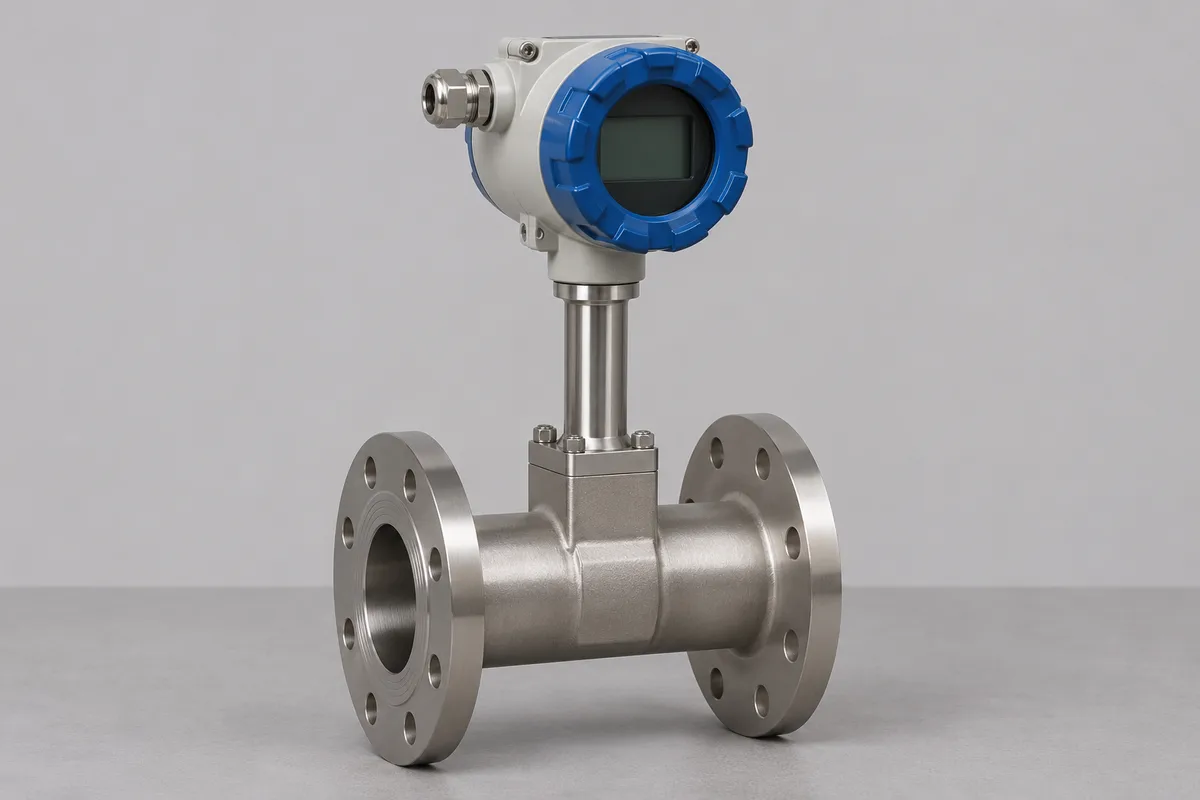
- The Endress+Hauser Prowirl F 200 senses vortex shedding and can be configured for different fluids and calculated outputs.
- What we check
- Compare indicated flow against a reference over the operating band. Review temperature or pressure inputs separately if they enter a calculated mass result.
- Reference equipment and accuracy
- Use a calibrated flow reference appropriate to the fluid. Any compensation channels need traceable temperature or pressure references as applicable.
- When to repeat the check
- Review the interval after deposits on the shedder or a change in upstream pipework.
Technical references Proline Prowirl F 200 vortex flowmeter