
On this page
Matching each weight to its slot
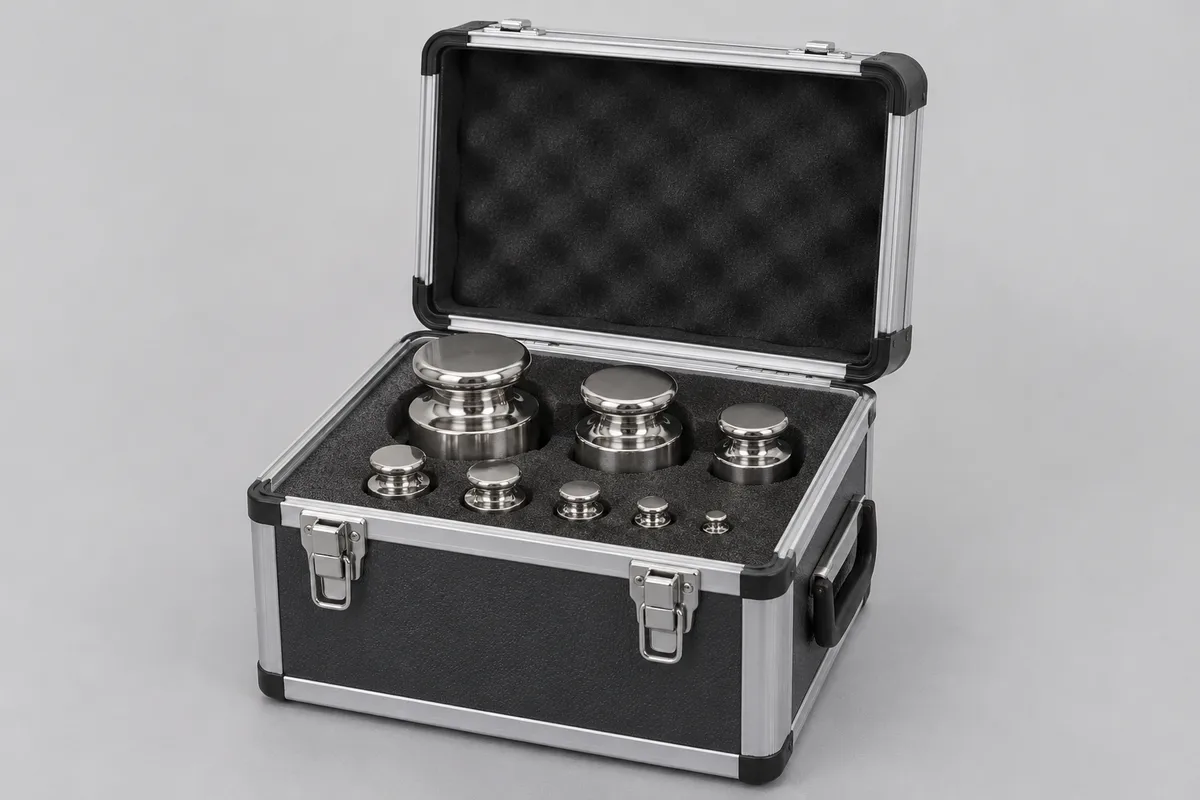
Prepare an inventory by slot, with each nominal value and distinguishing marks. Identify any empty slots and any weight that came from another set. The report should associate each measured value with the correct piece so that combinations can be assembled afterwards.
A missing small weight can be hard to see in a photograph of a complete case. List the occupied slots, including repeated nominal masses, and record a piece on loan as a separate line so it can be reunited with its own result later.
Specifications and service checks
A weight box can hold more than one piece of a denomination, often distinguished by dots or marks. A slot-by-slot inventory keeps a replacement weight from inheriting the recorded history of an earlier piece with the same nominal mass.
- Range and configuration
- Record the denomination of each individual weight and the class marked on its certificate. A set may contain several pieces carrying the same nominal value.
- Manufacturers and models
- METTLER TOLEDO supplies OIML-class weights. For a box or cast-iron piece, the denomination, class and individual ID matter more than the case model.
- What we check
- Inventory the pieces before weighing them. Calibrate each denomination and retain the original box positions or identifiers for duplicate pieces, including the small riders.
- Reference equipment and accuracy
- OIML R 111 classes run from E1 through F and M classes. Choose references and a comparator that can resolve the tolerance of the weight being tested.
- When to repeat the check
- Shorten the review interval for loose weights exposed to abrasion, corrosion or cleaning. Set a recall for each replaced or repaired piece.
Technical references METTLER TOLEDO OIML and ASTM Weight Classes: Tolerances, Accuracy, and How to Choose · OIML R 111-1 weight classes