
On this page
At the normal sash opening
Identify the hood, room and normal working height marked on the sash. For a horizontal sash, record which panels are open. Note any large apparatus normally left inside, the room ventilation mode and recent exhaust work. For repeat testing, the previous setup is often as useful as the last average velocity.
What a face velocity result tells you
Readings across the opening show the distribution of inward air speed. Keep the individual points as well as the average so a weak area near one side remains visible. An airflow visualisation or containment test answers a different question. If one is required, identify the test method and acceptance criteria in your laboratory procedure.
Alarms and return to use
Where the hood has a low-flow alarm or sash warning, include the installed monitor and its normal settings in the test request. The report can record which alarm operated and under what condition. Give the laboratory contact who controls the hood and the time it can be made available for the site visit.
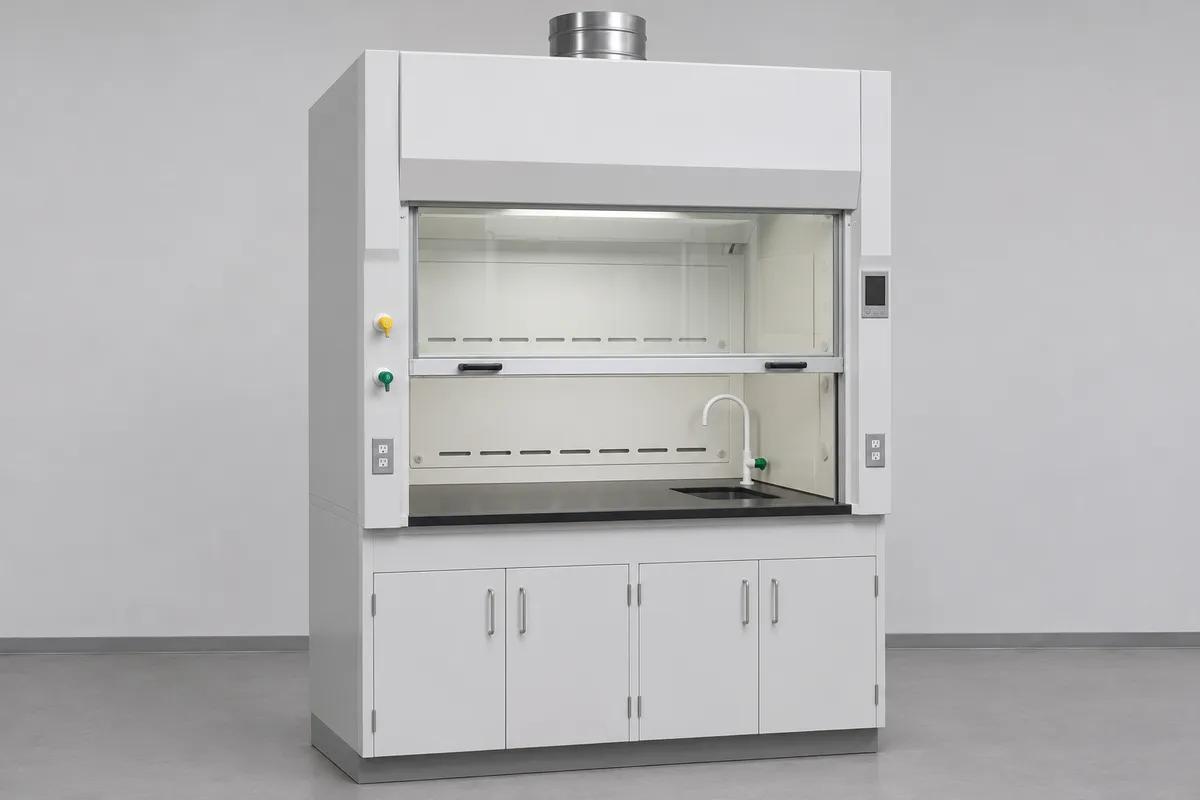
Fume hood
A face-velocity figure depends on the sash opening at the time of measurement. Mark the normal working height and identify the sash if the hood has more than one opening. For repeat work, include the last measurement grid or hood drawing, and tell us whether an airflow display or low-flow alarm is also included.
An installed airflow alarm and a visiting technician’s vane meter are two separate assets. Mark the sash position associated with the alarm setpoint and identify the installed sensor. This gives the site team a defined condition when it compares its routine indication with the survey.
- Range and configuration
- The specification belongs to a particular hood width, sash arrangement and exhaust configuration. A flow display in m/s and a room exhaust result in m³/h serve different purposes.
- Manufacturers and models
- Labconco’s Protector Premier service literature identifies individual models such as 4871400. Include the full model code on the hood tag so the correct sash and monitor documentation is used.
- What we check
- Commissioning or periodic performance testing evaluates the installed hood. Ask separately for calibration of its monitor, with the tested sash position and installation identified.
- Reference equipment and accuracy
- A calibrated air-velocity instrument supports an airflow measurement. The performance acceptance criteria come from the installation specification and applicable test method.
- When to repeat the check
- Schedule the installation check under the site’s safety programme. Review it after a sash change, exhaust modification or relocation.
Technical references Labconco Protector hoods · NIST air speed metrology · Labconco Protector model register