
On this page
Glass graduations or a digital delivery head
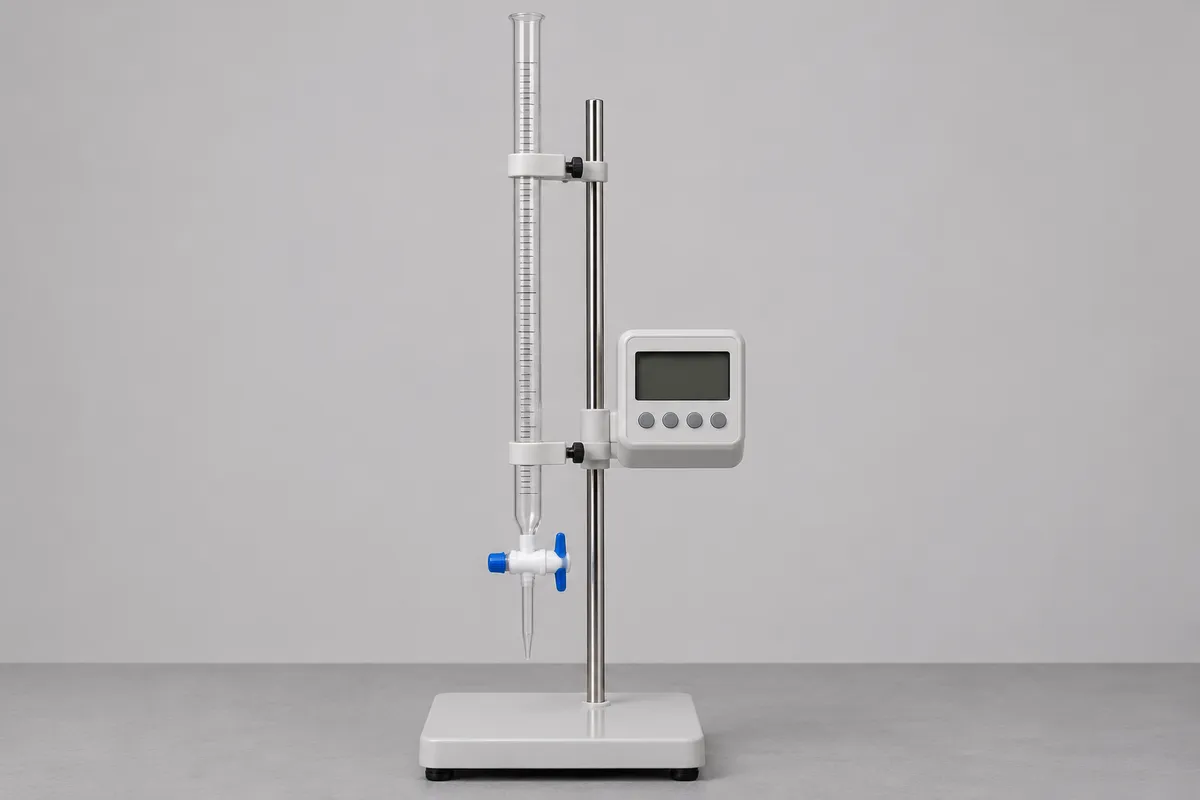
For a glass burette, give the capacity, smallest division and any class, reference temperature or waiting-time marking on the barrel. Include the fitted tap and tip. For a digital burette, identify the head, delivery tube and tip used for titration, along with its indicated increment. Mention any recent replacement of those parts.
A volume from zero or between two readings
For a glass burette, we set the first meniscus reading, deliver water into a weighed vessel and read the final meniscus. The mass of water and its temperature give a reference volume to compare with the difference between the two scale readings. For a digital head we use the displayed delivery. If your assay takes 10 mL from the 15 mL to the 25 mL mark, specify those marks and the acceptance limit for that delivery.
What accompanies the result
A technician filling an assay worksheet may need the volume delivered between two readings. Include those readings if they matter to the method, along with the result required at each mark. For an unexplained change from earlier runs, tell us about a leaking tap, bubbles seen in the delivery tube or a replacement tip. Give the laboratory number printed on that burette so the certificate can be matched to the assay.
Pricing the delivery intervals you use
A 50 mL burette used for a single delivery from zero takes a different booking from one used for several short additions down the barrel. Give the start and finish marks for each interval and any repeat deliveries your method requires. For a bottle-top unit, tell us which delivery head and tip are fitted so we quote the assembly that goes back on the reagent bottle.
Bench time includes the deliveries, any specified waiting period and the weighing for each result. A tap that lets water pass between readings makes the starting volume uncertain. Flag a known leak when you book and tell us who can agree the next step if it holds up the comparison.
Equipment covered
Burette
With a starting reading of 5 mL and an ending reading of 25 mL on a delivery burette, the nominal volume delivered is 20 mL. Give us the graduation interval you use, the smallest scale division and the identification on the glass. If the stopcock has been changed or drips between deliveries, mention that separately.
A titration starting at 1.2 mL and ending at 9.7 mL uses 8.5 mL of scale travel. If most endpoint readings fall in that part of the tube, identifying both marks lets the laboratory select a comparison relevant to your actual work.
- Range and configuration
- DWK’s cited Class AS glass burette holds 10 mL. Read the marked subdivision and note which part of the glass scale is normally used.
- Manufacturers and models
- DWK DURAN and BRAND Titrette illustrate glass and piston-driven designs.
- What we check
- Compare delivered volumes across the working span. Read a glass burette by its meniscus and follow its drainage convention. For a piston burette use the appropriate piston-apparatus method.
- Reference equipment and accuracy
- Use a calibrated balance and a temperature reading for the gravimetric result. In a glass burette two scale readings can contribute to a partial-volume result.
- When to repeat the check
- Check for a leaking stopcock or valve between visits. Review delivery after replacing the tip or any part of the dosing assembly.
Technical references DWK DURAN 10 mL burette · BRAND Titrette manual · ISO 8655-6 gravimetric volume determination