
On this page
Hexagon size on the working shank
If an inspection drawing specifies the hexagon size, identify the part of the straight shank to be measured and its tolerance. Where a key simply fits into a separate torque tool, record it as that tool’s adapter. The torque reading belongs to the measuring tool.
A ball-end key and a straight-ended key can carry the same nominal size. If your fixture relies on the straight section for alignment, identify that section on the drawing. For an inch-size assortment kept beside a metric set, copy the unit from the original inventory as well as the stamped number.
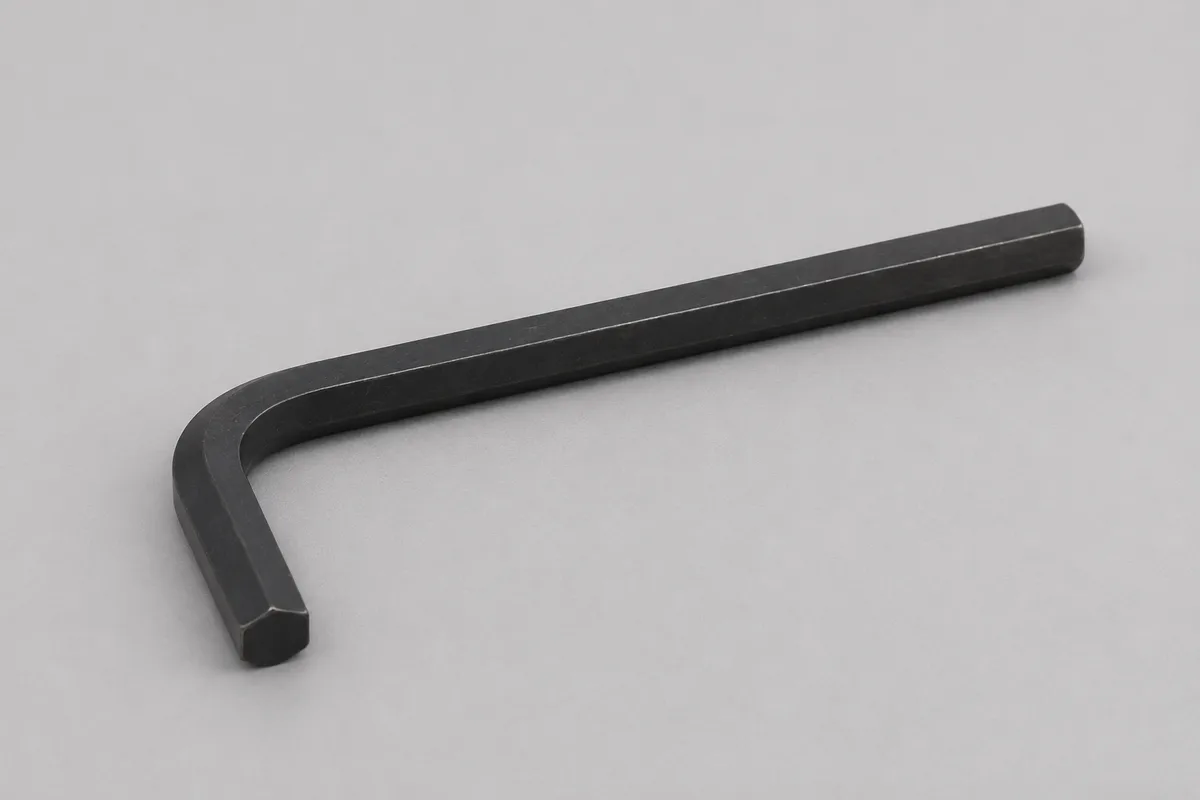
Allen key used with an inspection fixture
Identify it only as a required assembly accessory unless a controlled drawing calls for a dimensional check. If the operation requires a specified tightening torque, name the torque-measuring tool and adapter instead of treating the hex key itself as a calibrated torque instrument.
Specifications and service checks
The stamped size refers to the across-flats dimension. Inspect the end that engages the socket because a rounded end and an unworn shank may give different impressions of the key's fit.
- Range and configuration
- The quoted size is the distance across opposite flats. A ball end and the straight driving end have different geometry.
- Manufacturers and models
- Bahco’s metric hex-key range includes sets covering 2 to 12 mm.
- What we check
- Check the straight working flats in more than one orientation. Inspect rounded corners and identify which end was examined.
- Reference equipment and accuracy
- Use a calibrated external micrometer or suitable limit gauge. Its resolution must distinguish the allowed across-flats tolerance for the named size.
- When to repeat the check
- Inspect frequently used keys at the tool crib. A dimensional check after wear or damage generally tells the buyer more than a fixed annual date.
Technical references Bahco product reference