
On this page
Plunger travel and the load-reading device
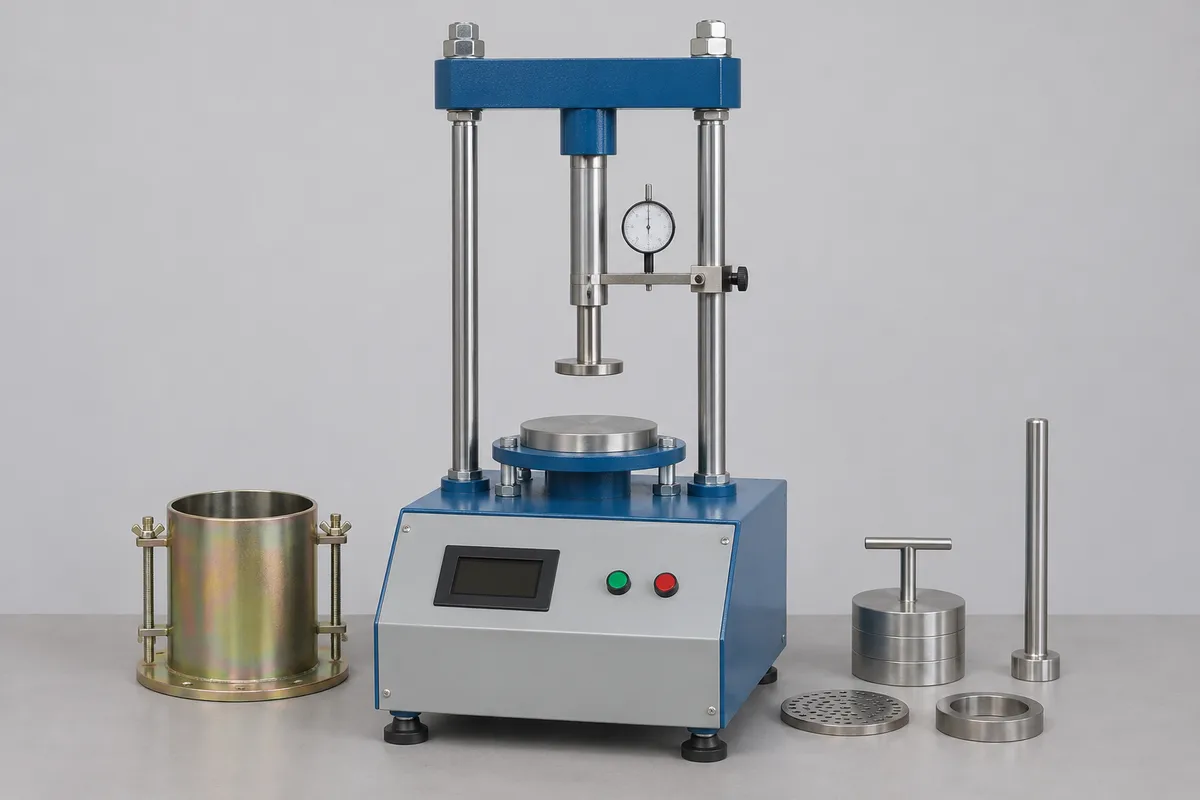
Give the force transducer or proving-ring number, the displacement instrument and the plunger fitted to the frame. If the crosshead speed is set by a selector, include the setting used in your method. Those identifiers keep the results tied to the tested configuration.
California bearing ratio apparatus
Moulds, piston and surcharge pieces are measured separately where their dimensions or mass enter the method. The results identify each measurement channel and the arrangement used, keeping the equipment evidence distinct from specimen preparation and the calculated CBR result.
Specifications and service checks
One dial tracks penetration and another channel records load. If a report curve looks shifted along the horizontal axis, identify the penetration gauge and its zero position as well as the force device before booking the frame.
- Range and configuration
- The combined CBR–Marshall machine in the catalogue has a 50 kN frame. A frame may serve several tests. For CBR, identify the force range, penetration scale and speed specified for the CBR attachment.
- Manufacturers and models
- Matest’s S213 CBR–Marshall machine is a 50 kN frame with selectable drive speeds.
- What we check
- Compare the force indication with a calibrated proving device, measure plunger travel and verify the rate over a timed distance.
- Reference equipment and accuracy
- Use a compression force standard with uncertainty suitable at the lowest requested load, plus a displacement reference and calibrated timer.
- When to repeat the check
- Review calibration after changing the load cell or ram. Verify the selected speed when switching a shared frame between methods.
Technical references Matest product reference