
On this page
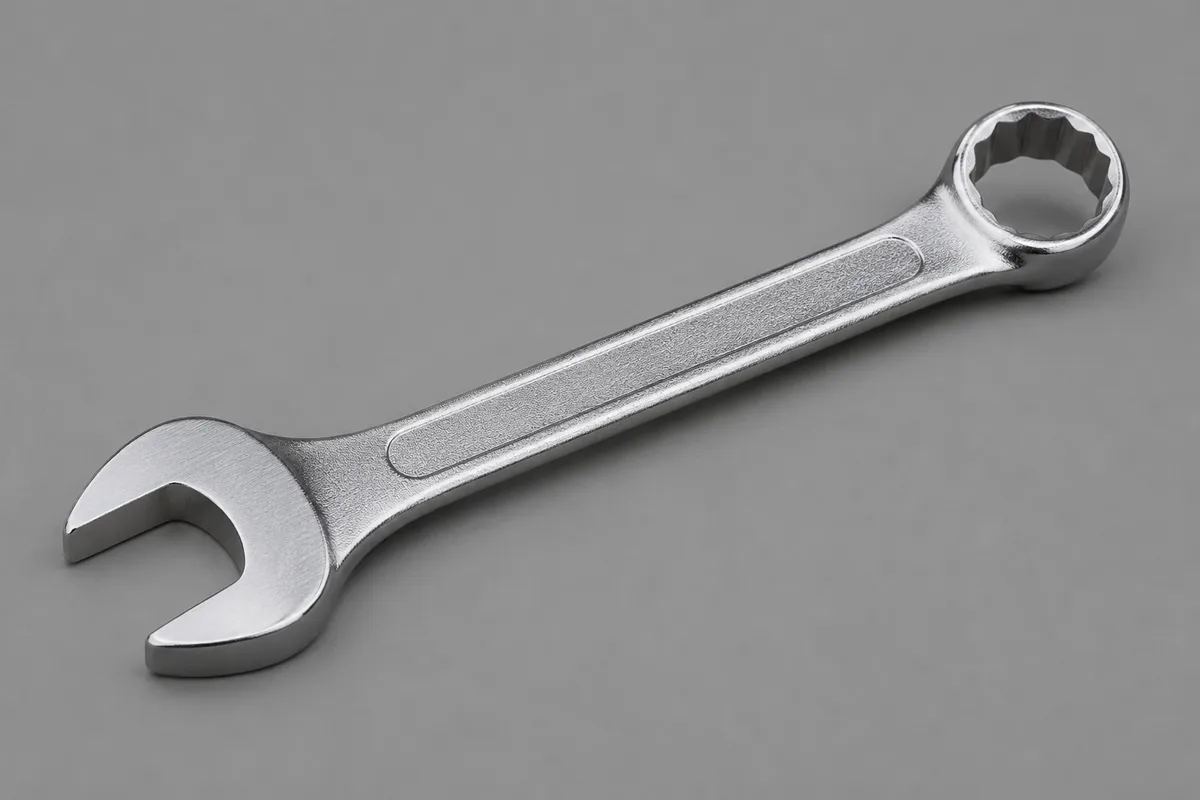
The ring end and the open end
Mark which end is to be checked and give the required across-flats dimension or gauge fit from the inspection drawing. For a tool crib with several identical spanners, add the crib number to each result. That identifies the worn tool when the set goes back into circulation.
Combination spanner in a tightening setup
Record its size and role if it forms part of a specified assembly method. An attached measuring adapter or torque wrench needs its own identity and configuration. A fit or opening-dimension requirement can be reviewed separately; it does not turn the spanner into a torque reference.
Specifications and service checks
The ring and open end of one spanner can wear differently. If a fitter reports slipping, specify which end was used and the fastener size. That lets inspection focus on the actual contact faces.
- Range and configuration
- Both ends have the same nominal fastener size, but their working surfaces and inspection points differ.
- Manufacturers and models
- Bahco SB111M-28 has a 28 mm open end and a ring end. STANLEY also offers metric combination wrench sets.
- What we check
- Measure the open jaw across flats and check ring engagement using a suitable reference profile. Record which end showed wear.
- Reference equipment and accuracy
- A calibrated jaw gauge and a verified hexagon reference are appropriate. Choose the gauge tolerance for the spanner size on the drawing.
- When to repeat the check
- Check tools that start slipping. Recheck after visible overload or local damage to either end.
Technical references Bahco product reference · STANLEY product reference