
On this page
From cutter dimensions to internal volume
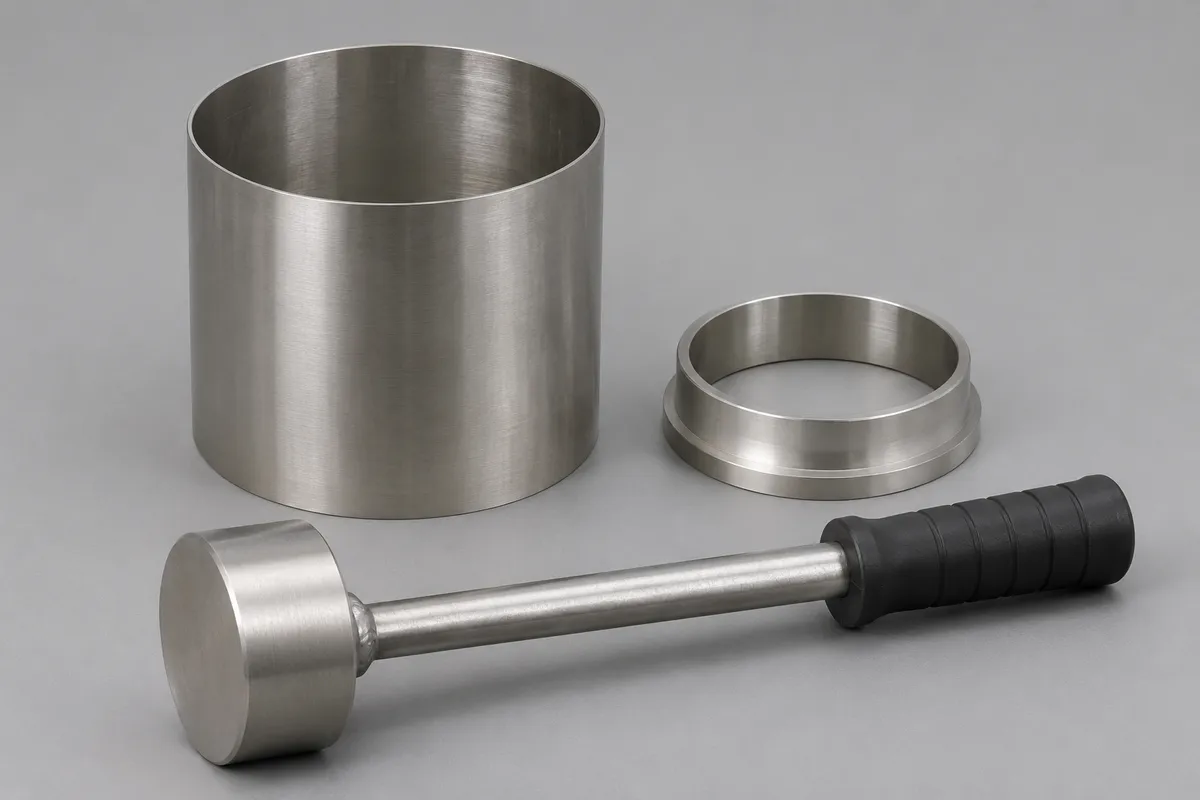
A worksheet that uses a fixed volume every time needs to identify which cutter that volume belongs to. Two cutters of the same nominal size can have different measured inside diameters and heights. Give each cylinder its own tag and specify whether you need the measured dimensions, the calculated internal volume, or both. If the edge has been dressed, mark the working section shown on the drawing.
Core cutter dimensional reference
Note cutting-edge damage or distortion before dispatch. If the laboratory calculates volume from dimensions, state the measurement and calculation requirements explicitly. A nominal size on the case does not establish the volume of the particular cutter used for the field sample.
Specifications and service checks
Soil density calculations depend on the volume attributed to the cutter. Two cutters with the same nominal marking need separate identifiers if their measured bore or usable height differs after edge dressing.
- Range and configuration
- Humboldt lists a 3-inch (76.2 mm) drive head in its density sampler range. Drive cylinders are identified by internal volume. A nominal three-inch sampler head describes the assembly and is insufficient to calculate the volume of an individual sleeve.
- Manufacturers and models
- Humboldt lists drive-cylinder samplers for the ASTM D2937 method. CONTROLS supplies a surface soil sampler for the core-cutter method.
- What we check
- Measure the sleeve bore and working height or determine its capacity by a documented volumetric method. Check the cutting edge for deformation.
- Reference equipment and accuracy
- Use a calibrated bore gauge and height reference. If capacity is determined gravimetrically, use a traceable balance and thermometer.
- When to repeat the check
- Check a sleeve again after a hard inclusion dents its cutting edge. Keep a separate volume record for each sleeve.
Technical references Humboldt product reference · CONTROLS product reference