
On this page
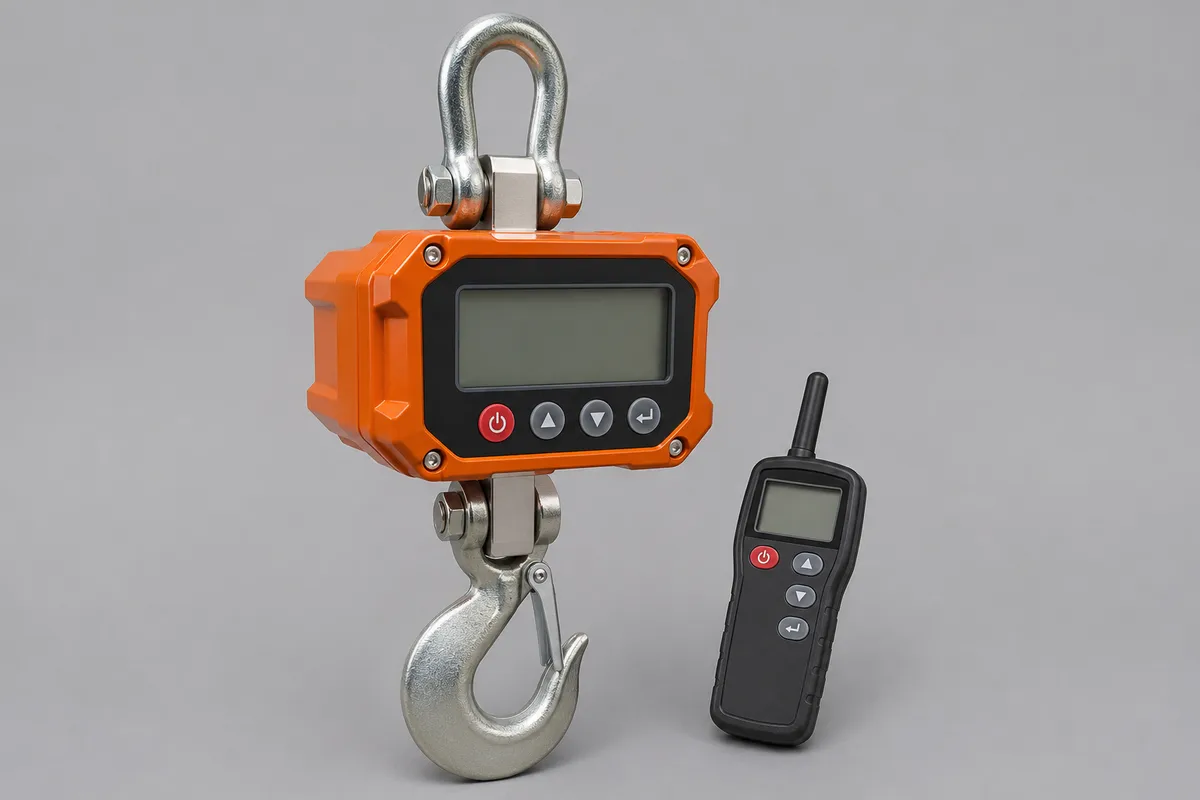
Working loads, hook fittings and remote display
Give capacity, display division and the working loads of interest. If the operator reads a remote handset instead of the local display, include that pairing. State separately if a lifting-equipment inspection is also required so the weighing result can be booked against the correct asset.
Crane scale and suspended weighing
Identify the indicator, load cell and attachments, and give the operating loads needing results. RTS calibrates the suspended scale with the stated load arrangement and working points. A weighing comparison is not proof loading or certification of lifting accessories; keep those separate responsibilities explicit on the work order.
Specifications and service checks
If a lifting beam stays below the scale, its mass is part of the gross load. Record the empty suspended assembly and which tare was stored when comparing a lifted component with its separate floor-scale weight.
- Range and configuration
- A crane scale’s plate gives both capacity and scale division. KERN HFD scales use different weighing ranges across the family, so the full order code is useful.
- Manufacturers and models
- KERN HFD 1T-4 is one HFD-series crane scale. Include the hook, shackle and display details.
- What we check
- With suitable lifting arrangements, compare indicated mass with traceable applied loads at several points. Check return to zero and repeatability in the normal hanging position.
- Reference equipment and accuracy
- Use calibrated masses or a suitable force reference and document any conversion between force and indicated mass. Resolve the smallest division used for acceptance.
- When to repeat the check
- Inspect the indicated zero and compare a known load between calibrations. Shock loading or replacement of a load-bearing fitting calls for inspection and reassessment.
Technical references KERN HFD 1T-4 Robust, high-resolution crane scale