
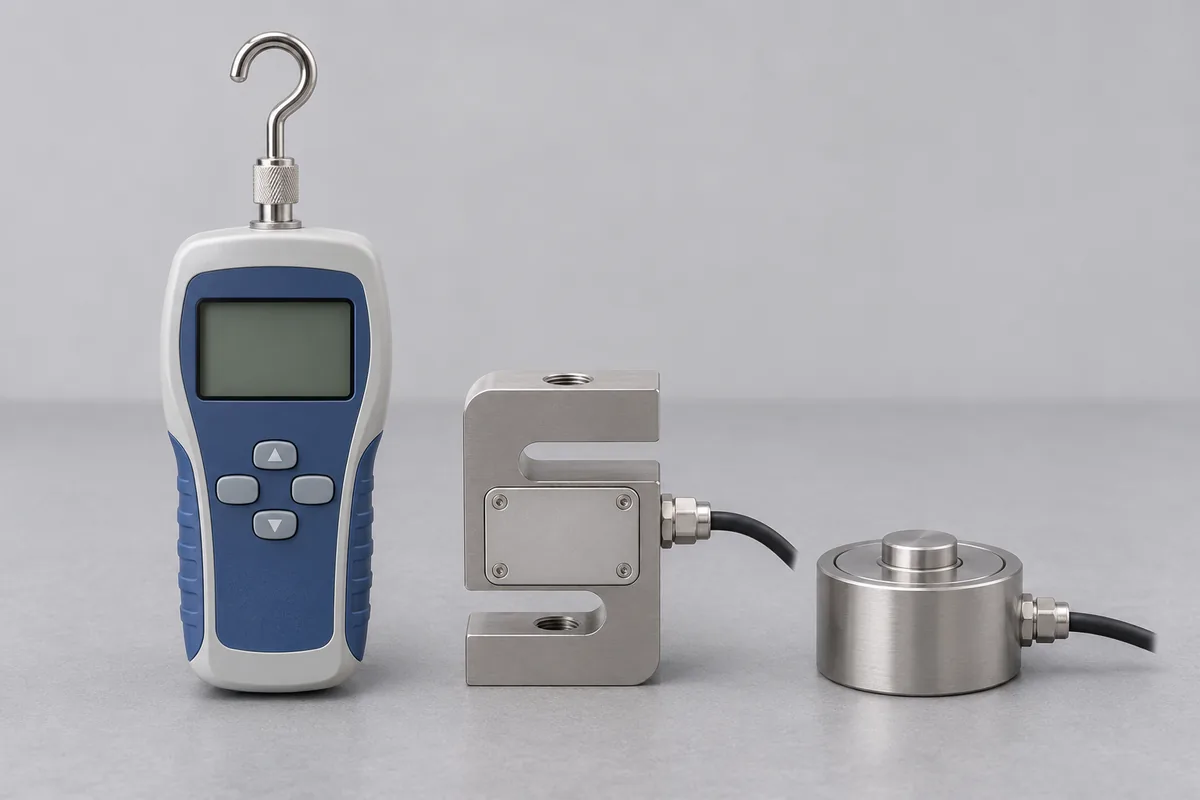
Describe the way force enters the cell
Provide the rated capacity, units, model and serial number. State tension, compression or both and give the working loads of interest. A drawing or photo of the loading threads, base, loading button or rod ends helps the team assess the fixture needed.
Identify the electrical readout
For a bare strain-gauge cell, include its rated output and excitation information from the data sheet. For a complete system, list the indicator, channel and cable kept with the transducer. Tell us if the indicator displays force or a scaled unit used by the production line.
Increasing loads, return loads and zero
A force system can give different readings at the same load depending on whether the load is being increased or removed. Say whether your application needs results for both directions of loading. If the cell holds a steady force for a period, describe that use and ask whether a creep assessment is needed. Give the required method or class when the cell serves as a reference instrument.
The report also needs a clear basis for converting the electrical signal into force. Keep any indicator scaling, calibration factor and excitation setting with the cell's identification. Where the received condition matters, request readings before those settings are changed. A replacement cable or amplifier should be recorded even if the cell itself is unchanged. RTS can review the capacity, loading attachments and intended measurement sequence before confirming the arrangement.
Preserve the cell-to-channel pairing
Send both the cell tag and the display tag, and say whether the assembly can leave the machine. Include the site address and access details if its mounting must stay in place. List the loading fittings with their owner so borrowed attachments return to the correct maintenance store.
Load indicators without the original load cell
A load indicator may be checked using an electrical simulation or together with its load cell under applied force. Name the required arrangement and retain the cell identity, sensitivity setting, excitation and displayed units. If the sensor will remain at the plant, say so. RTS can review the indicator function and applicable reference method while making clear which parts of the complete force-measurement chain were included.