
On this page
Load and displacement channels
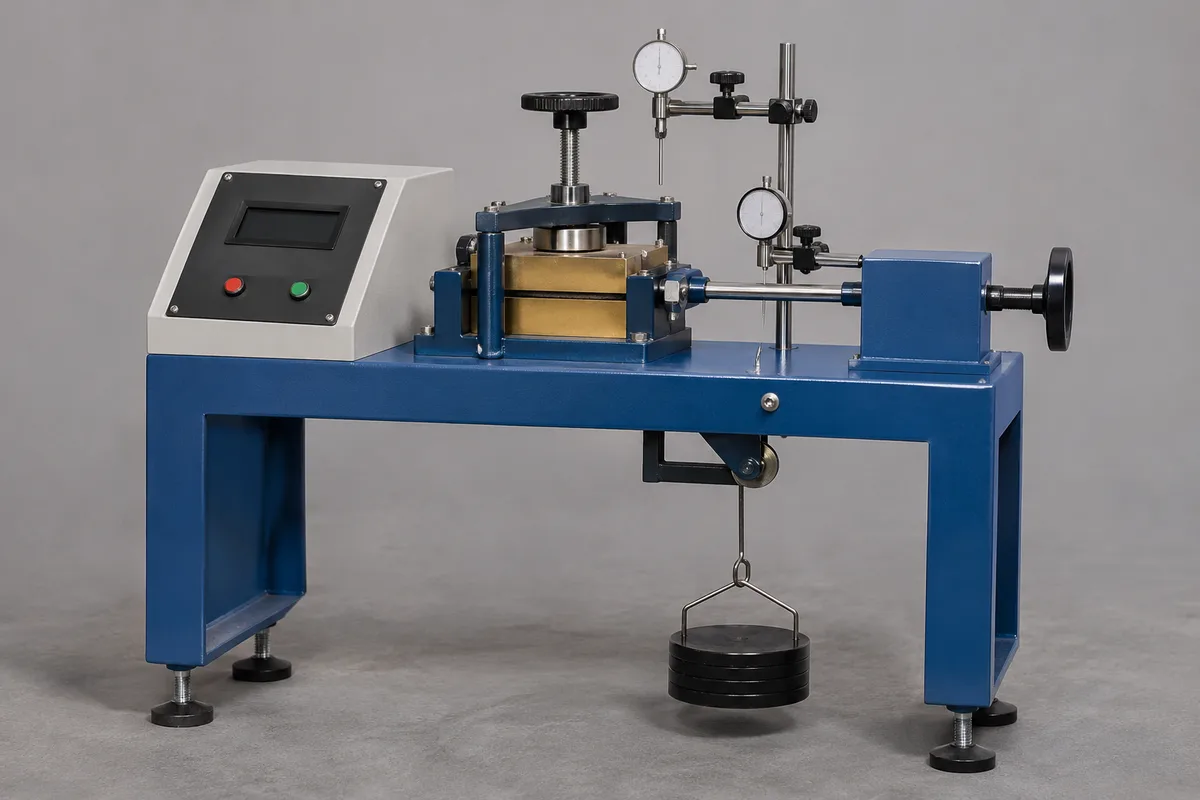
Provide the shear box size and the IDs of the load and displacement devices. Specify the travel rate used by your laboratory and the method of applying normal load. Where a lever or hanger is fitted, identify the assembly associated with the quoted load.
Displacement can be recorded by one gauge for horizontal travel and another for vertical movement. Interchanging their record numbers will leave the load data intact but make a later plot hard to reconcile. Give the direction, gauge ID and initial reference on the worksheet for each channel.
Direct shear apparatus channels
Include the shear-box dimensions and the requested travel or rate checks. List each sensor with its readout. A result for a detached load cell does not automatically describe every channel or the alignment of the complete test arrangement.
Specifications and service checks
Displacement of the carriage and displacement recorded at the specimen can differ if a fixture takes up slack. Mark where the displacement device bears and identify the load channel used for the same run.
- Range and configuration
- Examples include 60 × 60 mm and 100 × 100 mm square specimens. Specify normal load, shear force and displacement ranges individually.
- Manufacturers and models
- Matest ShearLab S276-KIT accepts several shear-box shapes and sizes. CONTROLS offers direct shear systems for soil testing.
- What we check
- Verify the applied normal load, indicated shear force and travel of the identified box. Report displacement and force results against the correct channels.
- Reference equipment and accuracy
- Use calibrated force and displacement standards in the directions of use. A nominal mass on a lever requires the effective lever ratio to be accounted for.
- When to repeat the check
- Recheck after a load cell, box or lever change. Use the previous errors and frequency of operation to review the interval.
Technical references Matest product reference · CONTROLS product reference