
On this page
Lead configuration, gain and sweep speed
Send the lead cable configuration, gain and sweep settings used by the engineering team. Mark whether the result is taken from the display, a paper trace or an exported file. The test record can then tie amplitude and time measurements to the output being examined.
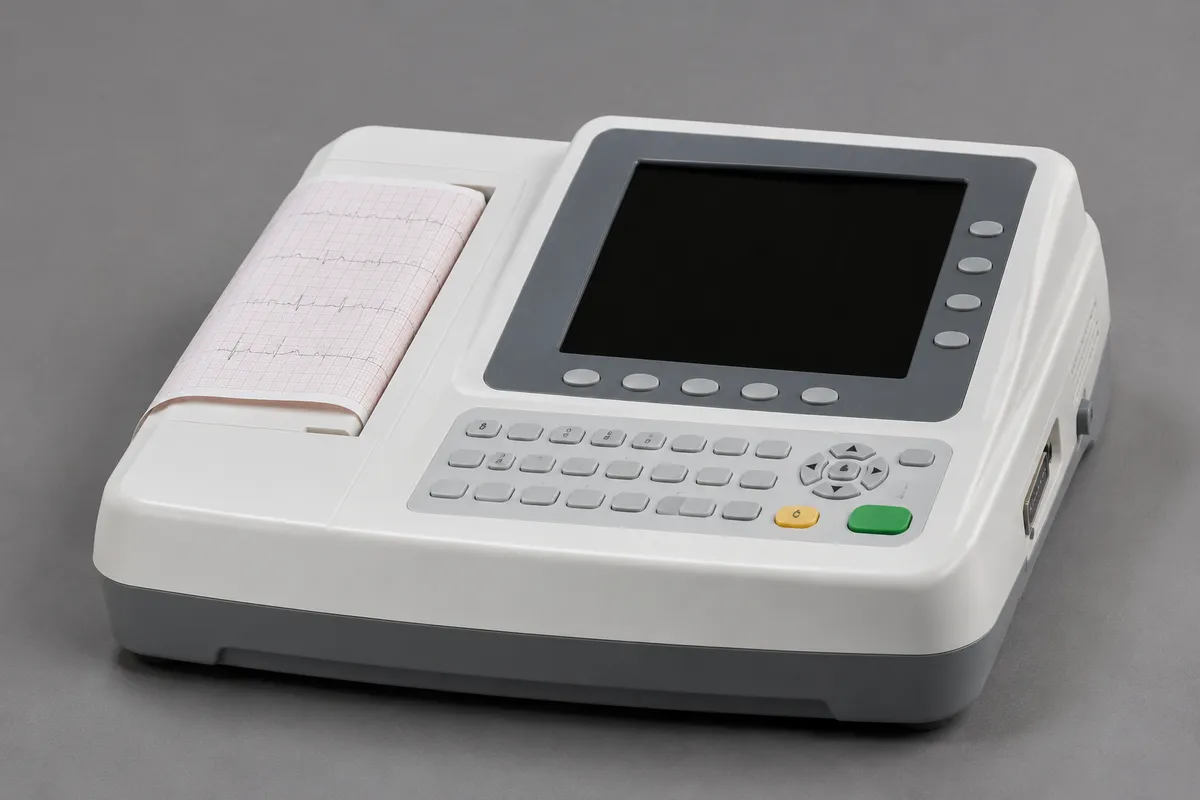
ECG machine recording functions
State which simulated signal characteristics and recording features require evidence. The simulator and lead set should be identified with the result. A bench comparison of the instrument does not interpret an ECG or establish the accuracy of a diagnosis.
Specifications and service checks
Two printouts of the same simulator signal may have different trace heights if the gain settings differ. Retain the gain and paper-speed markings on the printout when requesting an engineering check. They let the lab reproduce what the operator saw.
- Range and configuration
- Record the available leads, gain in mm/mV and recording speed in mm/s. Amplitude and time on the printed trace have independent scales.
- Manufacturers and models
- GE HealthCare’s MAC 2000 is a resting ECG system with a published specification sheet.
- What we check
- Apply a defined simulator waveform to the lead connections and compare the measured trace height and time spacing. Identify enabled filters and the recording output.
- Reference equipment and accuracy
- Use a calibrated ECG generator with known amplitude and timing plus a length reference for paper records. Digital measurements should use the file’s actual scale.
- When to repeat the check
- Recheck after recorder, input-board or relevant software work. Include the lead cable used when investigating intermittent traces.
Technical references GE HealthCare product reference