
Identify each channel on the job sheet
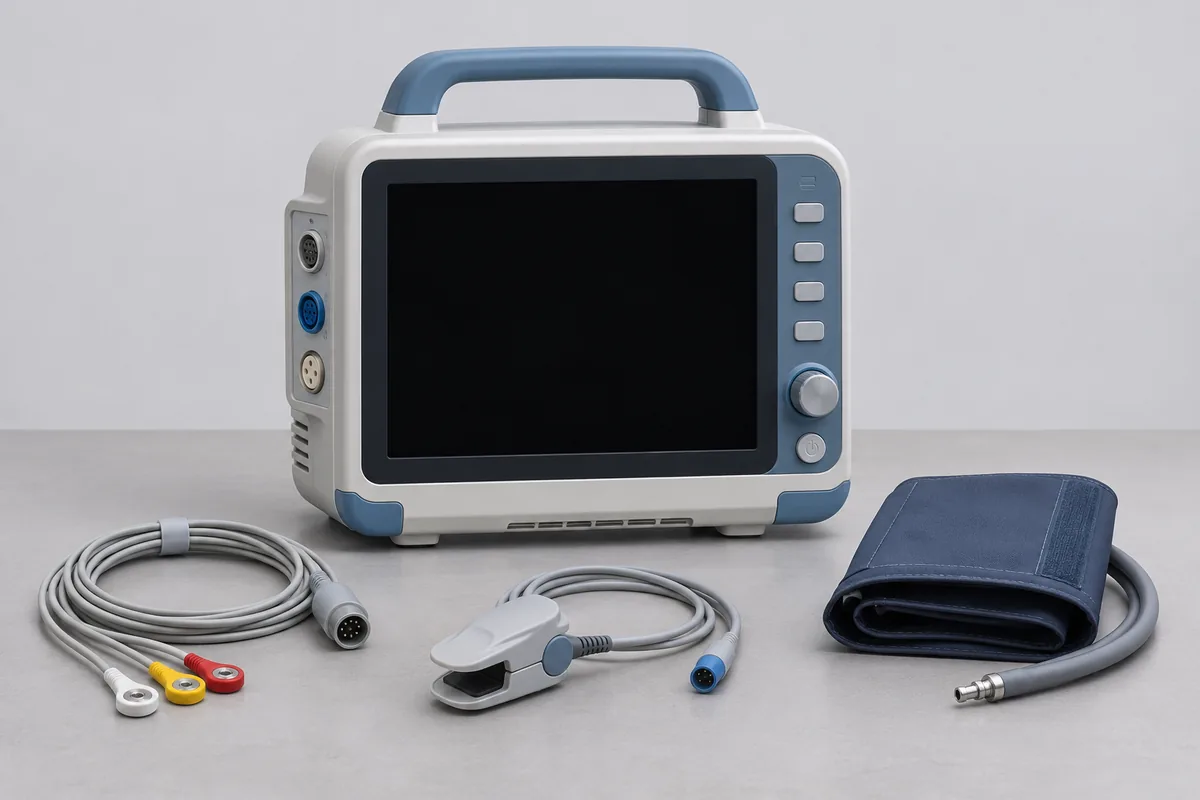
List the channels under review, such as ECG, non-invasive blood pressure or temperature. Record the lead set, pressure hose or probe supplied with each. If a module moves between monitors, give its own identifier so the result can follow the module.
Agree what the report will cover
Tell us which indications your service procedure asks the engineer to compare with a simulator and where it requires measured values. Include the procedure revision and whether an accessory is part of the check. A separate reference thermometer used by the workshop can be listed as a second asset for calibration.
Distinguish simulation from the complete channel check
A simulated input can test how a monitor responds to a defined signal, but the requested record must also identify the accessories included in that comparison. A result for one temperature probe or pressure module should not be filed against a different item merely because both fit the same monitor. Put the module serial number and the test procedure reference beside the main asset number.
List any alarm indication or additional fitted function the engineering procedure requires, with its acceptance criteria. Record the reason for the visit, such as recurrent testing or assessment after a documented repair, and identify any software change relevant to the procedure. RTS will review the model and requested bench measurements before accepting the work. The biomedical department remains responsible for reviewing the service evidence and authorising equipment release; patient records are not needed for the enquiry.
Label the return destination
Name the team authorised to release the monitor and receive it back. Keep the owning department and return address alongside every serial number. Supply the workshop’s equipment preparation declaration and identify any accessory that belongs to another asset before arranging collection.
Blood gas analyzer method review
A blood gas analyzer is an analytical system rather than just another bedside monitor channel. Give the analyser model, measured quantities, cartridge or reagent system and the quality-control question raised by the laboratory. Ask for a specialist method review before a quotation. Sensor checks, control-material results and method performance are different records; no patient specimen or result is needed for this enquiry.
Blood pressure monitor and sphygmomanometer
Identify whether the blood pressure monitor or sphygmomanometer uses a displayed pressure indication, an automated measurement cycle or both. List its cuff and hose assembly and the engineering checks required by the manufacturer. A static pressure comparison and an automated simulator response are distinct results. Keep those distinctions in the request so the report does not imply clinical performance from one bench observation.
ECG machine recording functions
For an ECG machine, supply the model, lead configuration and recording or display functions covered by the engineering procedure. State which simulated signal characteristics and recording features require evidence. The simulator and lead set should be identified with the result. A bench comparison of the instrument does not interpret an ECG or establish the accuracy of a diagnosis.
ECG simulator as a reference instrument
An ECG simulator is a workshop reference and needs its own asset record. List the generated functions, waveform settings and output connections that the department actually uses. Its calibration request differs from testing a monitor with that simulator. RTS must review the output quantities and reference method; a general low-frequency electrical scope should not be assumed to cover every simulated physiological signal.
Fetal monitor modules and simulator requirements
Give the fetal monitor’s fitted modules and the manufacturer-approved simulator or accessory arrangement named in the engineering procedure. State the indications and alarm records requested without including patient traces. Different channel types need different evidence. A general patient-monitor booking should therefore list the specific fetal monitoring configuration for specialist review before the equipment is accepted.
Pulse oximeter simulator compatibility
Record the pulse oximeter model, probe and any adapter used by the biomedical workshop. The enquiry must identify the compatible simulator and test procedure, since a simulator response is not the same as an independent clinical accuracy study. Give the required bench points and reporting fields for review. The department remains responsible for deciding what evidence permits return to service.