
On this page
Supplying a current or reading one
There are two quite different jobs behind the description “20 mA”. A calibrator can supply current for checking a display, or read current coming from a transmitter. Tick the direction your technicians use, or ask for both. For the remaining functions, a short table of quantity, range and working point is enough. Add the AC frequency, DC polarity or resistance connection wherever it affects the reading.
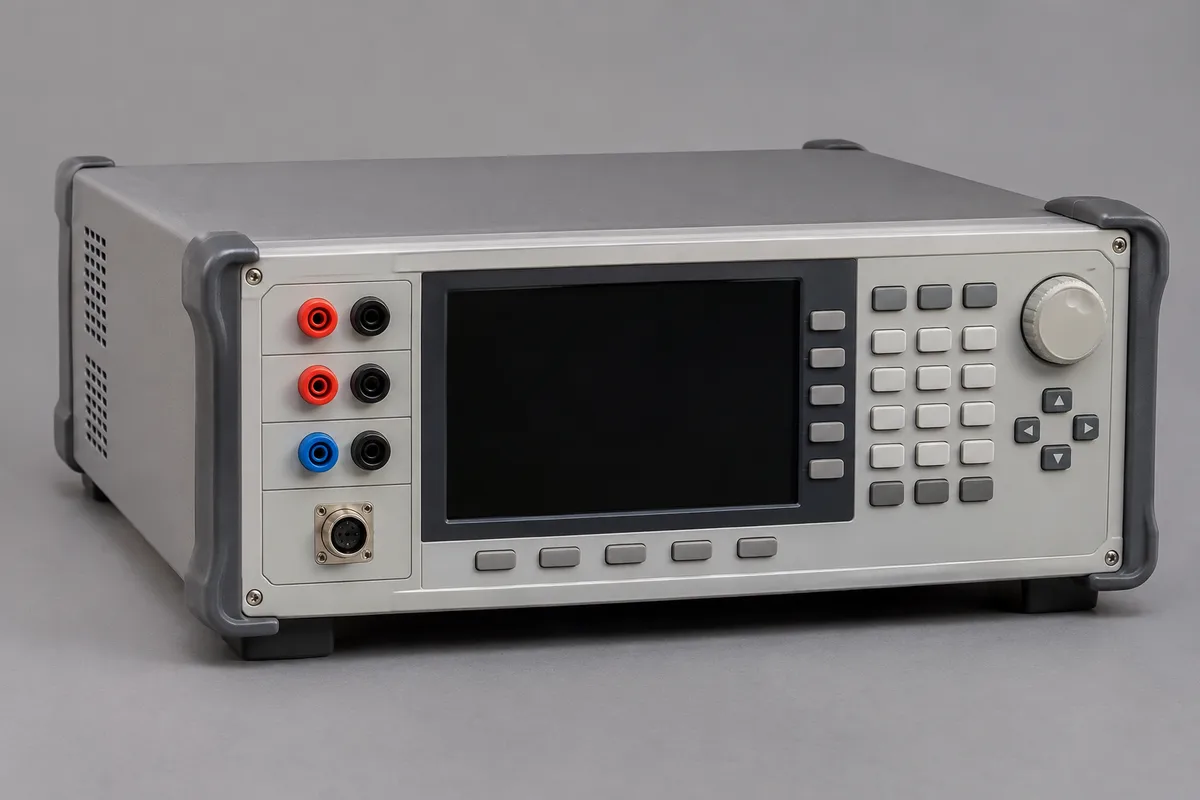
An electrical calibrator with several functions
Include AC frequency, selected range and any external current coil. Tell us whether the order concerns the value generated, the input indication or both. A source setting and a meter reading require different reference arrangements, even when they are functions of the same instrument. Keep the manufacturer option list with the enquiry.
Specifications and service checks
Suppose a receiver reads 25% at an 8 mA input on a linear 4–20 mA span. That is the expected quarter-span indication. A source test of the calibrator addresses the applied current, while a check with the receiver included also covers its programmed scaling.
- Range and configuration
- Identify the ranges actually used, including polarity for DC and frequency for AC. The accuracy on a millivolt output differs from the accuracy at hundreds of volts.
- Manufacturers and models
- Fluke 5560A is a multiproduct calibrator with several electrical output functions. A voltage-only asset can be assessed against a subset of these functions.
- What we check
- Measure assigned outputs independently at the requested points and loads. Keep the results for voltage, current, resistance or frequency distinguishable by function.
- Reference equipment and accuracy
- Use reference meters, characterised shunts or standards suited to each output. Evaluate the reference uncertainty against the individual range specification.
- When to repeat the check
- Monitor key outputs with check standards between calibrations. Review the interval against drift of the functions that set the tightest tolerance.
Technical references Fluke 5560A calibrator family specifications