
On this page
Deflection readings and the bridge null
State whether your procedure uses absolute deflection, sensitivity per division or only the ability to detect null. Include the coil or circuit resistance where known, normal operating orientation and direction of deflection. Both sides of zero may be relevant on a reversing bridge.
Galvanometers and zero-centred indications
Include the scale markings, polarity, shunt or multiplier and the usual operating position. A null indication and a numerical current result are different requirements. Give the sensitivity or deflection points required by your procedure, with the connected circuit identified so the calibration reproduces the working arrangement.
Specifications and service checks
A null detector used in a bridge only has to show the direction and closeness of imbalance around zero. A teaching laboratory using the same instrument for current per division needs a different comparison. Identify how the operator uses the pointer.
- Range and configuration
- Record the current per division or voltage range and whether the scale is centre-zero. Positive and negative deflection can differ.
- Manufacturers and models
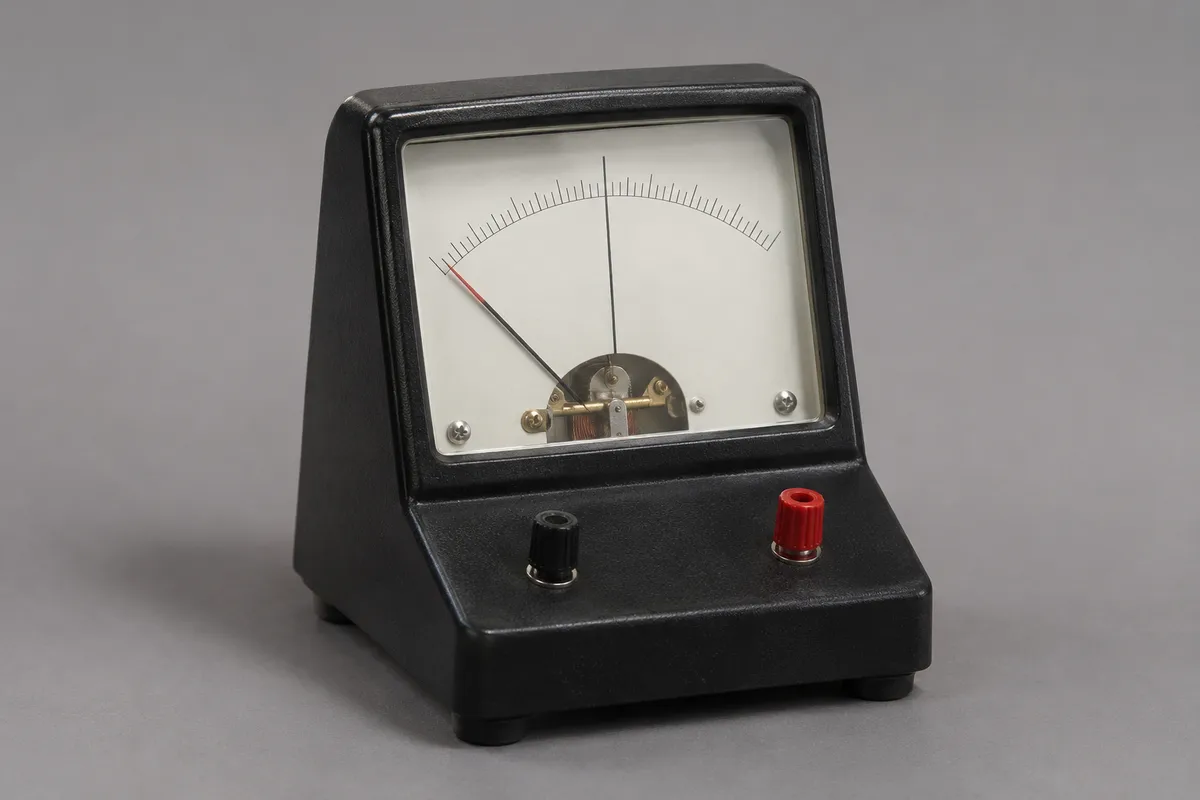
- PHYWE offers a centre-zero analogue galvanometer with a nominal 5 mA / 100 mV indication. Ranges depend on its terminal configuration.
- What we check
- Compare pointer deflection on both sides of zero with small known currents and note mechanical zero before and after the exercise.
- Reference equipment and accuracy
- Use a stable low-current source, calibrated meter and appropriate resistance. The applied current uncertainty must be small against a scale division.
- When to repeat the check
- Recheck after transport, movement servicing or a persistent change in mechanical zero.
Technical references PHYWE analogue galvanometer