
On this page
Which scope channels and probes travel together?
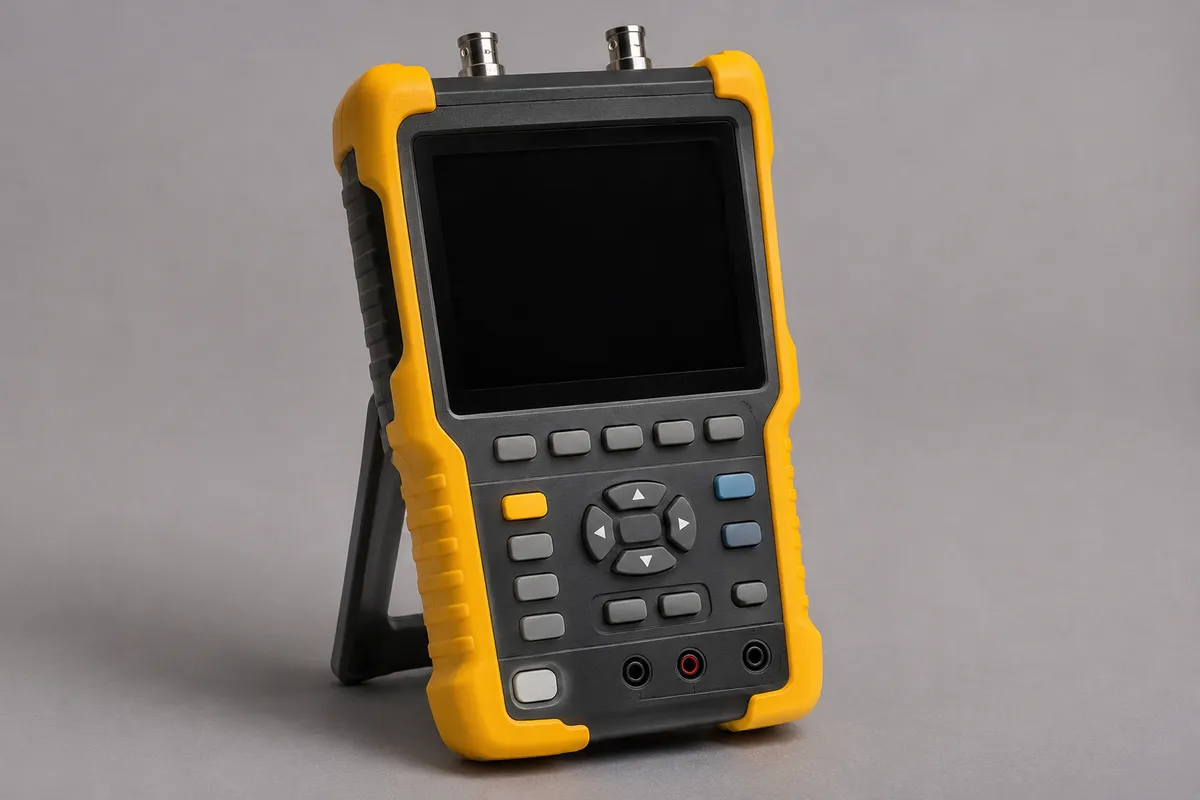
List the used channels, probe models, termination and any selectable input range. If the instrument includes a separate multimeter function, identify it explicitly. Specify vertical amplitude and timing points for the scope functions independently of the meter readings.
For a portable instrument used to compare two timing signals, keep both channel and probe identities with the result. Exchanging the leads can introduce a different input path even though the same timebase setting remains visible on the screen.
Specifications and service checks
A portable scope might alternate between trend logging over a shift and waveform capture during a machine start. Identify the acquisition mode in which the discrepancy appeared. A long trend records a different view of the event from a triggered waveform.
- Range and configuration
- Specify channel, voltage division, time division and probe ratio. The electrical safety rating is a usage limit, separate from bandwidth or vertical gain accuracy.
- Manufacturers and models
- Fluke 190 Series III ScopeMeter instruments combine portable oscilloscope functions with individually specified input channels and probes.
- What we check
- Compare channel gain, timebase and response at the selected frequencies. Test the separate meter input if it is used for independent measurements.
- Reference equipment and accuracy
- Use a calibrated scope source and compatible leads and terminations. A probe-and-scope result includes attenuation and frequency response of the paired probe.
- When to repeat the check
- Review after a fall or input repair and check accessory compensation after a probe change.
Technical references Fluke 190 Series III user manual