
On this page
Flow, temperature and detector readings
Keep results such as delivered flow, column-compartment temperature and detector response linked to their own references. Where a test uses the complete system, retain the configuration used for that run. This gives the quality reviewer a clear boundary between module checks and system performance.
HPLC modules and performance checks
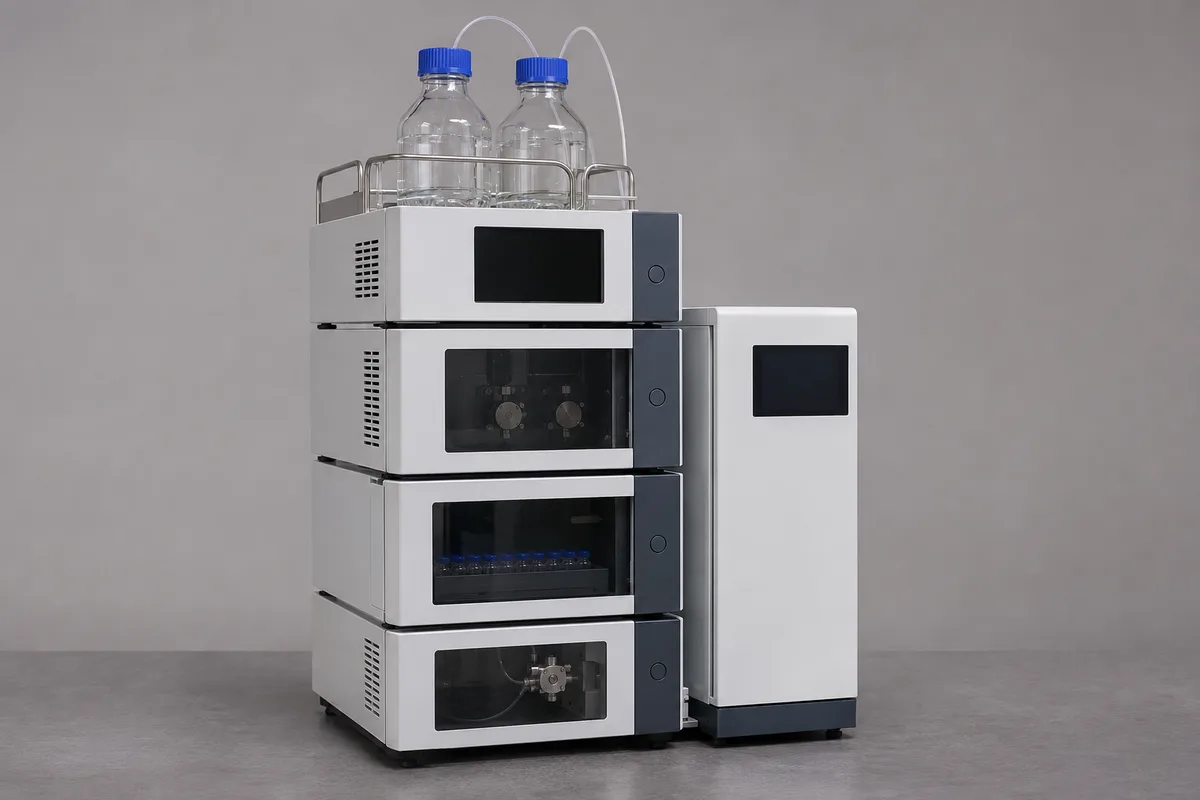
RTS checks the flow, temperature, injection and detector-performance functions specified by the HPLC qualification protocol. For a system used with several methods, the mobile-phase conditions, detector settings and operating points identify the conditions to evaluate. Results retain each module’s identity and operating configuration so the qualification record follows the installed system.
High performance liquid chromatograph
State whether the modules share one instrument ID in the laboratory register. Separate pump and detector serial numbers help trace a qualification report after a module swap.
A shift in retention time can prompt a check of pump flow, column-compartment temperature or elapsed time. Identify the hardware module and the job question first. For a pump-flow request, the programmed flow and the outlet where delivered flow will be measured give a clear starting point.
- Manufacturers and models
- Waters’ e2695 Separations Module combines solvent and sample handling and can be used with a separate detector.
- What we check
- For a routine pump-flow check, tie the delivered flow result to the pump module and its indicated flow. Where the detector is also included, specify its type and measurement channel. A pump-only record will otherwise look like a result for the entire chromatograph.
- When to repeat the check
- Recheck the affected module after seal, lamp or sensor replacement. Use system-check history and the laboratory’s acceptance limits to review the recall period.
Shared with HPLC system — Range and configuration · Reference equipment and accuracy · Technical references
Specifications and service checks
Two pump heads may feed one detector, and a combined programmed flow can conceal a discrepancy on a single channel. Identify pump A or B if the enquiry follows a channel-specific observation. Include the detector and oven identifiers separately if those modules also need checks.
- Range and configuration
- Waters quotes 0.01–10 mL/min for the e2695 pump and identifies 0.05–5 mL/min as typical. Add the make and model of the detector because the pump specification does not describe wavelength or absorbance.
- Manufacturers and models
- A Waters Alliance e2695 is a separations module. Laboratories can pair it with different detectors, so two systems listed under the same e2695 model can need different optical reference checks.
- What we check
- Select the modules that need checking. Typical equipment measurements include delivered pump flow, the temperature of a fitted oven and wavelength indication for an optical detector.
- Reference equipment and accuracy
- For flow, use a traceable flowmeter or an appropriate gravimetric collection with a calibrated balance and time reference. Wavelength and temperature need their own references.
- When to repeat the check
- A module swap can change one part of the system midway through its qualification cycle. Keep the date and identifier of the replacement with the system record. Review which linked measurements require a new result before carrying forward the existing due date.
Technical references Waters e2695 specifications