
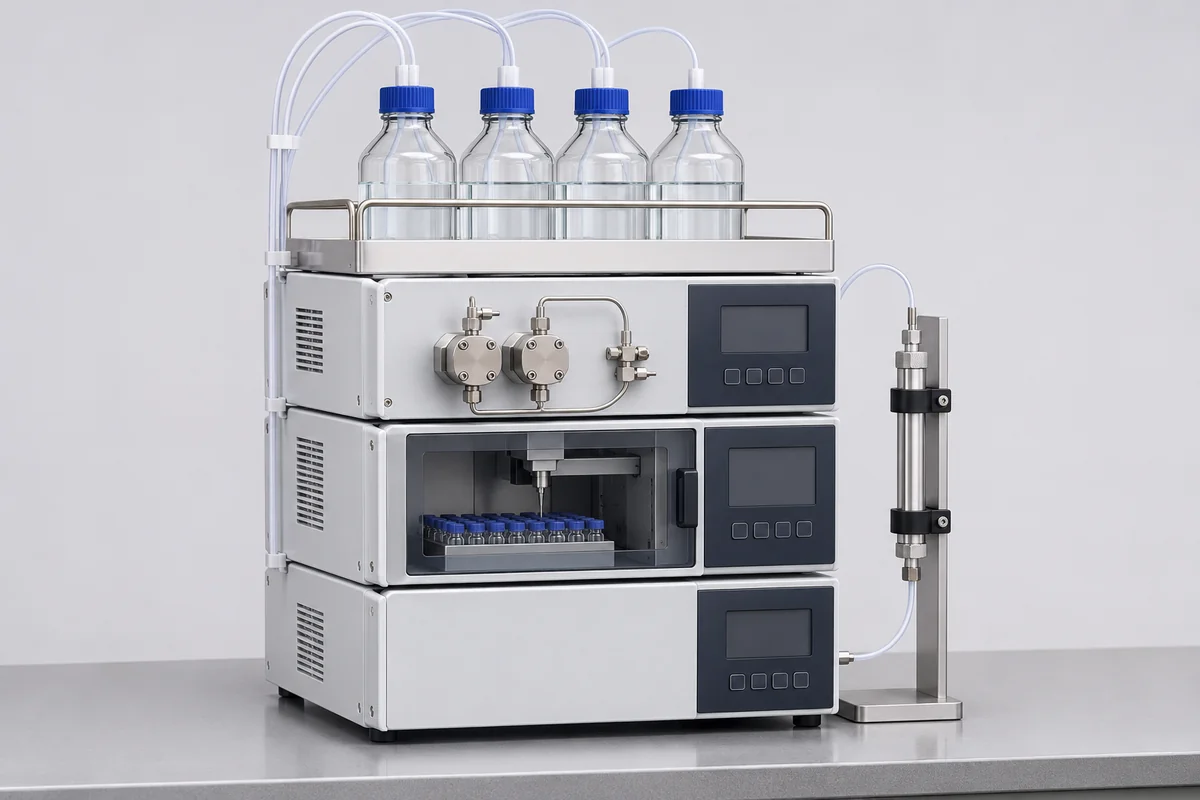
HPLC system and high performance liquid chromatograph
List the HPLC pump, injector, detector and temperature-controlled compartments by their fitted configuration. State which flow, temperature, injection or detector-performance checks the protocol requires. High performance liquid chromatograph is another name for the same system family, not a second instrument on the order. Keep the module identities and accepted operating conditions with the results so the qualification record matches the installed system.
Gas chromatograph modules and method conditions
For a gas chromatograph, identify the inlet, detector, carrier-gas arrangement and temperature-controlled zones involved in the method. Specify the hardware quantities or analytical performance evidence requested. A temperature comparison does not establish detector response or separation performance. The laboratory should provide its instrument protocol and reference-material requirements so RTS can review which work and service route are appropriate.
Karl Fischer titrator configuration
State whether the Karl Fischer titrator uses volumetric or coulometric measurement and identify its dosing or generating assembly, electrodes and any oven module. Those configurations require different checks. Include the water-reference material and protocol used by the laboratory. A burette delivery result alone does not establish the complete moisture method, and a coulometric system should not be described as the same volumetric arrangement.
Titrator delivery, electrode and endpoint records
Give the titrator model, dosing-unit capacity, electrode type and endpoint method. Identify whether the enquiry concerns delivered volume, an electrical measurement channel or performance with a specified reference material. Retain reagent and method details when they determine the requested comparison. Separate these quantities in the quotation so an electrode check is not mistaken for validation of the complete titration calculation.
Agree the protocol before the reference run
Send the instrument qualification plan and any laboratory-specific acceptance limits, with the revision used for the previous assessment. Identify the person who will provide approved reference materials, configured methods and access to stored results. A protocol should say which modules and modes receive evidence. It should also make clear whether a hardware check or an analytical performance exercise is being requested.
Keep reference instruments on separate asset lines
Temperature probes, balances and timers used during an equipment study retain their own calibration records. Those records support the selected method but do not automatically establish the complete system’s qualification or accreditation. RTS must confirm the accepted work and reporting scope. For an IMT Sohna laboratory or another Indian site, give the available instrument window and the technical reviewer before arranging a visit.