
On this page
Checking a dial setting or a small increment
Do you use a single 10 mH setting, or add small increments to an existing bridge reading? In the second case, the starting setting and size of the step both belong on the order. A previous bridge sheet usually gives the measurement frequency, drive level, terminals and series or parallel equivalent circuit. These details let the next set of readings be compared on the same basis.
Inductance boxes
Identify whether a reported series or parallel representation is required and retain any winding-resistance information from the previous certificate. A reference used at one frequency may need a different result from the value printed on its case. RTS measures the selected inductance values using the requested series or parallel representation and frequency.
Specifications and service checks
A bridge setup may specify both inductance and loss at a particular frequency. If the box provides the reference for that setup, identify which quantity the user needs assigned. A nominal inductance at a dial position does not describe the losses in the winding.
- Range and configuration
- Report the nominal step in µH, mH or H and the measurement frequency. Lead inductance can matter at the smallest settings.
- Manufacturers and models
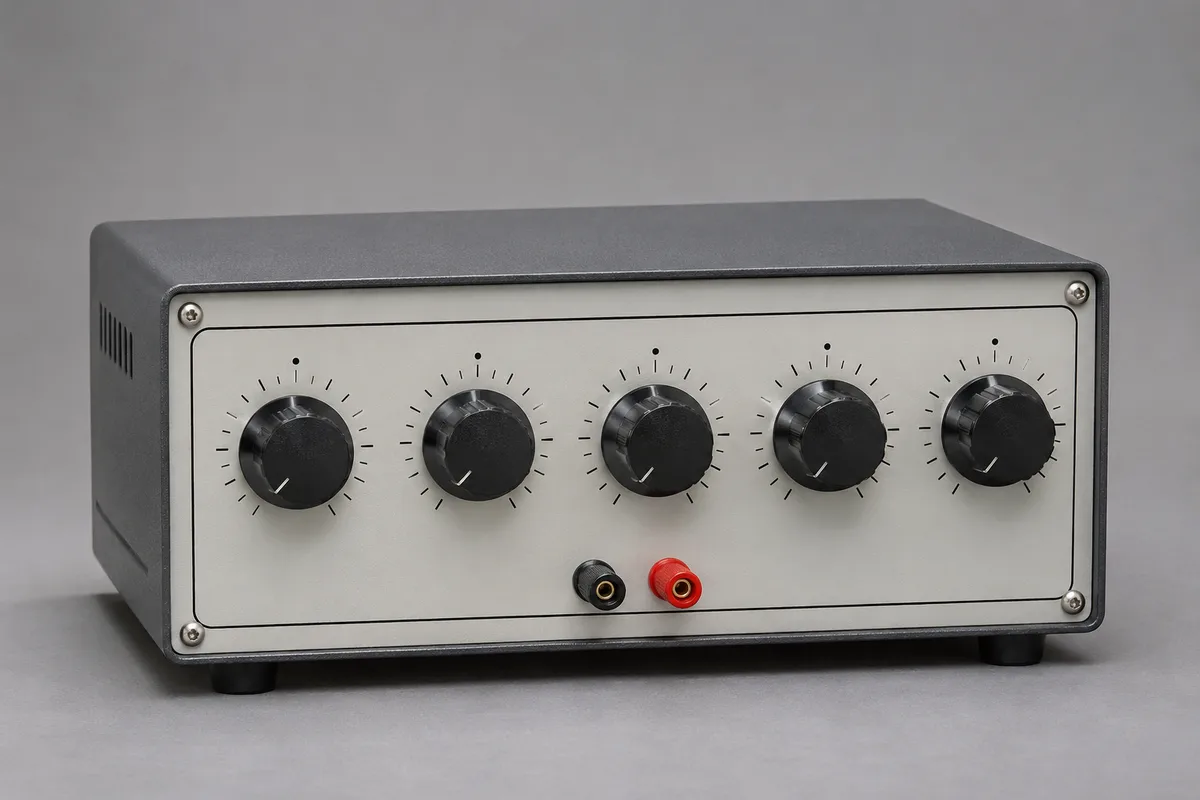
- IET Labs GenRad 1491 is a precision decade inductor. Identify the exact variant and its rated frequency and current.
- What we check
- Measure the zero setting and selected decades with a consistent series or parallel model. Record the applied current and frequency.
- Reference equipment and accuracy
- Use a calibrated inductance bridge or LCR instrument with suitable standards. Determine the correction for the connecting fixture.
- When to repeat the check
- Review any change in the zero setting or repeatability after the unit is moved or a selector serviced.
Technical references IET Labs GenRad 1491 inductance boxes