
Read the marking together with the previous result
Give the nominal value, serial number and marked tolerance where available. A previous certificate can identify the terminal arrangement, reference temperature and current used for an earlier result. If your laboratory needs to continue that history, specify the same conditions or explain the change being requested.
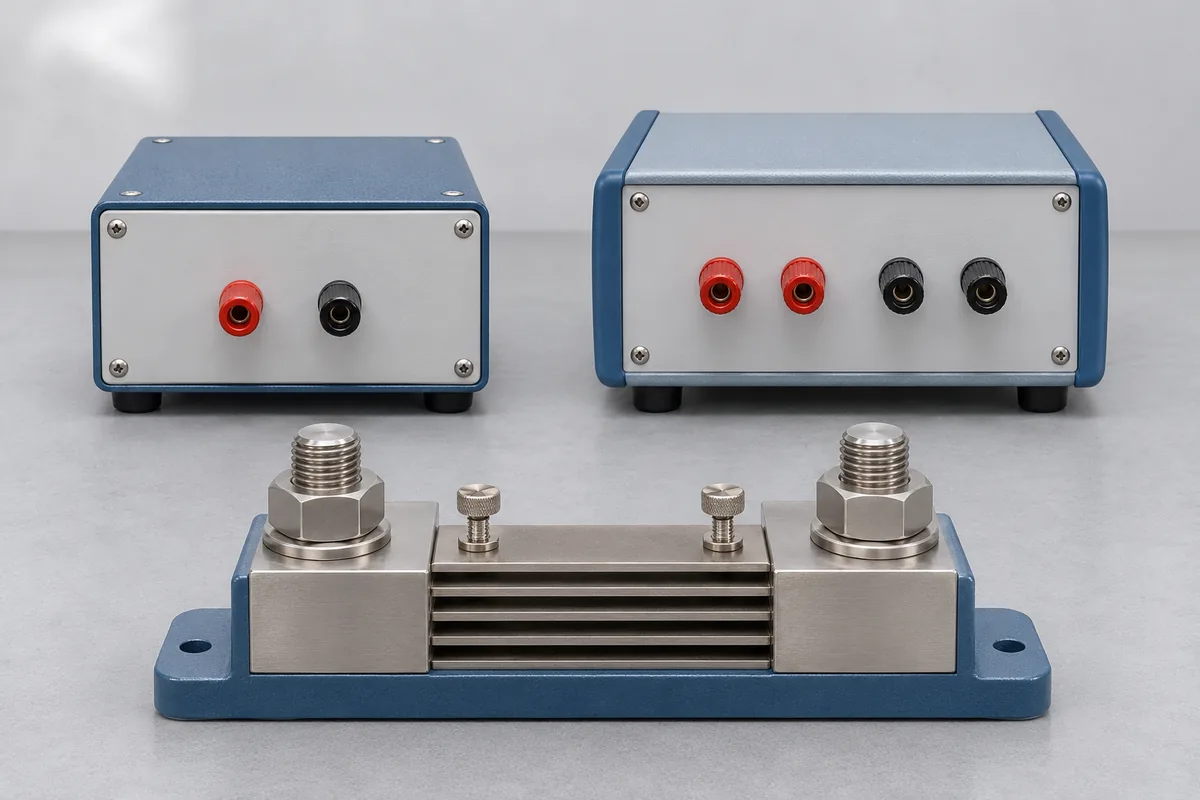
For a shunt used to infer current from a measured voltage drop, include the working current points and the measurement unit your records use. State whether the enquiry concerns resistance, voltage drop at a stated current, or another specified characteristic. Ask for confirmation of the reported quantity before sending the item.
Identify the connections used in service
A four-terminal item has separate current and potential connections. Send a clear view of its terminal labels, including any special plugs or mounting block. Describe how it is supported and cooled during use if those conditions are specified by the maker. Current and temperature conditions can matter to the value recorded.
If the reference is kept in a controlled enclosure, tell RTS whether the enclosure can travel or whether the item is normally removed. Quote any required stabilisation instructions from its manual. The team can review the nominal value, available connections and requested uncertainty before confirming acceptance.
Returning a reference to the right owner
Put the owning laboratory's asset number on the dispatch note and name the person who receives the result. Identify any items borrowed from a shared reference kit. Confirm the packing and return route before the item leaves its usual enclosure.
Decade capacitance boxes
A decade capacitance box is a selectable reference, so record the dial combinations and terminals used as well as individual nominal values. Include the measurement frequency, applied level and any dissipation-factor requirement. Keep its previous assigned values with the request if your bench applies corrections. RTS will review the appropriate capacitance method; the resistance-decades entry should not be treated as coverage of capacitance merely because both instruments use decade switches.
Inductance boxes
For an inductance box, list each selected value, measurement frequency and connection arrangement. Identify whether a reported series or parallel representation is required and retain any winding-resistance information from the previous certificate. A reference used at one frequency may need a different result from the value printed on its case. RTS must review the inductance-specific reference method and accepted points before agreeing the work.