
On this page
Cup drop, operating rate and grooving tool
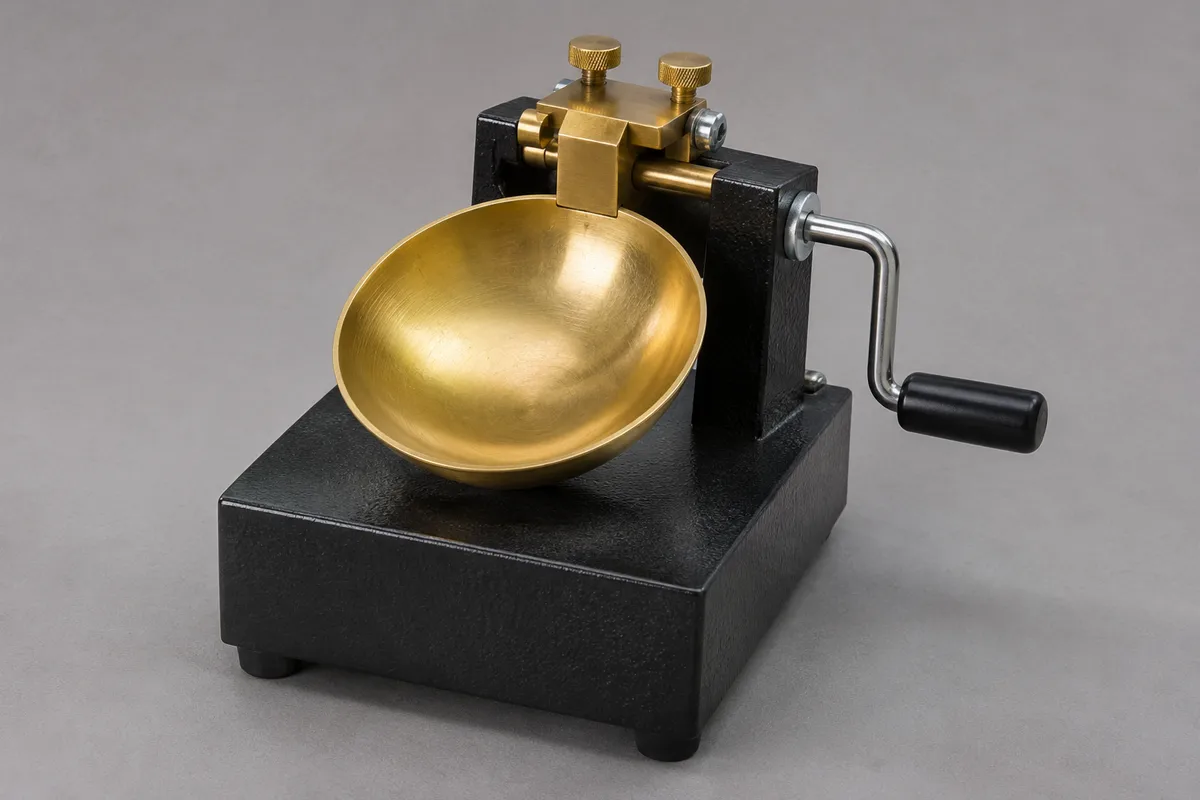
A soil laboratory may have both a hand-cranked cup and a motor-driven one. For the cup apparatus, send the cup and grooving tool your operator uses, together with the specified drop and, on a driven machine, its working rate. If the instrument on the register is actually a fall-cone model, its cone and penetration scale require different checks. A model number avoids quoting the wrong apparatus.
Liquid limit device
For a cup device, list the cup, base, grooving tool and controlled movement requirements. Include the counter or timing function if assessed. The equipment examination should use the applicable method's requirements; results from a different apparatus type should not be treated as automatically equivalent.
Specifications and service checks
A counter can advance correctly even if a worn base or cam changes the cup's drop. Identify the cup, cam and base as fitted and specify whether the enquiry concerns the mechanical drop, the counter or both.
- Range and configuration
- The cup lift, drop and operating count are relevant. Water content is measured elsewhere using a balance and drying equipment.
- Manufacturers and models
- Matest S170-06 is a cup-type liquid limit device.
- What we check
- Check cup drop against the specified gauge, inspect the base and pivot and compare the count or drive rate with an independent count.
- Reference equipment and accuracy
- Use a verified height gauge, timer and suitable dimensional reference for the grooving tool. Keep the tool and cup identities with their results.
- When to repeat the check
- Inspect for worn feet, pivot play and grooves before a test series. Recheck after the cup, cam or base is replaced.
Technical references Matest product reference