
On this page
Working liquid and pressure configuration
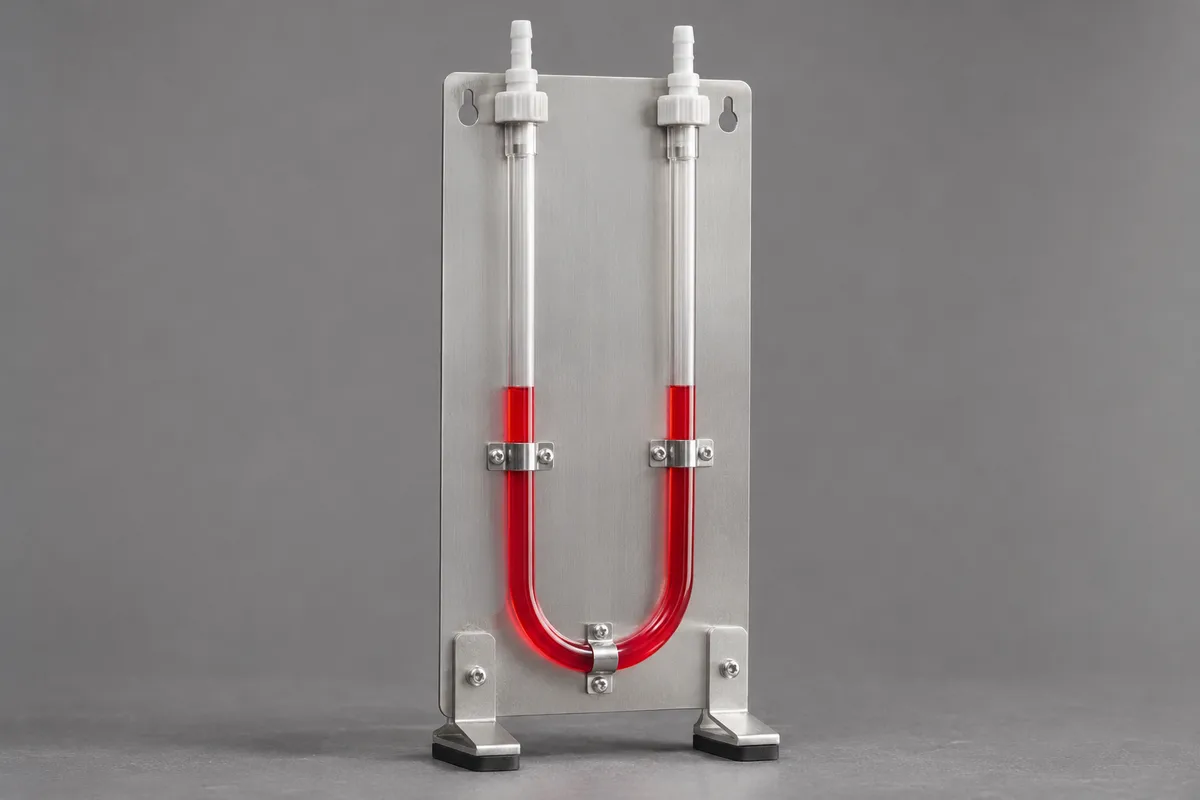
Identify the instrument configuration, the liquid specified by its maker and the reference marks normally read. Include any temperature or gravity corrections in your procedure. If it is a fixed laboratory installation, specify the point at which the pressure reference will be connected.
Liquid manobarometers
Give the pressure interval and explain whether the instrument records atmospheric or another reference pressure. Include the mounting and level-reference arrangement. RTS calibrates the filled instrument’s pressure indication with its liquid, temperature and mounting conditions recorded; a separate scale measurement addresses only the graduations.
Specifications and service checks
Two observers may record different heights if they use different fiducial marks or meniscus conventions. Identify the scale face, the liquid and the reference mark in a photograph of the installed instrument. It gives the reader a reliable starting point for interpreting older handwritten observations.
- Range and configuration
- Column instruments relate pressure to density, gravity and height. Identify whether the scale reads length or pressure and the temperature to which it refers.
- Manufacturers and models
- NIST describes liquid-column pressure standards measured by ultrasonic interferometry. Identify the liquid and scale design on the customer's instrument.
- What we check
- Compare the indicated atmospheric or differential pressure against a reference. Document the liquid temperature and the pressure reference at each column end.
- Reference equipment and accuracy
- Use a calibrated absolute pressure reference or traceable column-height and temperature measurements. Liquid density and local gravity affect the conversion.
- When to repeat the check
- Review after transport, liquid replacement or a shift in the zero or level reference.
Technical references Low Pressure Gauges