
On this page
Vial sensitivity and base length
Give the marked sensitivity, base length and working surfaces, including any V-base intended for shafts. Identify the reference direction and the span of divisions used when transferring level to a machine or secondary instrument.
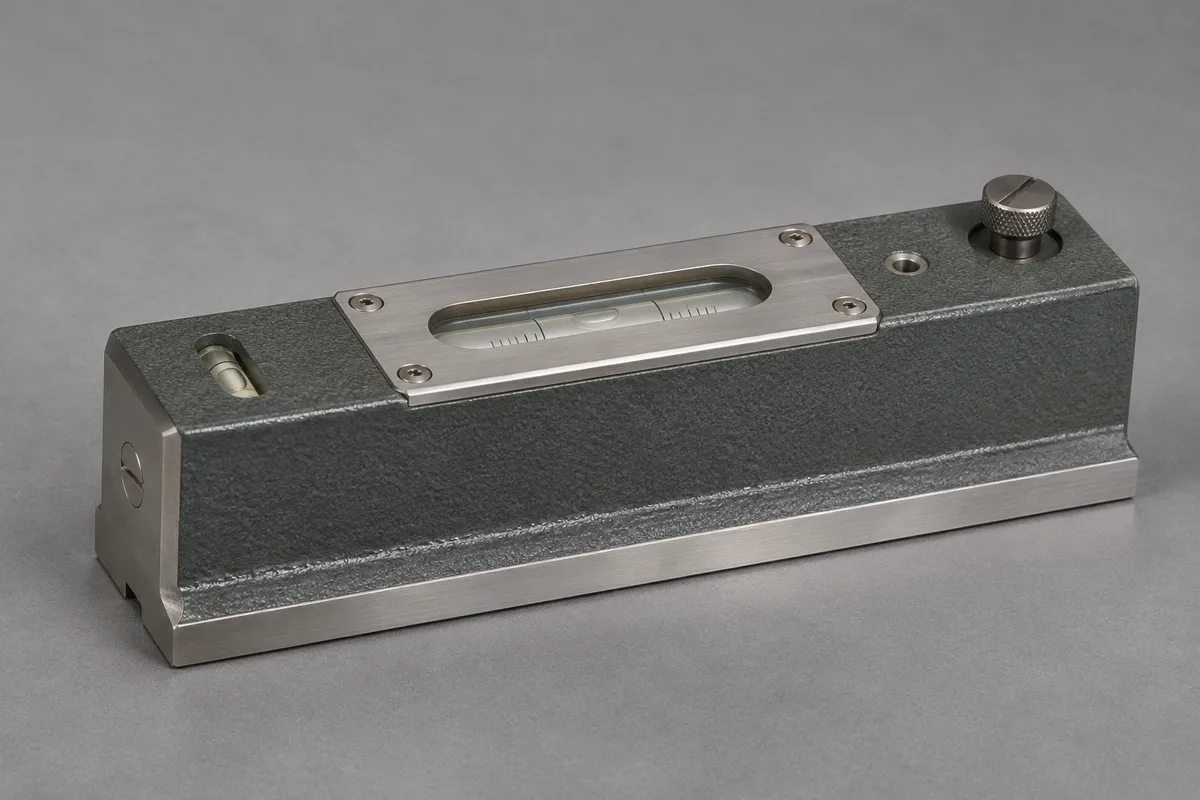
A reference level used to check a grinder table may carry a fine longitudinal vial and a coarser transverse vial. Include the transverse response only if it is read quantitatively. If it is simply centred during setup, record that role against the main reading.
Specifications and service checks
A precision vial marked 0.02 mm/m per division would indicate 0.04 mm/m for a two-division change. Phrase the observation as a slope until the physical span being aligned is known.
- Range and configuration
- Typical WYLER precision spirit-level sensitivities include 0.02 and 0.05 mm/m per division. Sensitivity expresses slope per division and is distinct from the base length.
- Manufacturers and models
- WYLER No. 48 and No. 58 are precision spirit levels with different mounting arrangements and sensitivity options.
- What we check
- Check zero by reversal and compare vial movement against known changes of slope. Use the working face or prism base that actually rests on the machine.
- Reference equipment and accuracy
- Use a calibrated tilt or sine reference that resolves fractions of the level’s own division. A base used for transferring level to another machine needs its reversal error recorded along with sensitivity.
- When to repeat the check
- Repeat the reversal check after transport and at the working temperature. Check more than zero if the vial or mounting has been replaced.
Technical references WYLER Precision level reference