
On this page
Jaw fit at the working depth
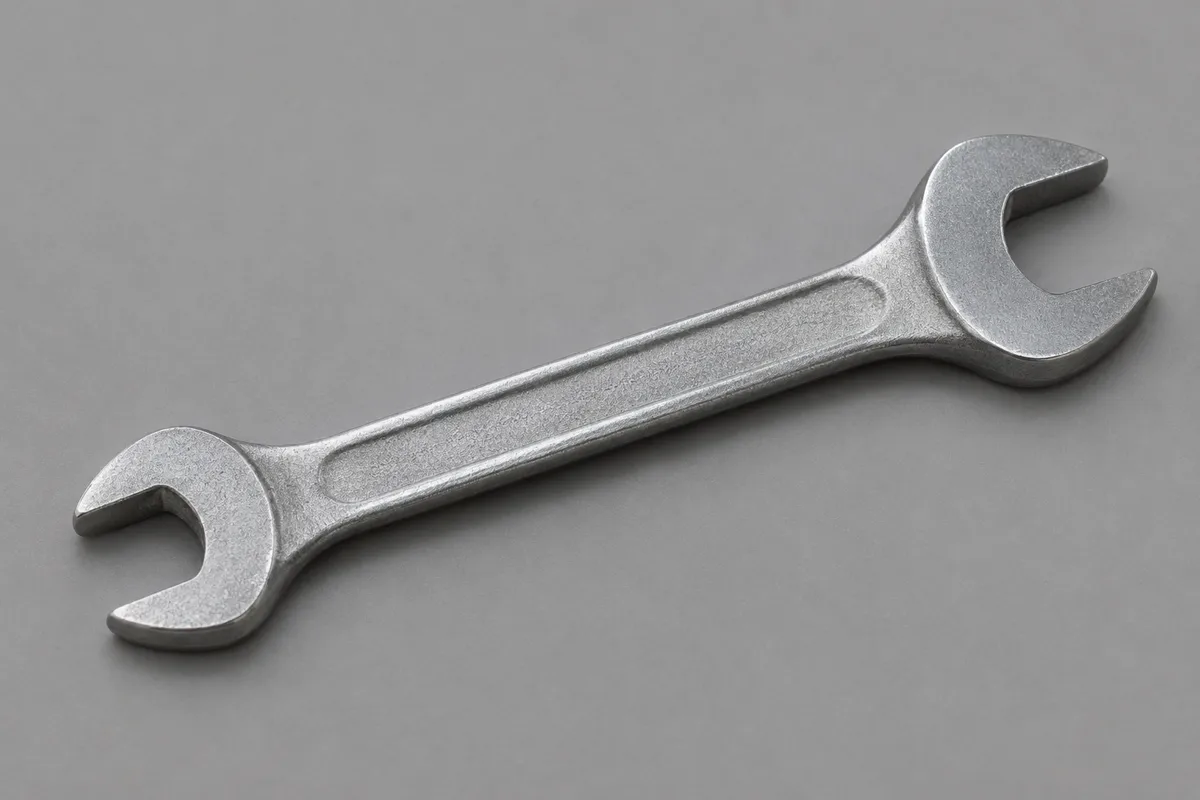
Identify the marked size at each end, the working depth and the dimensional or fit requirement in the drawing. If a reference gauge is used, record the particular jaw it tested. That keeps a check on a double-ended spanner unambiguous.
When jaws have worn at the tips, they can still fit a gauge nearer the throat. If the tool crib uses a fit gauge for acceptance, say how far the gauge must enter. For a spanner used with a thin locknut, head thickness can be a separate dimension on the order.
Open end spanner fit and measurement
A specified opening dimension can be an inspection feature when the drawing or tool-control procedure requires it. State that feature explicitly. For an extension used with a torque instrument, give the assembled configuration and relevant procedure instead of requesting calibration of the spanner alone.
Specifications and service checks
A jaw that has spread may still sit neatly across a fastener near the handle end of the opening. Identify the working contact position when reporting poor fit at the jaw tips.
- Range and configuration
- The jaw size is the across-flats opening. Any electrical insulation marking belongs to a separate product and test specification.
- Manufacturers and models
- Bahco lists the 6MV-6 in a 6 mm size.
- What we check
- Check the opening near the working faces and look for splayed tips. Record dimensions and physical condition against the asset ID.
- Reference equipment and accuracy
- Use calibrated go/no-go gauges or a suitable length measuring instrument. A visual inspection of a coating supplies no dielectric test value.
- When to repeat the check
- Verify after deformation or a slipping complaint. Identify an insulated tool separately at issue.
Technical references Bahco product reference