
On this page
Input levels and the phase convention
Give the two input types, levels, frequency and the phase convention used in your procedure. Include angles on both sides of zero if either direction matters. If the display is in degrees but the acceptance record uses power factor, specify the quantity you want reported.
Phase meters and the two signals being compared
Give the voltage or current inputs, frequency, selected channels and leading or lagging convention used by your procedure. Identify transformers or probes that form part of the comparison. RTS measures the phase relationship between the two signals as well as the requested AC amplitudes.
Specifications and service checks
A delay of 1 ms represents an 18° phase difference on a 50 Hz sinusoid. The same delay represents 21.6° at 60 Hz. Give the operating frequency with any delay or phase requirement so the two descriptions refer to the same condition.
- Range and configuration
- Specify angle in degrees, lead or lag convention, frequency and signal level. A reversed channel assignment can change the reported sign.
- Manufacturers and models
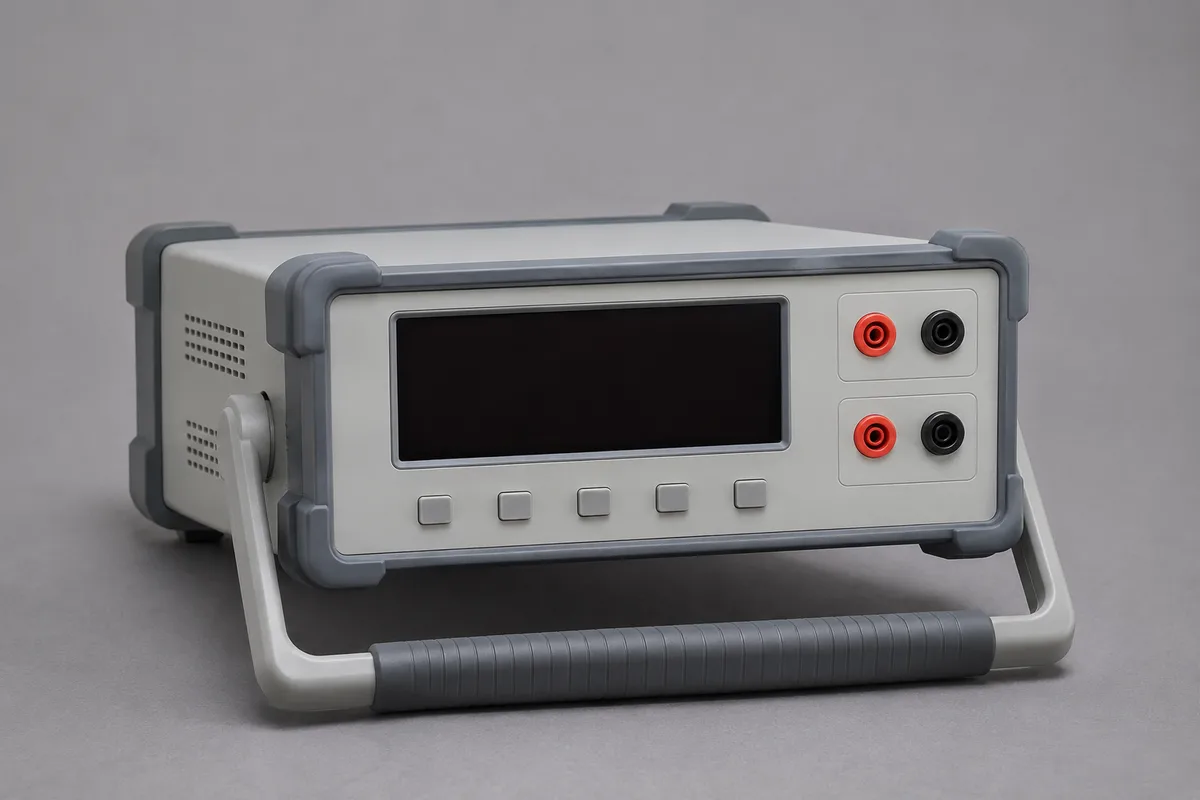
- Megger PAM420 measures phase angle between selected voltage or current signals. Record which two channels form the reference pair.
- What we check
- Apply pairs of signals with known phase separation on either side of zero and at the quarter-cycle points used in service.
- Reference equipment and accuracy
- Use a calibrated phase source or a synchronised source verified with a reference phase meter. Include channel timing differences at the selected frequency.
- When to repeat the check
- Recheck following a channel repair or a change in leads or current probes used for the comparison.
Technical references PAM420 - Multifunction phase angle meter