
On this page
Jaw gap, fitted dies and stops
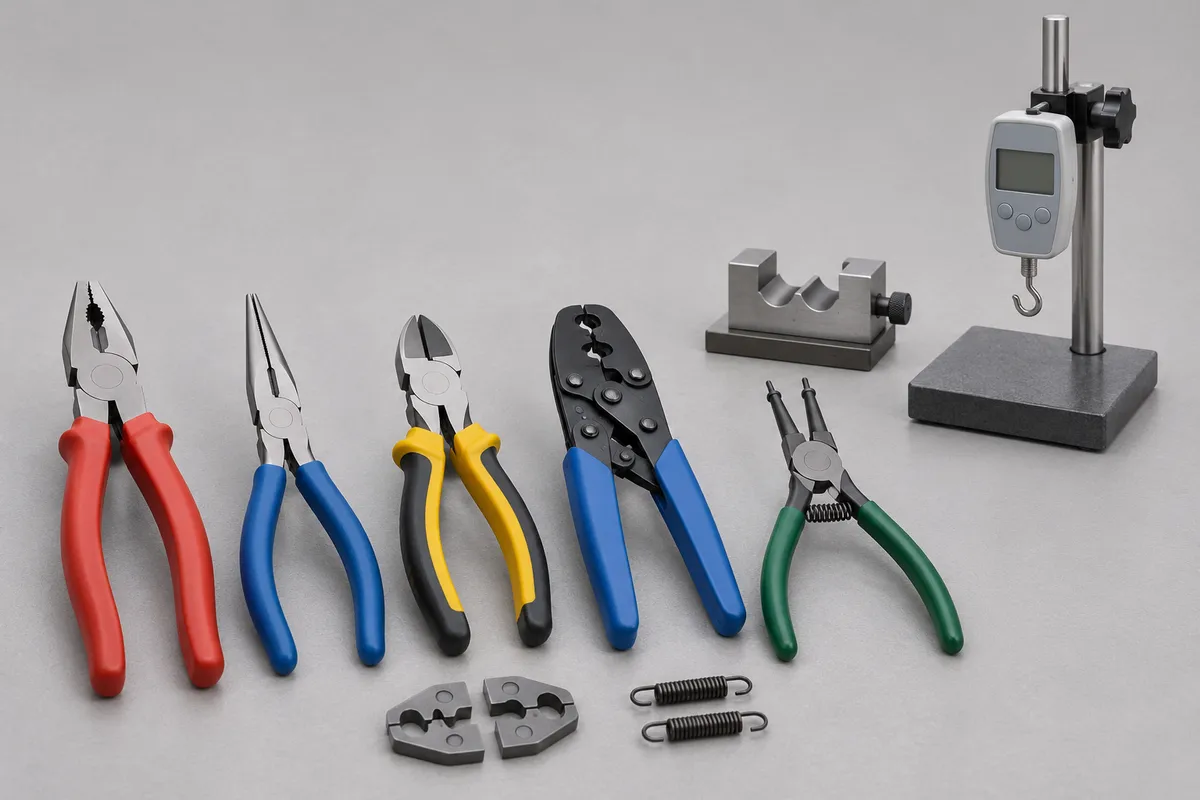
A general-purpose pair and a pair made to close to a fixed stop need different inspections. For the second, mark the point on the jaws where your drawing specifies the gap. Include the jaw insert or die that was fitted. If the job concerns a crimp, identify the relevant crimp gauge or force instrument alongside the pliers so the finished crimp and tool are assessed on the right basis.
Pliers and specified crimping or gripping checks
Give the exact tool type and the required feature or test result. Jaw dimensions, pull strength of a finished joint and an indicated force are separate questions. RTS measures the specified gripping, crimping or dimensional characteristic against the stated requirement.
Specifications and service checks
A pair used for crimping and a pair used only for gripping may look similar in an asset register. Record the die marking or jaw profile if the inspection is meant to address a particular finished joint.
- Range and configuration
- Nominal length identifies the tool size. The type of nose or cutter determines which jaw dimensions and closing gaps are meaningful.
- Manufacturers and models
- Bahco offers pliers with different jaw profiles and handle lengths. STANLEY lists 160 mm end nippers and 200 mm long-nose pliers in its FATMAX family.
- What we check
- Inspect pivot play and jaw alignment. Measure opening or cutting-edge clearance only against a defined drawing or purchaser limit.
- Reference equipment and accuracy
- Use calibrated feelers or a length instrument suited to the gap. Document which point on tapered jaws was measured.
- When to repeat the check
- Inspect heavily used pairs more often. Recheck a pair that binds, slips or has damaged insulation.
Technical references Bahco product reference · STANLEY product reference