
On this page
Specifying the end and fit to inspect
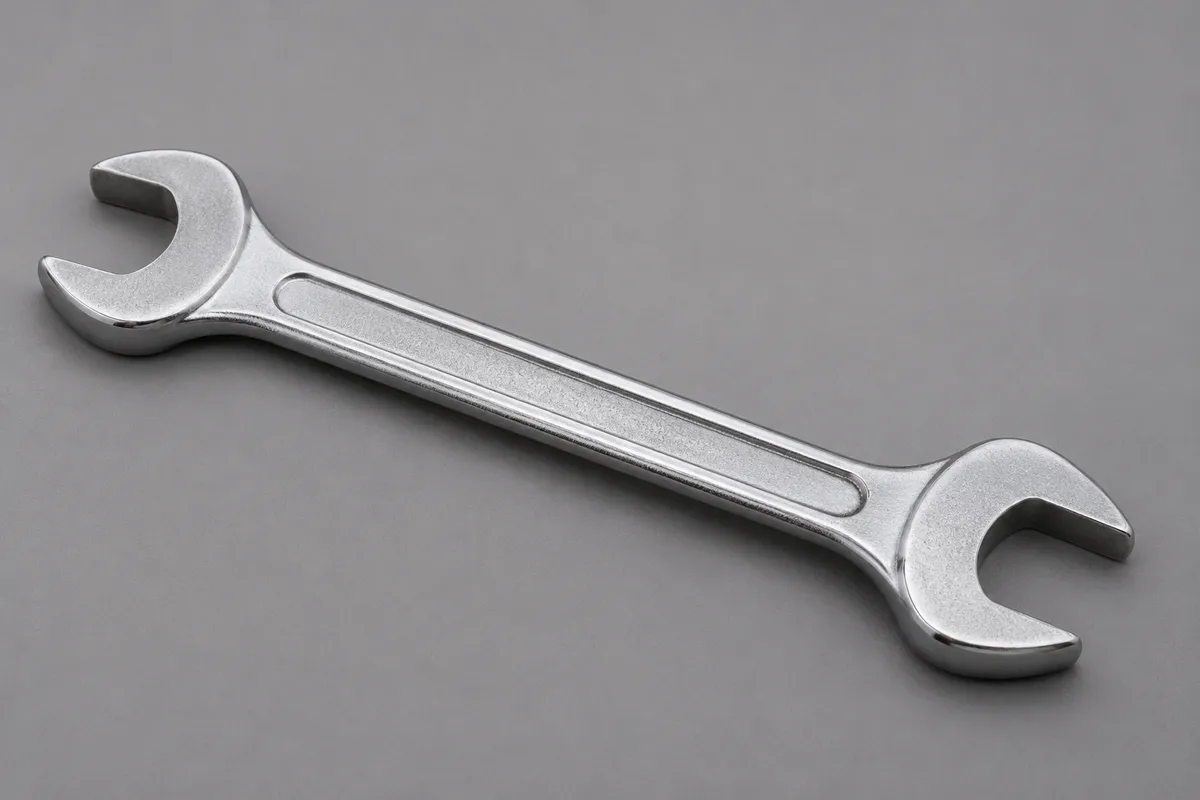
If a 24 mm spanner slips on one fastener, a note that it is ‘24 mm’ gives us the nominal size but little about the fault. Mark the end involved, the depth at which it engages and whether you want a dimension or a fit check to a reference. For a special spanner, include its drawing revision. Identify any torque-limiting or indicating attachment separately.
Spanner descriptions on a mixed tool list
Most spanners have no measuring function; a dimension, fit or specific assembly requirement must be stated before an inspection can be defined. If the item is a torque wrench, identify it as such and include its range instead of treating it as an ordinary spanner.
Specifications and service checks
An imperial spanner and its nearest metric size can look interchangeable in a tool drawer. Copy the unit and stamping before an opening-size check so a loose fit is assessed against the intended size.
- Range and configuration
- Bahco lists both a 28 mm tool and an 85 mm 111M-85 in this family. Start with the marked fastener size and the type of end. An offset ring, open jaw and adjustable jaw require different measurement positions.
- Manufacturers and models
- Bahco’s 111M family is one example of a metric spanner range.
- What we check
- Check opening or profile against the relevant nominal dimension. On adjustable tools include play and the position used for measurement.
- Reference equipment and accuracy
- Use a calibrated dimensional reference selected for the jaw and its tolerances. A tighter scale graduation does not correct for worn or uneven jaw faces.
- When to repeat the check
- Review wear at issue and when a fastener starts slipping. Record the observed feature against the individual tool.
Technical references Bahco product reference