
On this page
Cuff, tubing and dial divisions
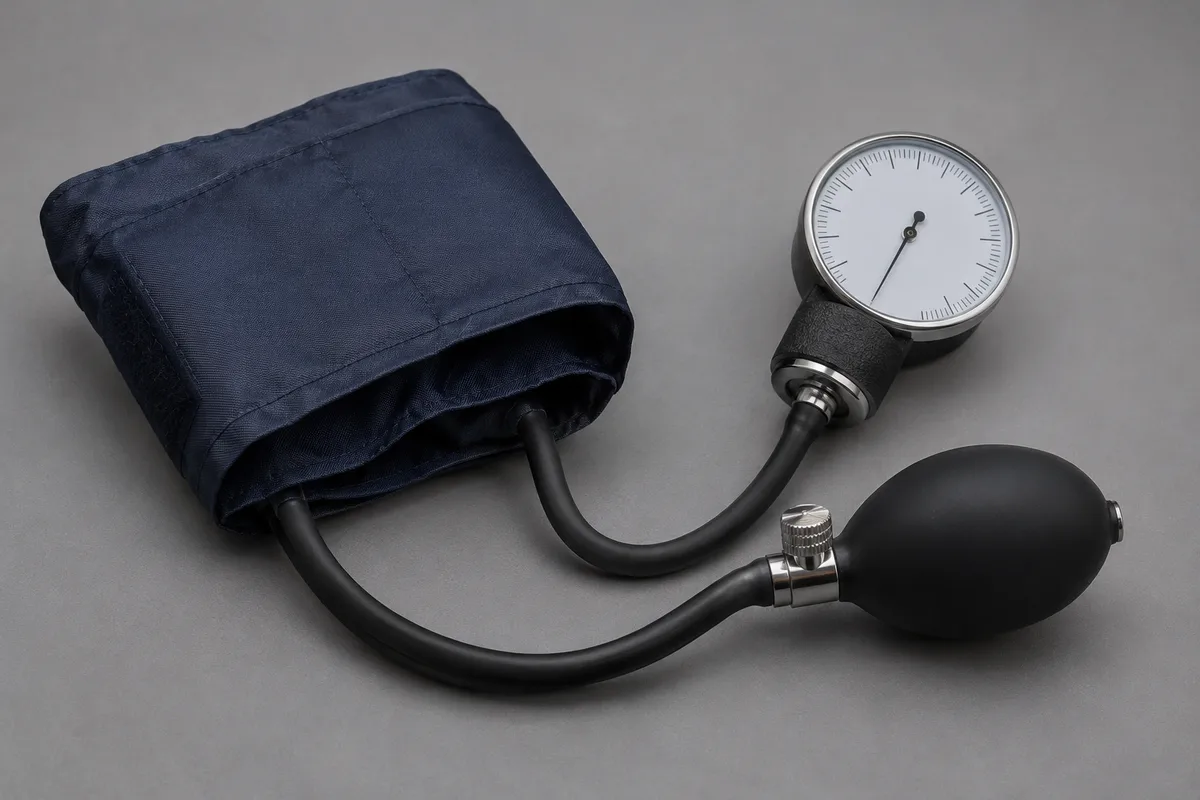
Give the dial range, scale interval and cuff and tubing assembly that travel with the gauge. If several cuffs share one gauge, tag the gauge independently. For an automatic or electronic unit, identify the model so its pressure-display check can be distinguished from pulse simulation.
For a wall-mounted gauge, also identify the tube and cuff used at the station. If the pointer is visibly displaced with no pressure applied, note its position before any adjustment. Keeping that observation makes the first set of results easier to reconcile with the defect reported by staff.
Specifications and service checks
A dial may return to zero even if its pointer sticks part-way down the scale. Mention the pressure region and direction where the sticking occurs. It gives the workshop a reproducible observation alongside the ordinary static comparison.
- Range and configuration
- Use the actual dial span and graduations. Note the gauge’s zero condition and specified error before selecting the comparison points.
- Manufacturers and models
- Welch Allyn’s DuraShock DS44 is a mechanical aneroid gauge for pressure measurement.
- What we check
- Compare the gauge against a traceable pressure reference at points on the rising and falling scale. Check leakage separately when the assembled pneumatic system is supplied.
- Reference equipment and accuracy
- Select a pressure reference covering the full dial with uncertainty suitable for the gauge tolerance. Record the pressure unit and whether the cuff and tubing formed part of the test.
- When to repeat the check
- Review after a drop, damage to the pointer or a repair. Follow manufacturer guidance and the gauge’s results when setting recall.
Technical references Welch Allyn product reference