
On this page
Material size on a roller tension gauge
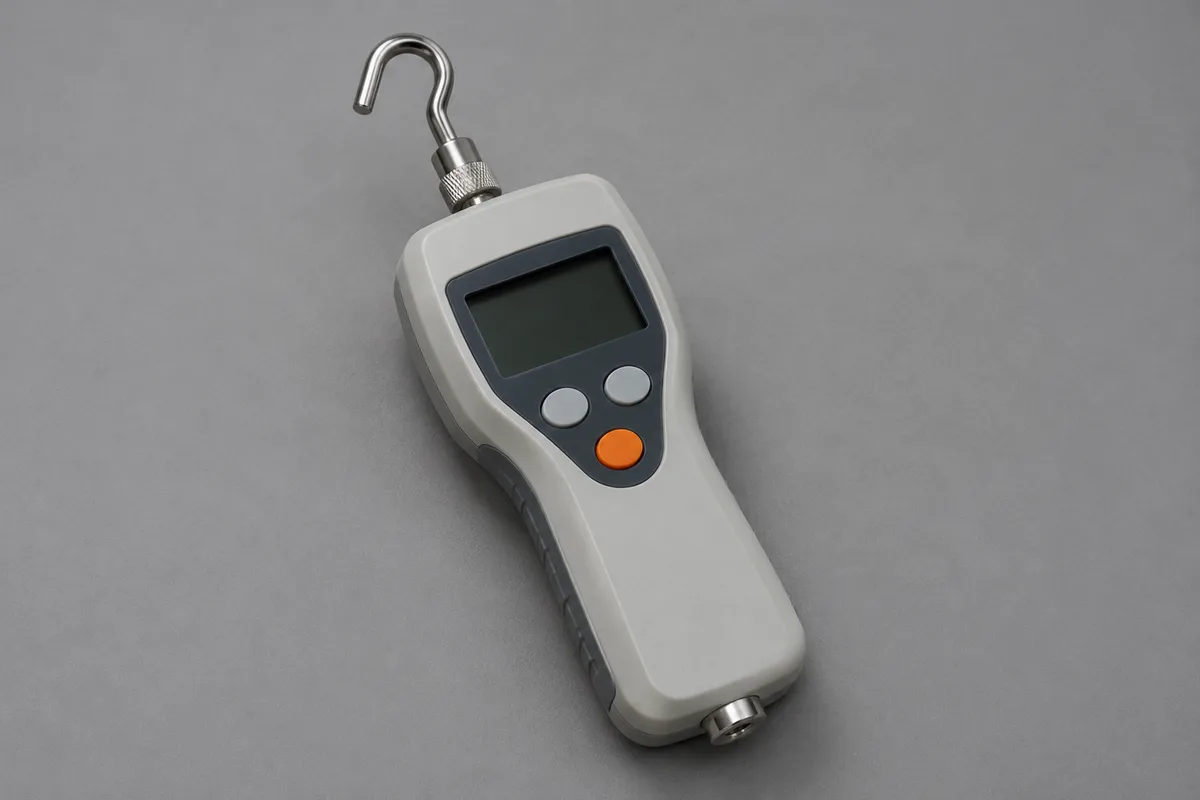
A three-roller yarn gauge can give a different result after a change in yarn size, even at the same line tension. Tell us the material, size, head and units your line uses, and whether readings are normally taken with the line moving. For a straight-pull gauge the useful details are different: a photograph of its end fittings and a list of the forces used are a better starting point.
Tension gauge material and geometry
A gauge used on a wire, belt or strip retains the material, size and contact geometry with its working range and units. Those conditions connect the reference result to the product being measured. When material or geometry changes, the next comparison identifies that new arrangement explicitly.
Specifications and service checks
A textile line may display tension in centinewtons while a portable reference shows newtons. A target of 250 cN is 2.50 N. Record the strand material and motion state too when comparing an inline reading with a hand-held check.
- Range and configuration
- SCHMIDT’s DX2 family spans variants from 10–50 cN to 5–20 daN. The material, diameter and path through a roller gauge affect the measurement.
- Manufacturers and models
- SCHMIDT DX2 is a three-roller mechanical tension meter. A direct-pull gauge requires a different fixture and reference arrangement.
- What we check
- Compare the display with traceable tension in the specified strand or test material. For an in-line pull gauge, compare force directly along its loading axis.
- Reference equipment and accuracy
- Use calibrated weights or a reference load cell suited to the tension range. On roller instruments include the material used, because stiffness changes the response.
- When to repeat the check
- Check a working tension after a roller change or material change. Use drift and frequency of threading to review the interval.
Technical references Mechanical Tension Meter DX Series - Hans Schmidt