
On this page
Dosing units and electrode inputs
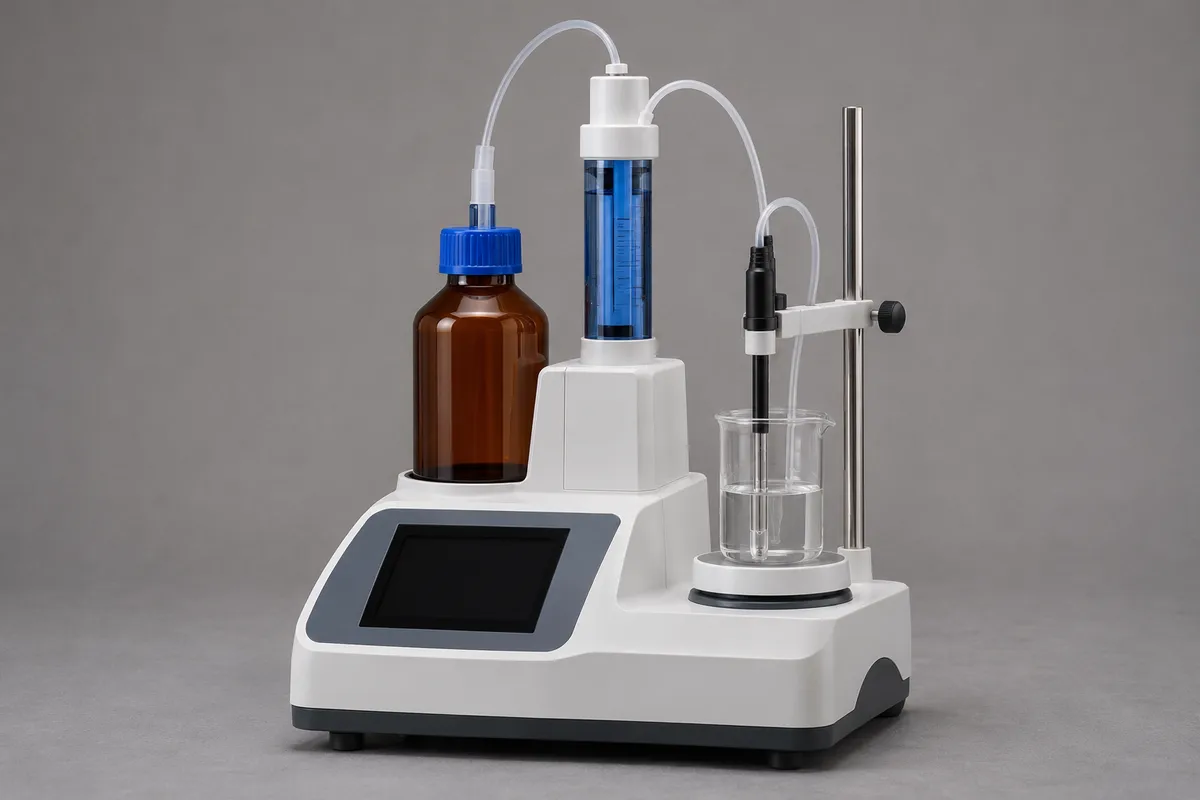
Label removable dosing units individually and note their nominal capacities. If the device uses more than one electrode input, identify the channel in the report. This prevents one successful system check from being applied to a different dosing or electrode combination.
A repeat order from a laboratory with two exchangeable burettes should name the burette as well as the titrator. The same drive can operate both dosing units. If one was replaced after the last service, use its current identifier when requesting delivered-volume results and retain the electrode-channel check under the instrument’s tag.
Titrator delivery, electrode and endpoint records
RTS measures the specified delivery volume and electrical functions and checks performance with the reference material required by the protocol. The dosing-unit capacity, electrode type, reagents and endpoint method remain attached to those observations. Instrument checks and validation of the complete titration calculation are recorded separately.
Specifications and service checks
After a dosing cylinder is changed, a laboratory can still use the same endpoint settings on the host instrument. Identify the cylinder volume and the actual dose interval to be checked. This separates delivered volume from the electrode and software functions used to locate the endpoint.
- Range and configuration
- A dosing unit has a volume capacity, whereas a titrator reports a chemical result. Volumetric and coulometric Karl Fischer instruments have different measuring principles.
- Manufacturers and models
- Metrohm’s Eco Titrator is a volumetric titrator, and its 915 KF Ti-Touch is a volumetric Karl Fischer system.
- What we check
- For a volumetric system, compare delivery from the identified dosing unit and check the relevant measuring input separately. Document any chemical performance check using an assigned reference appropriate to the method.
- Reference equipment and accuracy
- A calibrated balance and thermometer can support dosing-volume measurements. For a water-content check, use a suitable certified water standard with stated uncertainty, validity and units.
- When to repeat the check
- Review the affected functions when a dosing cylinder or electrode changes. Reagent standardisation and instrument calibration can require different schedules.
Technical references Metrohm Eco Titrator manual · Metrohm 915 KF Ti-Touch manual · ISO 8655-6 gravimetric volume determination