
On this page
Matching the measuring tools to their kit
For a kit inspection, list each measuring instrument, its serial number and the accessories stored with it. Identify empty positions or shared items before the case changes hands. Calibration results can then be filed against the instrument while the return record refers to the kit.
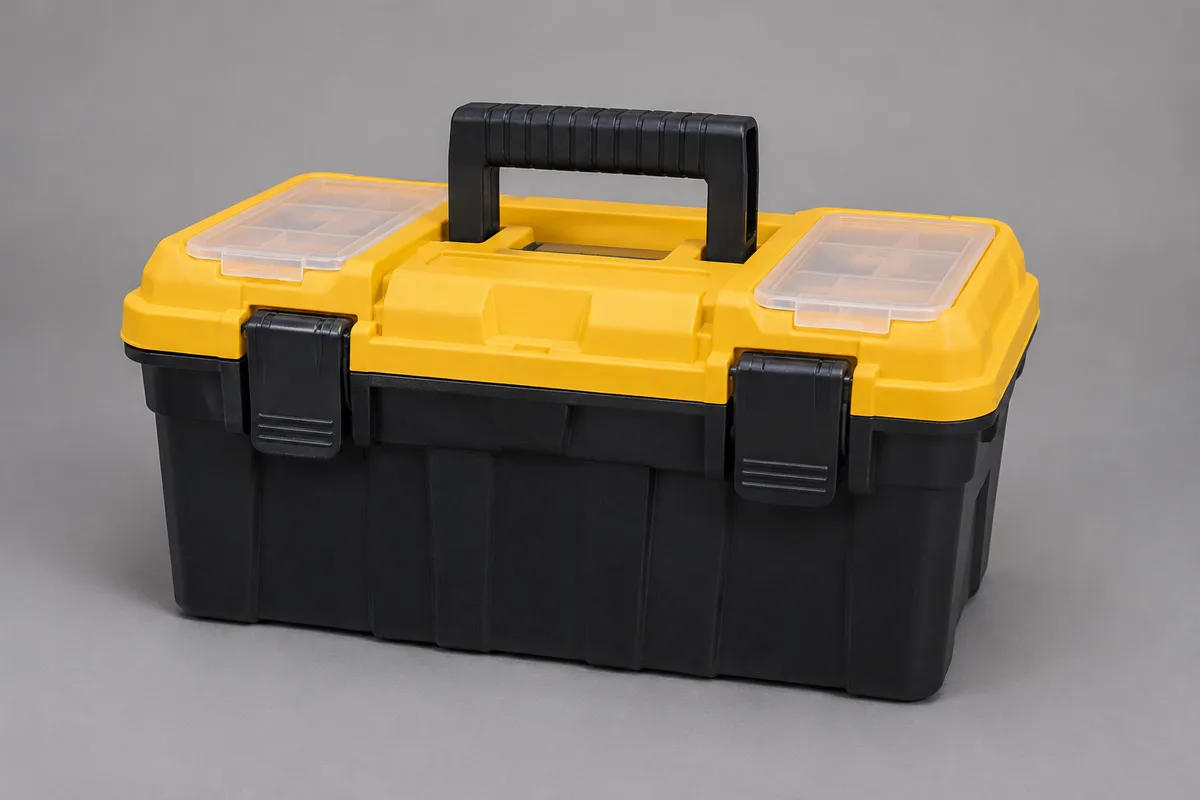
Tool box and the instruments inside it
Give the case an inventory number if that helps stores, then list every measuring instrument inside under its own identifier. Keep reference standards, ordinary tools and spare accessories distinguishable. A certificate for one instrument should not be presented as covering the whole box or all of its contents.
Specifications and service checks
A box used on several lines may contain measuring tools, hand tools and unattached accessories. List the asset tags of the measuring items individually. Keep a photograph of the packed tray if stores also needs a completeness check.
- Range and configuration
- A toolbox marked 470 mm can have a smaller internal usable length. Carrying capacity, contents and any gauge stored inside are separate attributes.
- Manufacturers and models
- Bahco lists tool-storage boxes in sizes including 470 and 670 mm. STANLEY offers a modular rolling toolbox for larger kits.
- What we check
- Check identity, latch condition and inventory. If a contract specifies box dimensions, measure the named external or usable internal features.
- Reference equipment and accuracy
- Use a calibrated rule or tape for size acceptance. Each measuring instrument in the box retains its own reference requirements and due date.
- When to repeat the check
- Check contents when custody changes. A case condition check and its contents’ calibration records serve different purposes.
Technical references Bahco product reference · STANLEY product reference