
On this page
Output torque with the driving wrench
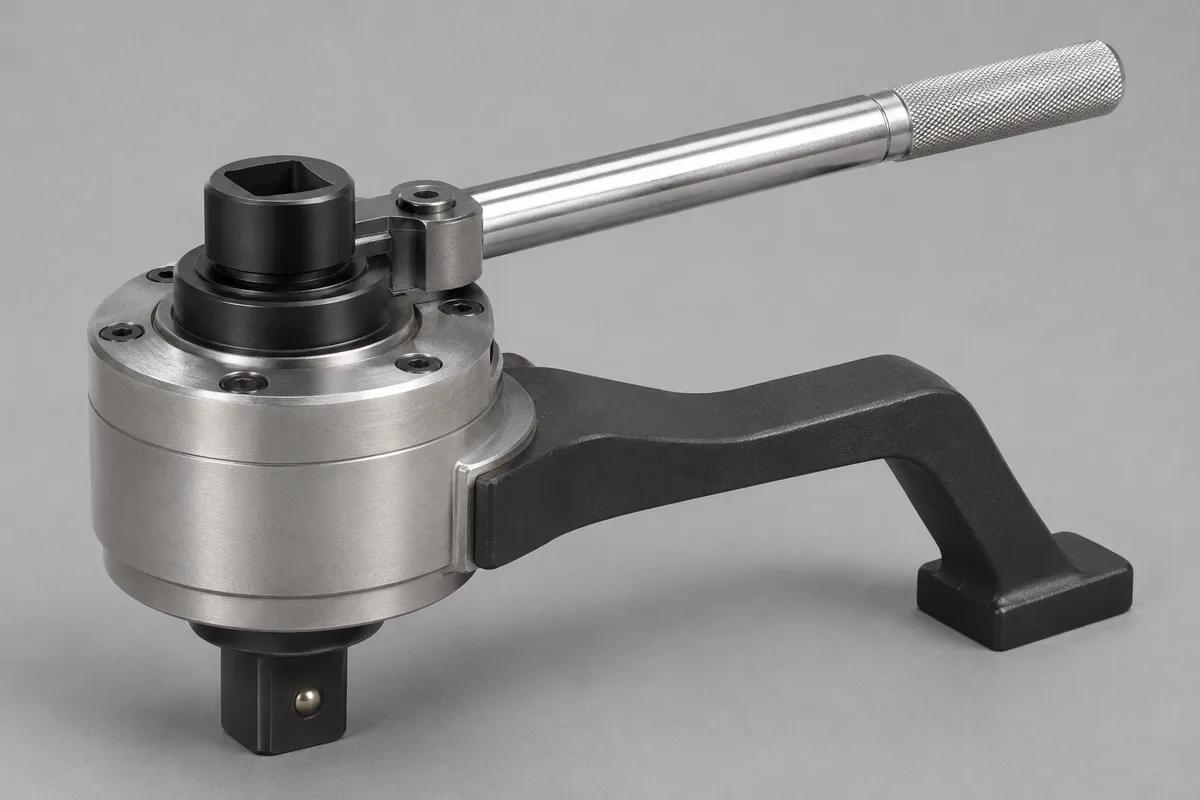
When the tool room issues a wrench and multiplier as a pair, the user needs to know the torque delivered at the output drive for a stated wrench setting. If the multiplier goes out on its own, it may be the measured input-to-output ratio that belongs on the certificate. Identify the direction, reaction arm, input and output drives and any anti-wind-up device. Give the output torques used on the job.
Torque multiplier input and output
The model, nominal ratio and direction of operation are recorded beside the selected torque points. Results distinguish the measured output from the nominal multiplication ratio. Where the multiplier is checked as an assembled system, the report identifies the fixtures and torque references used on both sides.
Specifications and service checks
A nominal 5:1 gear ratio describes the mechanism. A 100 N·m input therefore suggests 500 N·m only in an ideal lossless case. For a tightening instruction, use the delivered relationship verified for the actual multiplier and direction.
- Range and configuration
- Norbar’s HT3-1000 is a 1,000 N·m output model. The marked ratio and output capacity refer to different quantities.
- Manufacturers and models
- Norbar HandTorque HT3-1000 is a manual multiplier. Quote its reaction attachment with the gearbox.
- What we check
- Compare input and delivered torque under load. Record direction, reaction arrangement and the ratio derived at the working torque.
- Reference equipment and accuracy
- Use independently calibrated input and output torque references. Each needs its own suitable range because the two torques differ substantially.
- When to repeat the check
- Review the ratio after gearbox work or overload. Condition and result history should inform the interval on a frequently issued multiplier.
Technical references Norbar Torque multiplier reference