
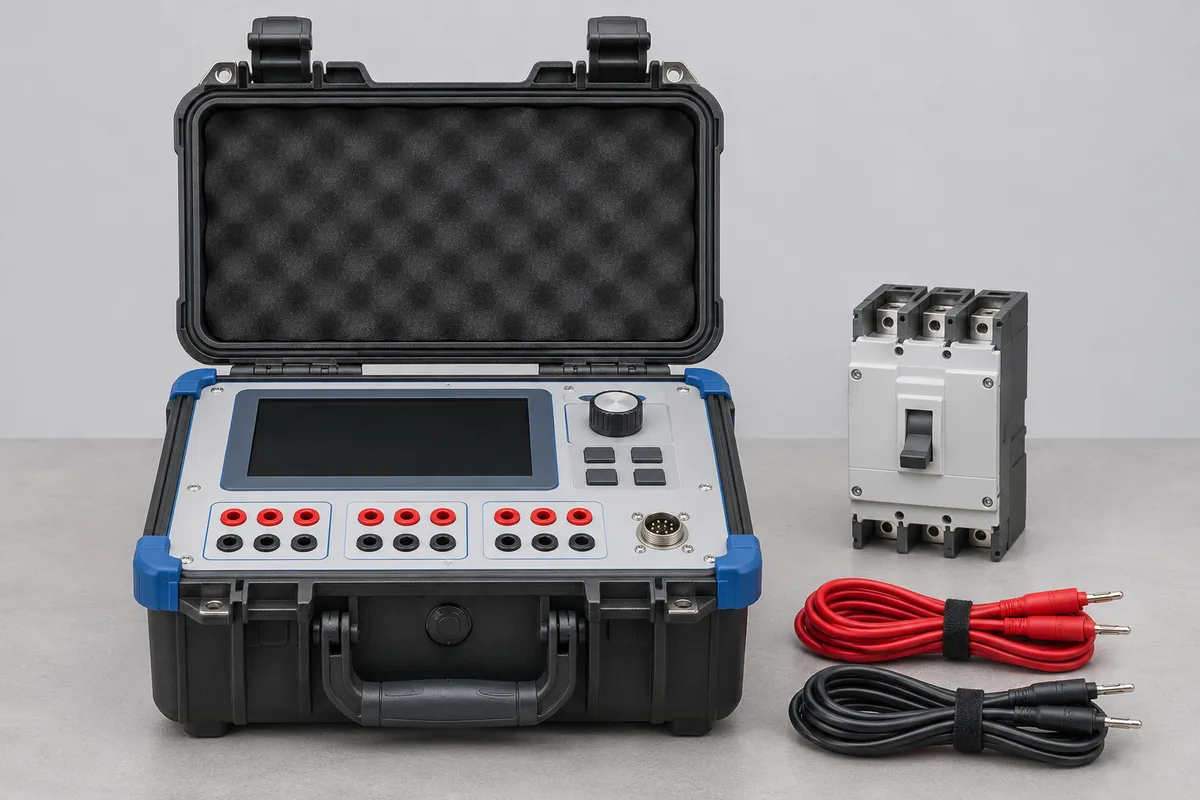
Tie the mechanism to the correct cubicle
Record manufacturer, breaker type, serial number, mechanism designation and pole count. Where a removable breaker can move between panels, give its current cubicle and mark the permanent breaker identifier separately.
Specify the timing evidence
List the operating sequences in the approved maintenance schedule and whether results are required by pole, for auxiliary contacts or with a motion record. Identify any baseline trace your reviewer expects to compare. A workshop oscilloscope used to investigate control signals has its own channel and timebase calibration requirements.
Making two timing reports comparable
An earlier report may identify three poles by colour while the current drawing labels them A, B and C. Give the test team the site's cross-reference and identify the operation used for the old result. The record should show which traces belong to the same operation so a reviewer can interpret differences between poles.
Where a breaker has been exchanged between cubicles, retain the serial number and mechanism identification with the result. A location tag alone can put last year's timing trace against the wrong unit. The site engineer can attach the old trace directly to the new test request.
Reserve access for the identified breaker
For a breaker serving an IMT Manesar production line, give the electrical supervisor’s release window and who will witness the job. For several units across India, record the spare or withdrawn unit separately from the breaker still assigned to each feeder.