
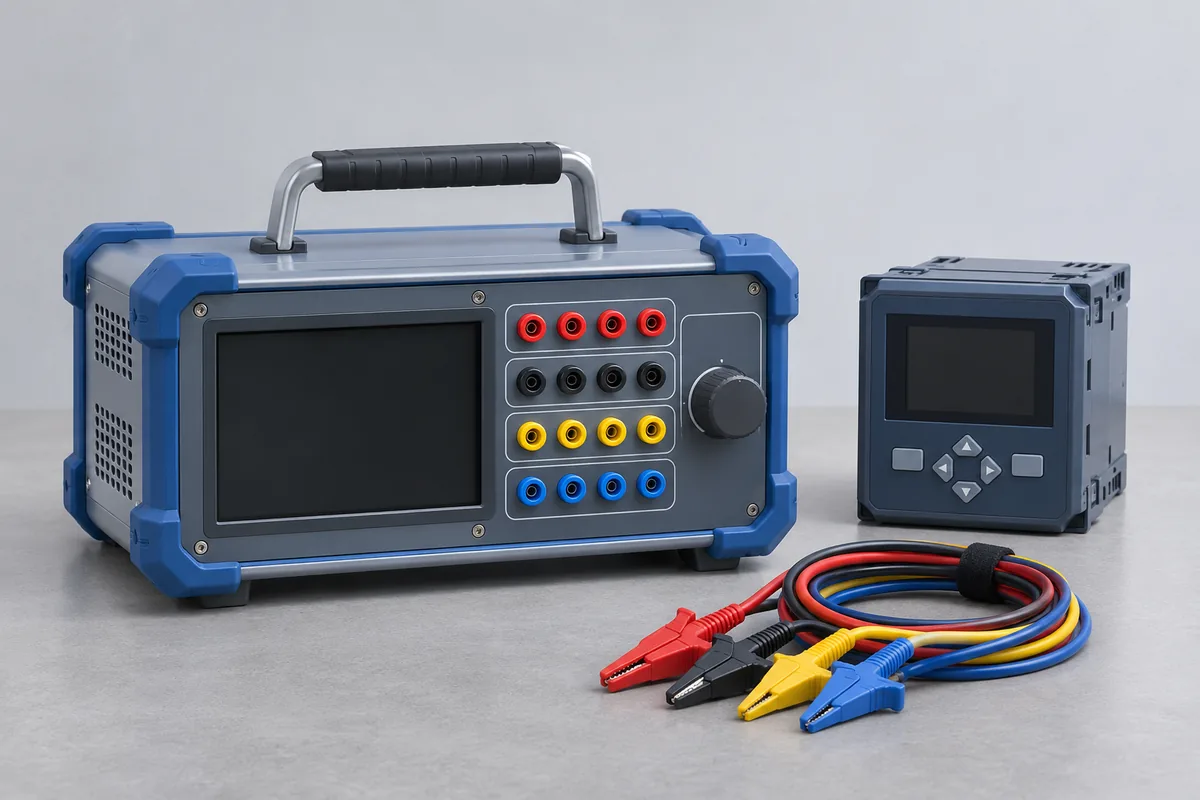
Identify the functions to be witnessed
Give the relay model, firmware identification if available, and the protection functions listed in the approved test schedule. Name the owner of the settings and identify the revision to be used. Agree a suitable route with the engineer for sharing the controlled file.
Define where the test ends
Specify whether you need a relay response record, operation of a nominated output contact or a wider scheme test. Identify the test-set evidence and witness signatures required. A digital multimeter used to check auxiliary measurements can have its calibration requested against its own asset tag.
Keep settings and test boundaries under one revision
The approved protection settings should be traceable to the relay and feeder named in the test record. Identify the current-transformer and voltage-transformer ratios used by the scheme, the active settings group and any logic or communication function included in the request. A relay response test and a test of the wider trip circuit have different boundaries; state which boundary the quotation must cover.
If results are to be compared with an earlier report, provide the earlier settings revision and note any change. Agree which output indications, operating times or other quantities the reviewer needs recorded, together with the owner’s acceptance limits. The authorised site team controls isolation, access and restoration. RTS will review the relay model and requested test arrangement before accepting the work; approval of the test record should identify any open item separately from completed measurements.
Match the feeder to the shutdown
Include the substation identifier and the authorised site contact. Show the permitted outage and witness contact against each feeder location. Confirm who owns the approved settings file and who will sign the restoration record before the equipment is released for the visit.