
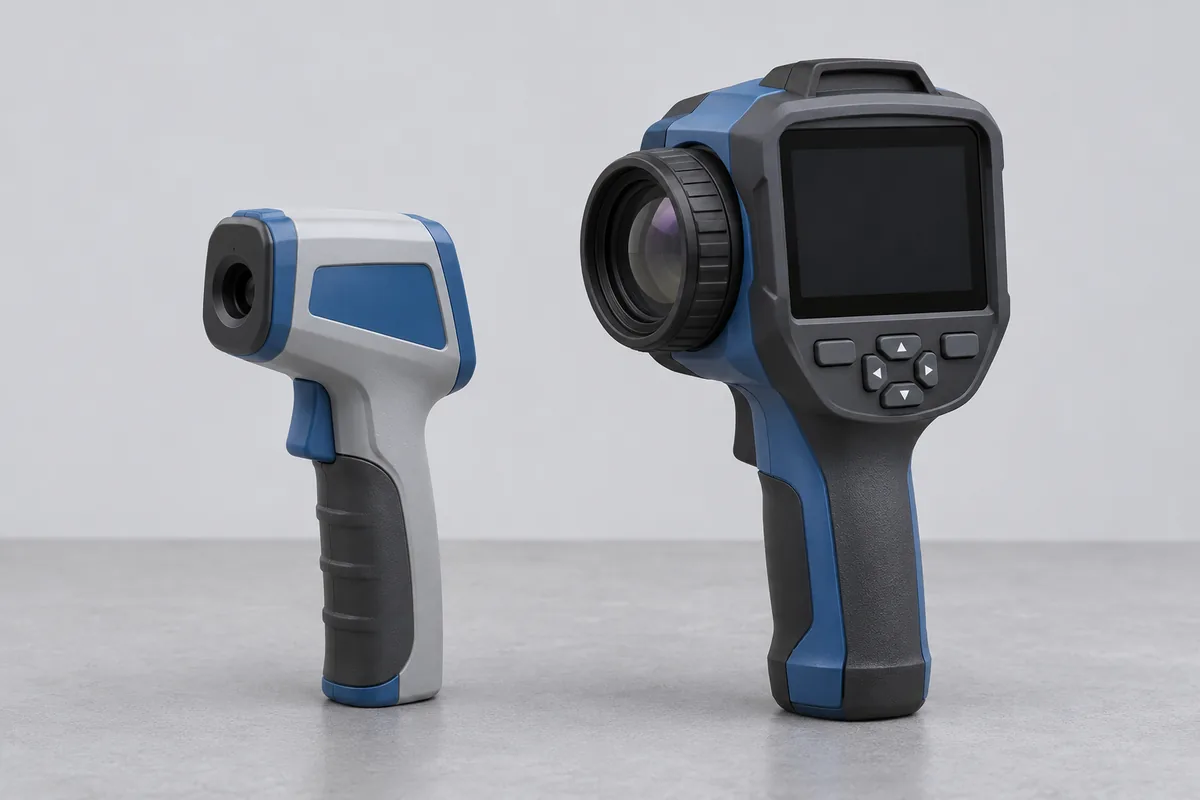
Keep the camera and lens identities together
Send the camera model and serial number, lens details and the temperature ranges selected during inspections. If you use interchangeable lenses, list each lens that needs to be included. Add any filter or protective window used in the measurement path and say whether it is part of the requested check.
Include the temperatures and tolerances relevant to your report, rather than only the camera’s widest advertised range. A wide-angle inspection lens and a lens used to view a small target from a distance do not describe the same setup.
Define the measurement to be checked
Give the working distance, target size and emissivity settings used in your procedure. Tell us whether you record a spot, an area or another measurement value. These details help establish the comparison against a suitable temperature reference and the configuration to record with the result.
Calibration addresses the camera’s measurement under the agreed conditions. The conclusion in a plant survey also depends on the surface viewed, reflections, access and the inspection procedure. An image that looks convincing is not by itself evidence of an accurate surface temperature. RTS will review the model and requested work before confirming the booking.
Fit the booking around inspection rounds
Give the date of the next inspection round and whether the camera can leave the site. Report a damaged lens, image defect or temperature disagreement at the enquiry stage; these may need assessment before calibration. Include the protective case and a list of the lenses being sent.
For cameras shared across Indian plants, identify the owner of each camera and lens. Ask for dispatch instructions and keep a record of the accessories sent with the unit.