
On this page
Volume markings and how the vessel is used
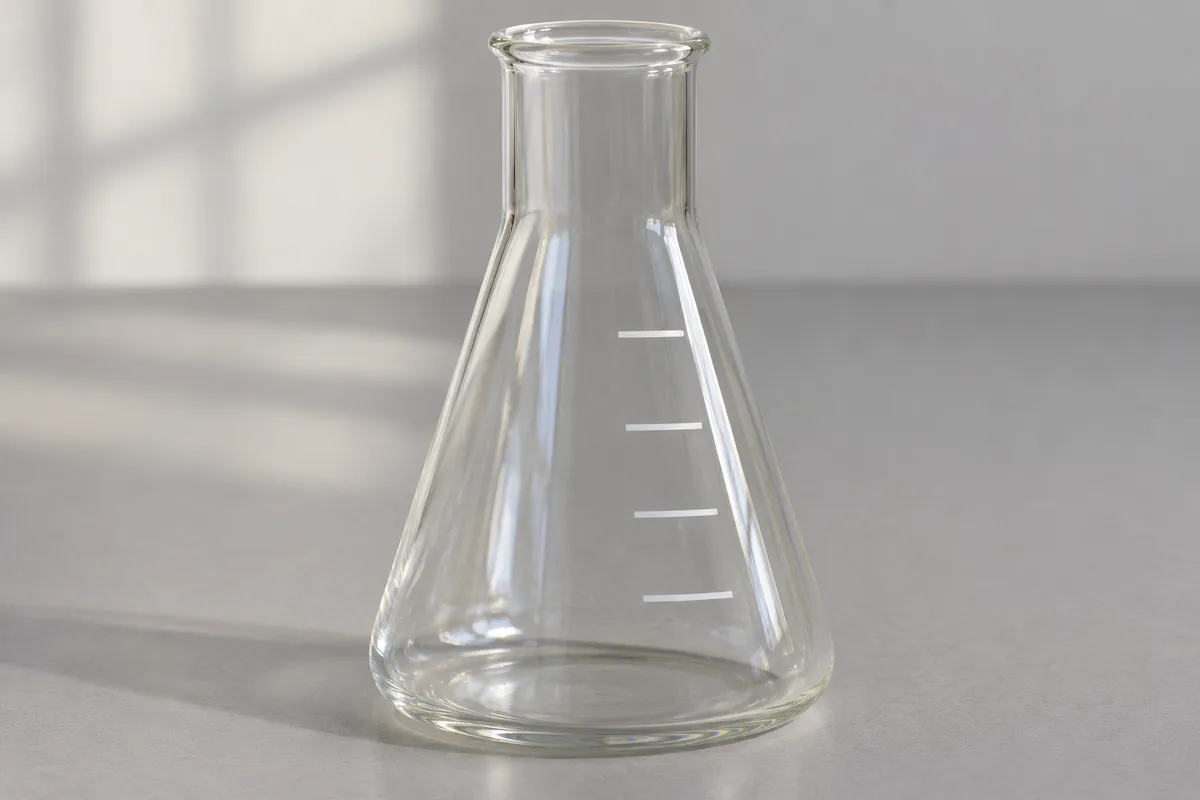
For a flask with several widely spaced marks, choose the marks used in practice and specify the allowed variation. A result for the volume contained at one mark does not define the amount delivered by pouring to another vessel.
Conical flask used as a receiver or vessel
Describe its actual role before requesting calibration. If a defined contained volume is needed, identify the filling condition and required result for review. A flask used only to receive a titrated liquid is not automatically the instrument that determines the reported delivered volume.
Specifications and service checks
A flask used to catch liquid from a burette makes no volume measurement of its own. The same flask used to fill to a line does. Describe which job it does on your bench and, for a fill-line check, mark the line you want measured.
- Range and configuration
- DWK’s 250 mL DURAN Erlenmeyer is an example of a vessel with approximate graduations. A marked capacity and a certified volumetric class are different entries in the catalogue.
- Manufacturers and models
- DWK’s DURAN low-form beakers and Erlenmeyer flasks illustrate the difference between vessel capacity and a certified measuring flask.
- What we check
- For a 250 mL graduated conical flask, nominate the fill line you rely on. Its broad, tapering body makes a different meniscus reading problem from the narrow neck of a volumetric flask.
- Reference equipment and accuracy
- Use a traceable balance and water-temperature measurement. A broad vessel and thick graduation can make reading the mark the largest uncertainty contribution.
- When to repeat the check
- Inspect after glass damage and use the previous volume result to judge the need for rechecking. For an approximate mixing vessel, define the required tolerance first.
Technical references DWK DURAN low-form beakers · DWK DURAN 250 mL Erlenmeyer flask · NIST volumetric calibration procedures