
On this page
Analyser inputs and timing functions
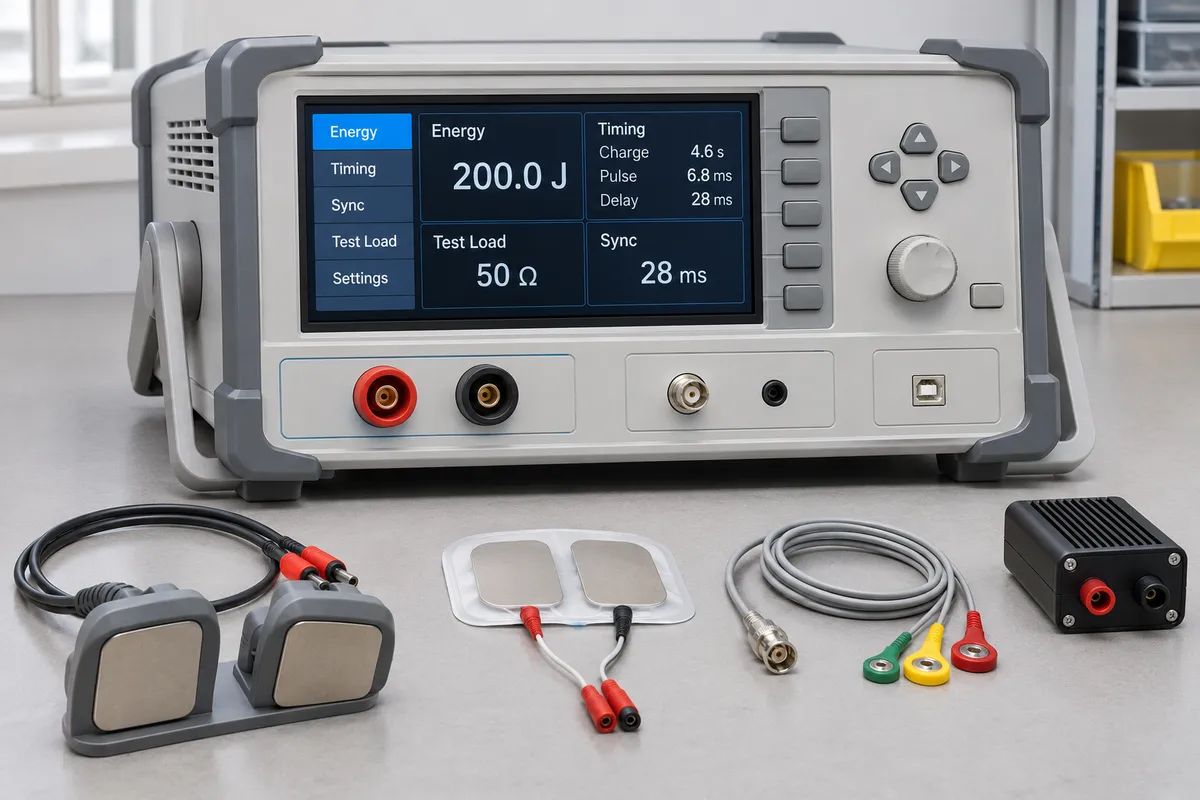
List the functions and measurement ranges your engineers use, including synchronisation timing if it appears on their worksheets. Identify the input adapters and record whether the reading being compared is in joules or milliseconds. Matching the input configuration makes successive calibration records easier to compare.
Defibrillator analyzer calibration enquiries
Identify the energy, timing or other functions used by the engineering procedure and the associated input adapters or load configuration. Supply the previous calibration report and desired points. RTS calibrates the analyzer’s specified functions separately from testing the defibrillator, with the reference loads and connections recorded.
Specifications and service checks
A service fleet may use one analyser both at the workshop and on site. Record the analyser input, load configuration and lead identifier beside its asset tag. An energy reading saved without the load setting can be hard to compare later.
- Range and configuration
- Rigel specifies a nominal 50 Ω non-inductive load. Energy, timing and simulated signal amplitude have separate specifications.
- Manufacturers and models
- Rigel’s UniPulse 400 measures defibrillator output and also provides simulation functions.
- What we check
- Verify the analyser’s pulse-measurement channels against an independently characterised source or transfer system. Check its ECG simulation output separately when required.
- Reference equipment and accuracy
- Use a traceable pulse-energy reference, suitable load characterisation and calibrated timebase. A steady DC voltage alone does not test pulse-energy integration.
- When to repeat the check
- Review after overload or repair to the input load. Recall should reflect both the manufacturer’s advice and the analyser’s history as a working reference.
Technical references Rigel Medical product reference