
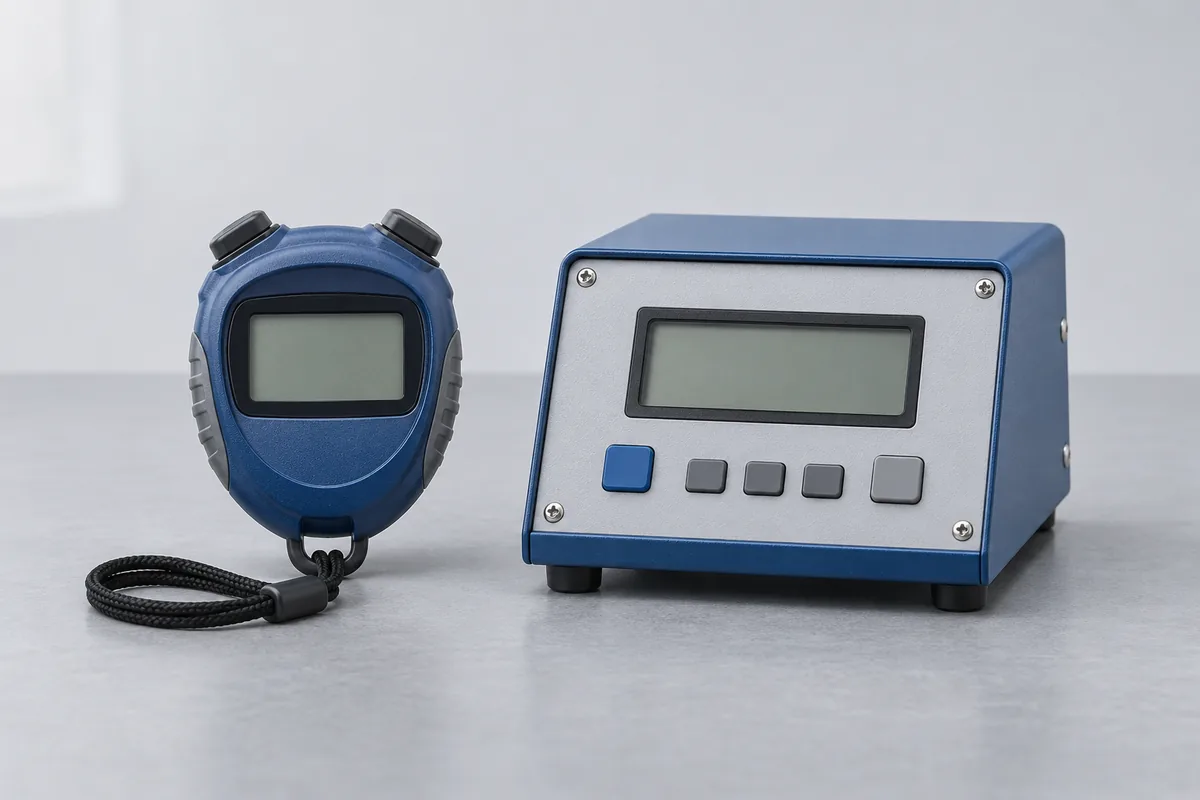
How does the interval start and end?
Describe whether a person presses a button, a contact changes state or the timer takes a signal from another device. Note the selected mode, displayed unit and any accumulated-hours function. If a fixture supplies the trigger, identify whether it will accompany the timer.
Separate timing from switch operation
A timer can display an interval and operate an output at the end of it. Tell RTS whether your record needs elapsed time, the output event or both. For a handheld stopwatch, distinguish a check on the timebase from variation introduced by a human operator.
A displayed interval or a contact change
A machine timer may show a programmed dwell, then signal the end of that dwell through a relay. The number on the display and the time between physical contact changes are two possible results. A sketch marking the start and finish events can settle which one production records. Include any selectable time base on the front panel.
For a handheld stopwatch used by an inspector, say whether you need the timebase assessed or a comparison using the normal start and stop operation. On short intervals, the way those events are initiated matters when interpreting the difference.
A timer shared between test benches
For an IMT Sohna electronics line, include the fixture or station tag with the timer number. If the line cannot spare the fixture, flag that when requesting a quotation.
Witschi testers for watch measurements
A Witschi tester may report watch rate, beat error or amplitude using an acoustic pickup and model-specific settings. Identify the exact tester and the outputs for which verification is needed. Include beat-rate and lift-angle settings where applicable, along with the microphone assembly. These are specialist watch-measurement functions; a stopwatch or general elapsed-time entry does not automatically cover the tester. Send its verification procedure for assessment before booking.