
On this page
Static force and the cycling programme
Identify the controlled channel, specimen fixture, mean level, amplitude and frequency used. State whether the request covers static force indication, displacement, cycle counting or dynamic verification. Record the programmed and measured quantities separately so the report can be compared with the test method.
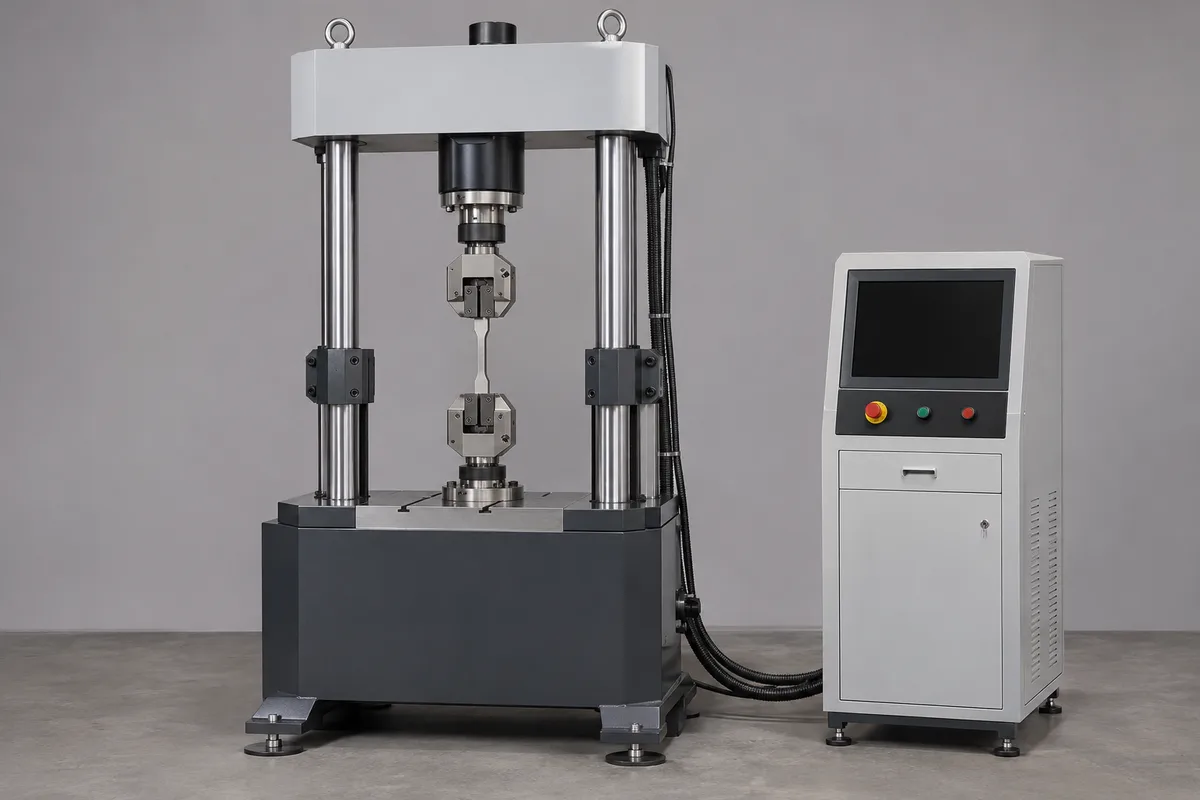
Fatigue testing machine channels
Static indication and dynamic response are measured under their respective reference conditions. The report records the loading programme, channel identity and method used for each requested characteristic so the laboratory can relate the instrument results to its cyclic test.
Specifications and service checks
For a repeated force cycling between 2 and 10 kN, the mean load is 6 kN and the amplitude is 4 kN. A request for “8 kN” alone could mean the full peak-to-peak swing, so include both turning points.
- Range and configuration
- A fatigue machine has a force capacity, stroke and frequency range. Record the mean load, alternating amplitude and frequency used on the actual specimen, since static force alone does not describe the cycle.
- Manufacturers and models
- Instron 8801 is a servohydraulic fatigue testing system. The installed actuator and load cell determine the working capacity.
- What we check
- Verify static force through the working range. If dynamic force or displacement is required, measure the cyclic response under the relevant fixture, frequency and loading conditions.
- Reference equipment and accuracy
- Use an appropriate force or displacement reference and time base. A dynamic check needs a reference system characterised for the frequency and amplitude under test.
- When to repeat the check
- Review check results when the specimen grip, control tuning, load cell or actuator changes. A new frequency range may require a different dynamic verification.
Technical references Instron Fatigue testing machine reference · ISO Force-proving instrument calibration