
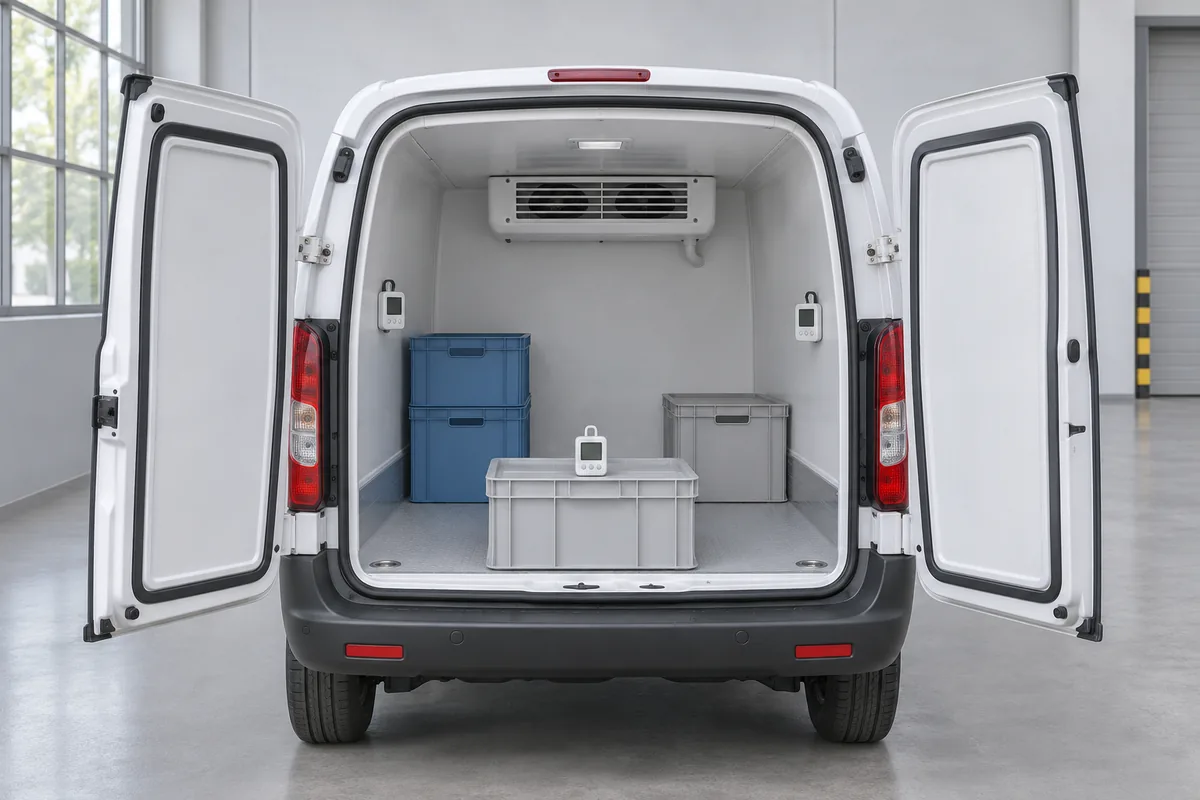
Identify the vehicle and the proposed run
Give a fleet ID, cargo-space dimensions, partition positions and refrigeration unit details. Include the load layout and operating setting your transport team has approved. For a journey, add the expected stops, loading periods and who can keep an event log.
Plan recorder collection at the destination
Agree where the recorders will be fitted and recovered, who has access at each end and which time zone the trip records use. Include the vehicle recorder if you need a separate comparison or calibration. Your transport team provides the vehicle, route and operating crew.
Interpreting a stop in the route record
A recorder close to a door may show a rise at the first delivery while a logger farther inside shows little change. The study reviewer needs the door-opening time and the positions of those recorders to explain the difference. Nominate someone to record departures, stops and unloading events against the clock used for the study.
If cargo is removed in stages, mark the planned starting load and the point at which each part leaves the vehicle. Identify the return arrangement for every logger, including any that reach the final customer in a package.
Give both ends of the trip
For a vehicle leaving IMT Bawal, list the departure gate and time alongside the destination contact. If the return is to another depot, give that address in the enquiry so equipment recovery can be costed.