
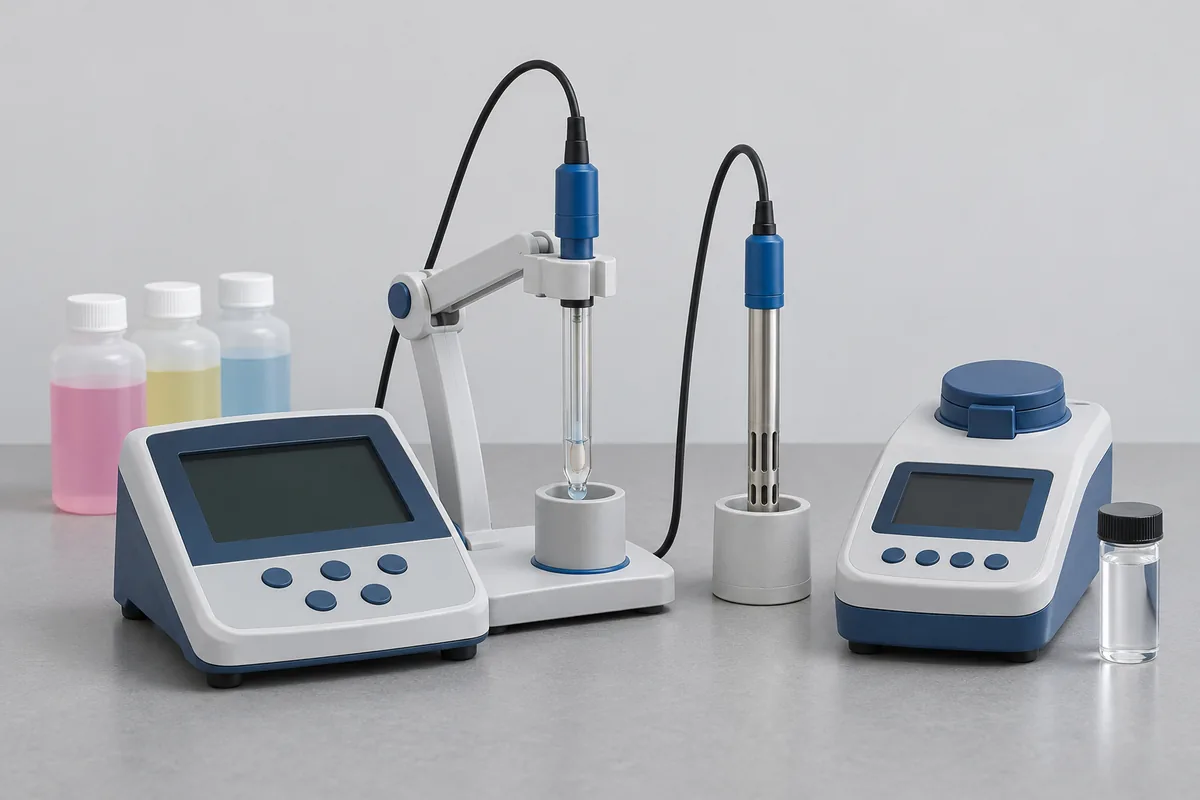
Meter, cell and temperature sensor
List the model and cell constant marked on the measuring cell. Give the normal conductivity interval and exact units; µS/cm and mS/cm are not interchangeable labels. Describe whether temperature compensation is enabled and where the temperature reading comes from.
Which comparison is required?
An electrical check of the meter and a solution check with the cell exercise different parts of the instrument. Identify your required result, reference solutions and any recorded sample temperature. An installed probe may have a separate tag from the panel readout.
Look at the units on the operator's log
A low-conductivity rinse and a process solution might be recorded in microsiemens per centimetre and millisiemens per centimetre respectively. Copy the unit with each target value. Record whether the meter reports at the measured temperature or displays a value compensated to a reference temperature, along with the setting used on that line.
For a replacement cell, check whether the old certificate identifies the original cell serial number. List the new cell and its marked constant against the meter. If there is a separate temperature probe, identify it as a third part of the measuring assembly.
Handover from a water-treatment line
For IMT Faridabad, identify whether the operator can release the full cell assembly or only a spare meter. Record the last fluid in contact with the cell and agree on cleaning before dispatch.
Conductivity cell paired with the meter
Record the conductivity cell identity, nominal cell constant and temperature-sensing arrangement with its meter. State whether the requested result concerns the full sensor system or an electrical input simulation. A cell constant belongs to a defined cell and method; it should not be copied from another probe simply because the model is similar. Include the reference-solution conditions required by the laboratory.