
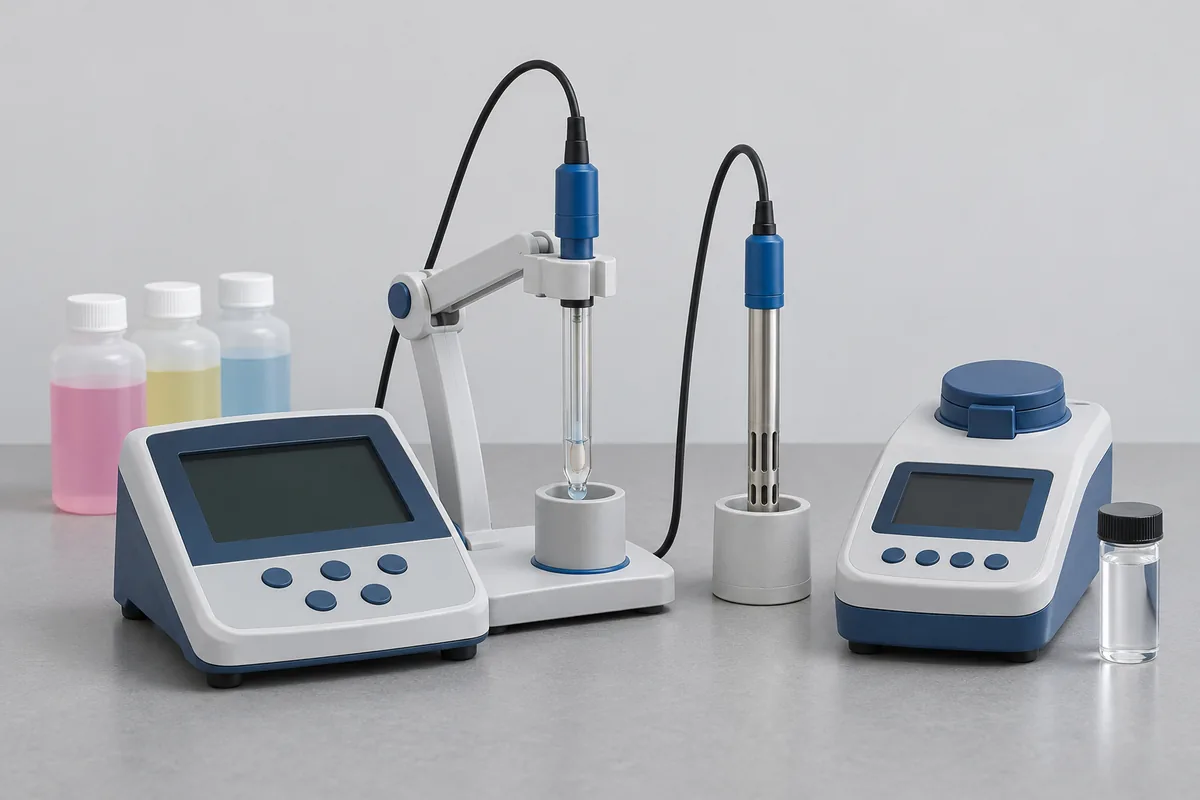
What belongs to the measuring chain?
List the meter model, electrode type, temperature probe and whether those parts are removable. Supply the working pH interval and the buffers specified by your procedure. If an earlier record contains slope or offset, send it with the date and temperature rather than just the final displayed value.
Before sending the electrode
Record symptoms already seen, such as slow response in a fresh buffer. Follow the electrode maker's storage and transport instructions and agree with RTS on which parts to send. Do not dispatch process liquid or used buffers unless arrangements have been made.
Separate the meter electronics from the electrode response
A pH result can involve the meter, electrode and temperature sensor as a working set. Give the identity of each item and say whether the quotation should cover the electronics alone or the complete measurement arrangement. Include the buffer set used by the laboratory, the temperature information recorded with it and any stored electrode calibration settings relevant to an investigation.
A comparison using a simulated electrical input does not establish the condition of an excluded electrode. Likewise, a successful reading in one buffer does not describe the response over every pH used by the method. Identify the working points and acceptance limits, and ask whether initial readings can be retained before adjustment. For a combined meter, list other required functions separately. The report should name the components and conditions behind each result.
A plant water-testing bench
Identify a portable laboratory meter separately from any installed pH loop at the treatment line. Give each its own tag and state which one the quotation concerns. Include the local release contact, preparation requirements and return destination for any instrument sent from the plant.
pH electrode and temperature probe
List the pH electrode separately when it has its own identity, and keep it paired with the meter and temperature probe used for the comparison. Provide the electrode type and reference-buffer requirements from the procedure. Checking the meter’s electrical input alone does not establish electrode response. A replacement electrode changes the sensing assembly and should remain visible in the instrument record.