
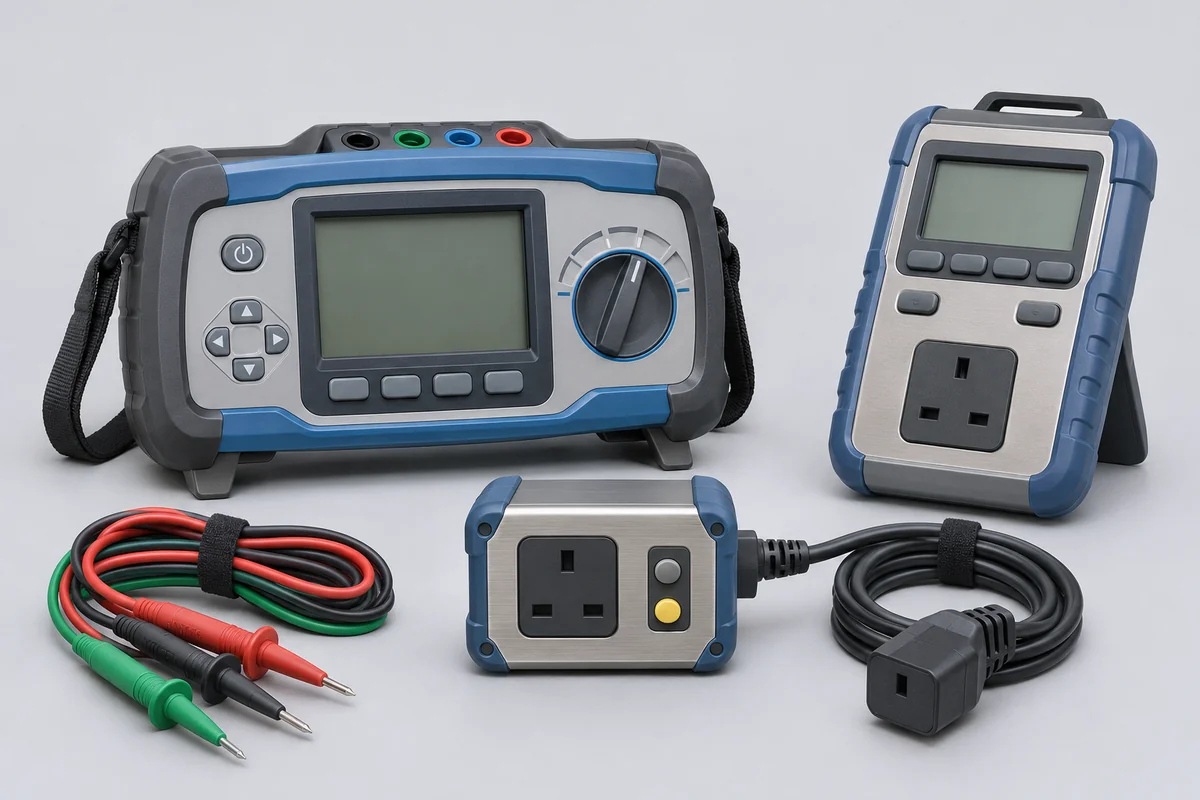
PAT testers and the functions used
A PAT tester may combine protective-conductor resistance, insulation, leakage and functional indications. Identify the functions used in your appliance procedure and the relevant lead or socket arrangement. List the numerical points separately from any automated pass/fail sequence. RTS must review the required references and method for each function. Calibration of the tester does not certify every appliance later connected to it.
RCD testers and trip measurements
For an RCD tester, give the selected residual-current type, current settings, phase selection and whether trip time or trip current is reported. Include any ramp or automatic sequence used by the technician. These functions need an appropriate simulator or reference arrangement; a stopwatch check alone does not evaluate the complete tester. Agree the supported modes with RTS before booking and retain the settings with the results.
Use the actual test sequence as the starting list
Send the function list from the procedure used by your technicians. If an automatic sequence selects several checks, provide the settings rather than only its program name. Some displayed results are measurements while others are decisions made against a configured threshold. The order should make clear which numerical values need calibration and which sequence functions need a separately described verification.
Keep leads and adapters with the configuration
Identify the normal test lead set, appliance adapters and any probes that alter the connection. Say which accessories can travel with the tester and which are fixed to the site installation. An internal compensation setting should be recorded before dispatch. The reviewer can then decide which accessories belong in the measurement arrangement and prevent a report from being applied to a materially different kit.
Do not infer one function from another
A resistance result can support a specified resistance function; it does not establish leakage measurement, simulated trip behaviour or every automated decision. CC-4643 must be checked against each requested measurand, method and range. Where a function is not established by that scope, RTS should confirm the appropriate service route and report description before acceptance. The enquiry can remain one job with clearly separated requirements.
Arrange the handover around inspection work
Provide the kit number and next scheduled use, together with the person who understands its settings. Include the report recipient and the department receiving the instrument back. On return, reconcile the accessory list and retain the agreed configuration with the calibration records. That makes it possible to identify the exact tester arrangement used during the next round of inspections at the plant.
Keep the supplied limits visible
If your purchasing procedure needs a conformity statement, include the source of each acceptance limit. Avoid a single unqualified pass instruction for all functions. The technical review should identify what can be measured and which decision rule is agreed before the order is released.