
Separate output settings from readings
For each voltage setting you use, note the resistance range or required points in MΩ or GΩ. State if the selected test voltage itself needs to be checked. Attach the model details if the display changes units automatically.
Which lead set belongs with the tester?
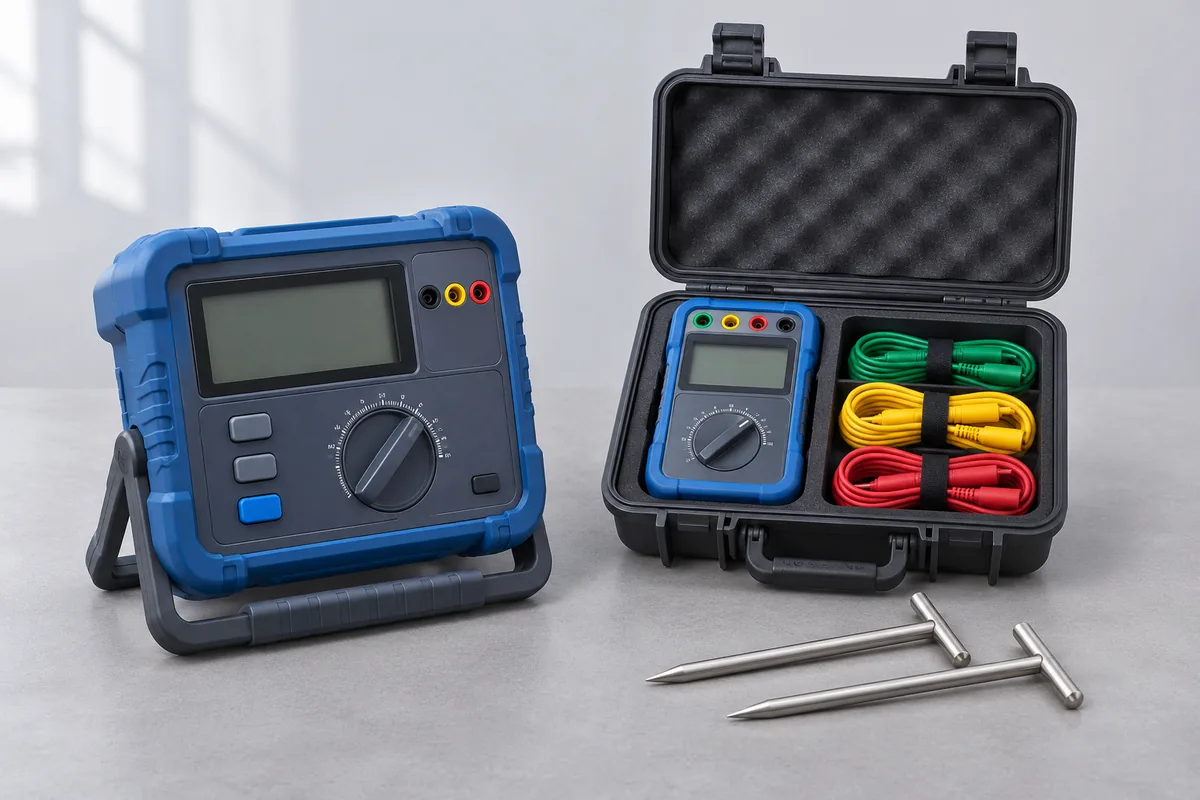
Identify the leads and whether a guard terminal is used in your measurement setup. Record any asset number on an interchangeable lead kit. RTS can confirm what should accompany the instrument when reviewing the booking.
Recording a point from the maintenance procedure
“500 V” on a maintenance sheet describes an output setting. It leaves the resistance value and unit unspecified. If the sheet calls for a comparison at a particular number of megohms, copy that point beside the selected voltage. If the instrument records timed readings, identify the displayed interval and whether that function is needed on the report.
A field kit can contain leads borrowed from another tester. Check the accessory numbers against the case inventory before dispatch. Note a damaged lead on the outward note so the person receiving the kit can distinguish an accessory issue from an instrument fault.
Booking the instrument or a site test
For instrument calibration, give us the tester's serial number and the date it can be taken out of service. If you need measurements made on a motor, cable or installation, describe that separately so the site work can be assessed.