
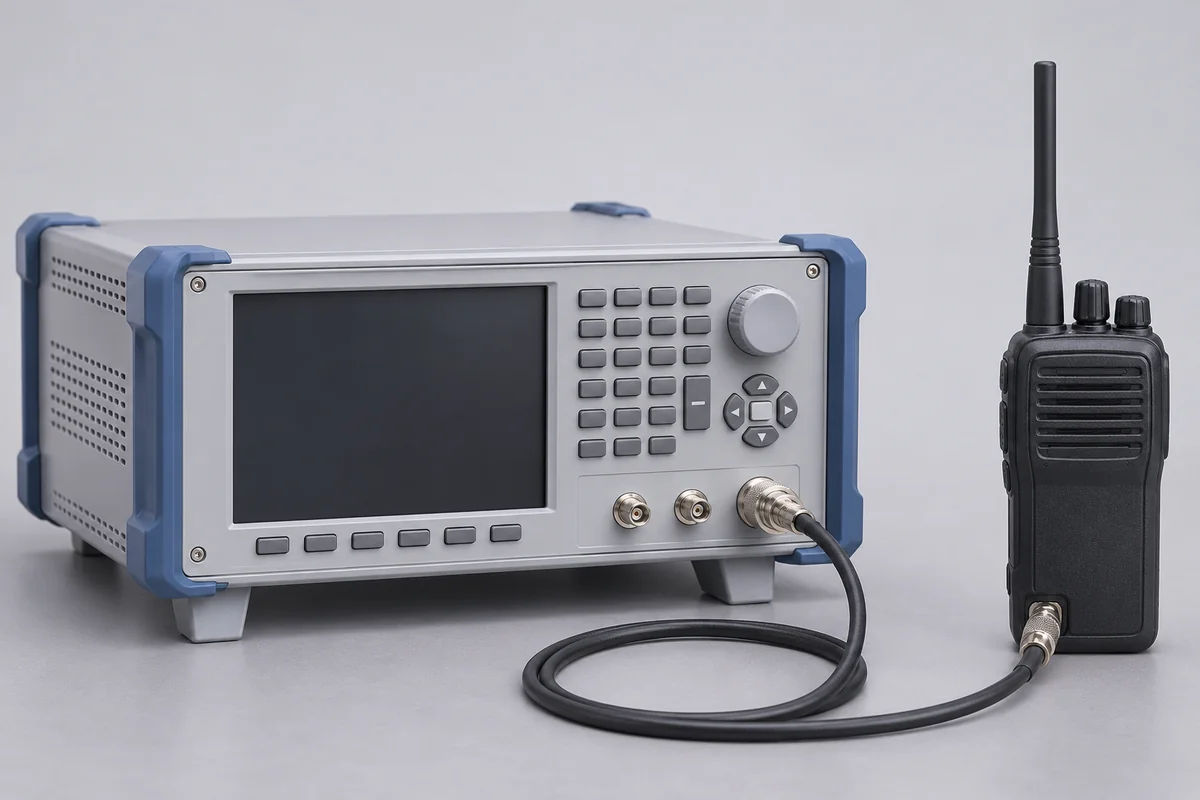
Radio communication testers and radio test sets
A radio communication tester, also called a radio test set, can combine an RF generator, analyzer and audio functions. List the transmit and receive modes actually used by your bench, with frequencies, levels and modulation settings. Keep installed options with the model record. RTS needs this function list to review the required references and scope; one power reading does not establish the entire radio test sequence.
Mark the generator and receiver ports
A radio test procedure may switch between generator output, RF power measurement and demodulated audio. Record the port and connection used at each stage. Include external attenuators and couplers where they affect the result. These parts should retain their assigned values and identities; they should not disappear from the enquiry simply because the test software displays one combined result on screen.
Include the operating modes that need evidence
Give the relevant analog or digital modes, frequencies and level conditions from the bench procedure. Identify installed licences or options that enable those functions. A successful self-test is useful operational information but does not provide every calibration result required by purchasing. Ask for the accepted functions to be named explicitly, including any intended limitation of the work to selected modes or ports.
Keep frequency references and corrections traceable
Tell RTS whether the test set uses an internal reference or one shared by the rack. Identify the external reference and any cable-loss corrections applied by the software. A returned instrument can be configured differently from the bench it re-enters. Retain the approved settings so the technical owner can reconcile the report with the intended RF connection and reference arrangement.
Review a specialist method before dispatch
Radio test equipment may require model-specific procedures and reference instruments beyond the published low-frequency electrical entries. Send the manufacturer's verification list and the outputs your procedure uses. RTS must confirm the appropriate service route, accepted measurements and reporting scope before booking. A calibration certificate for a power sensor should not be used to imply that modulation, receiver and audio functions were also evaluated.
Plan the release of a shared test set
State the rack identifier, next production use and which accessories can leave with the instrument. Include one contact who understands the test program and another for receiving if necessary. On return, keep the accepted function list with the instrument record so a later user can see exactly which evidence is available for the radio test sequence they plan to run.