
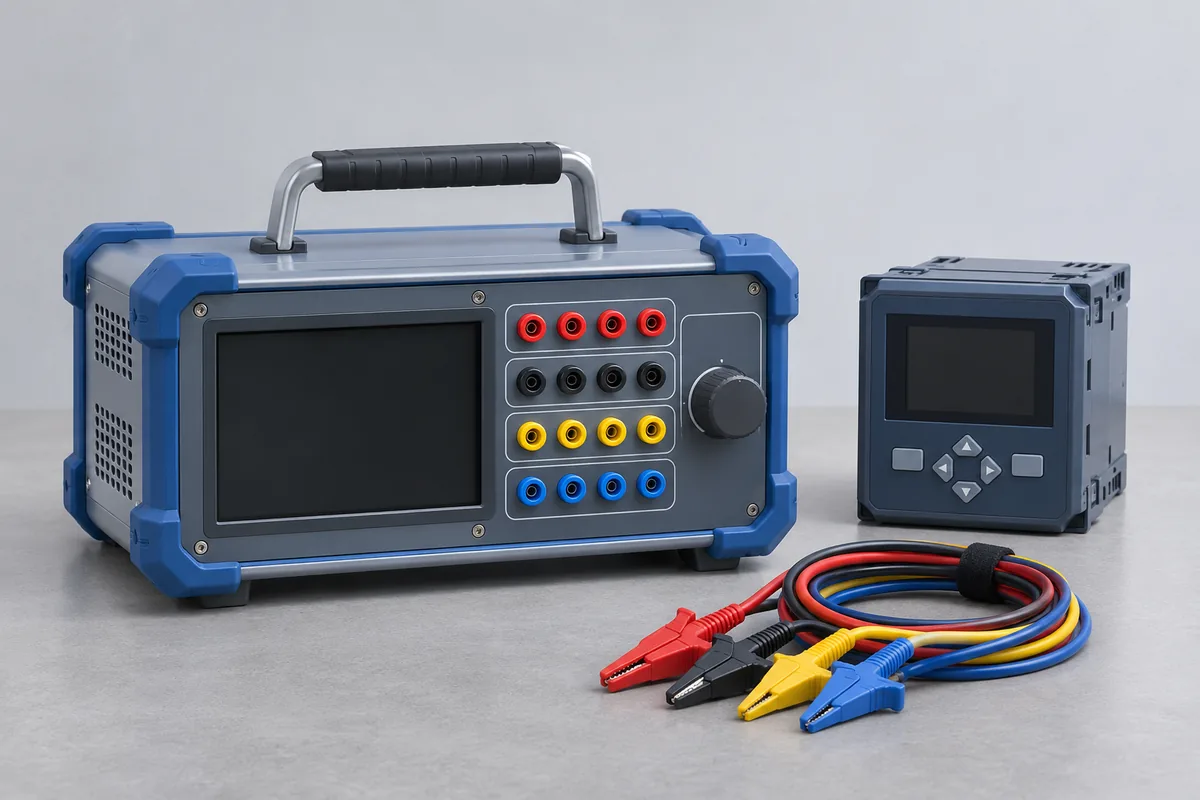
Identify the test set configuration
Give the make, model, serial number and fitted output modules. State whether the kit is used for primary injection, secondary injection or both. Identify any external current booster, amplifier or measurement unit that forms part of the kit. A photograph of the case contents helps keep separately numbered modules together.
For each output channel, provide the requested current or voltage points and frequency. Include phase relationships when they matter to the test procedure. If channels operate together, describe that arrangement; individual channel readings and a combined output configuration need to be distinguished in the proposed work.
Keep timing requirements with the output schedule
Describe the timing quantity used by the report and the input or output that starts and stops it. Include the relevant settings from an approved test plan. If a binary input, contact mode or auxiliary DC supply needs its own check, identify it explicitly rather than assuming it accompanies every output comparison.
Send a previous result sheet when the same checks are needed again. RTS can review the required functions, accessories and conditions before confirming what can be quoted. Calibration of the source equipment is separate from testing a protection relay or accepting the protection scheme at an installation.
Keep the commissioning kit complete
Name the kit owner and the person holding it between projects. Record special leads, interface units and cases that must return together. Agree the available release period and the receiving address before collection, particularly where the next project is at a different site.