
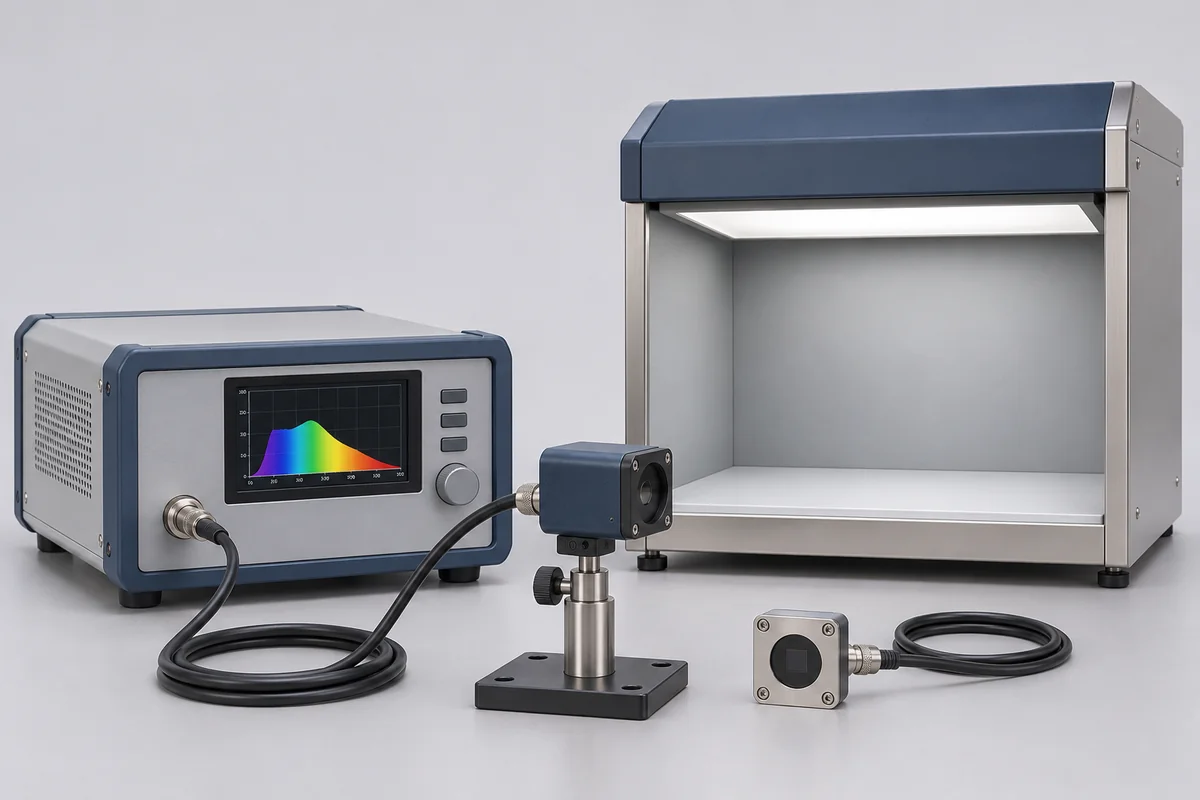
Spectroradiometers and the reported optical quantity
A spectroradiometer may report spectral irradiance, radiance or another optical result depending on its accessories. Name the required quantity and keep the collection optics, fibre and detector together in the enquiry. Give the wavelength interval and working signal levels. Wavelength accuracy and amplitude response are separate requirements, so identify both where needed. RTS must review the specialist reference arrangement before accepting this measurement work.
Spectroscopes with a wavelength scale
For a spectroscope, send the model and explain whether an observer reads a scale or software records a spectrum. Identify the wavelength features used in your work, any reference lamp and the viewing or input optics. A request to identify spectral lines differs from a request for radiometric amplitude results. State which output needs evidence so RTS can review the method without implying that all optical functions are included.
Define the optical path
Include a sketch of the source, collection optics and instrument input. Note detachable diffusers, integrating spheres, lenses or fibres and whether they remain with the instrument during measurement. A different accessory can change the quantity represented by the displayed number. Keep the required geometry in the enquiry so the reviewer can distinguish a detector check from evaluation of the complete optical arrangement.
Retain settings that affect the recorded spectrum
Provide the acquisition settings used by the laboratory, such as the selected spectral interval, averaging and any correction file. Identify dark or background records where these form part of your existing procedure. Do not replace them merely to make a trace appear cleaner before assessment. An example report with product information removed can show which axes, units and derived values need supporting evidence.
Ask for specific evidence
A wavelength comparison, a response correction and an evaluation of a derived colour value are different requests. Mark the required results and the acceptance source beside each one. RTS must review specialist reference availability and the complete measurement configuration before booking. The presence of ordinary electrical or illuminance entries in a laboratory scope does not establish a spectral radiometric service.
Return to the same laboratory arrangement
List the case contents and optical attachments by their markings. Keep protective caps and the manufacturer's handling instructions with sensitive parts. Include the software version and the person responsible for restoring approved settings after return. If the instrument serves several production lines, identify the owner of the reference configuration so new results are applied consistently to the intended measurement arrangement.
Repeat points from an earlier report
When comparing results over time, send the previous report and highlight the wavelengths and conditions to repeat. State whether a collection accessory or detector has changed. Similar-looking plots should not be treated as a drift history unless their measurement arrangements are comparable.