
Identify the switch and its sensing element
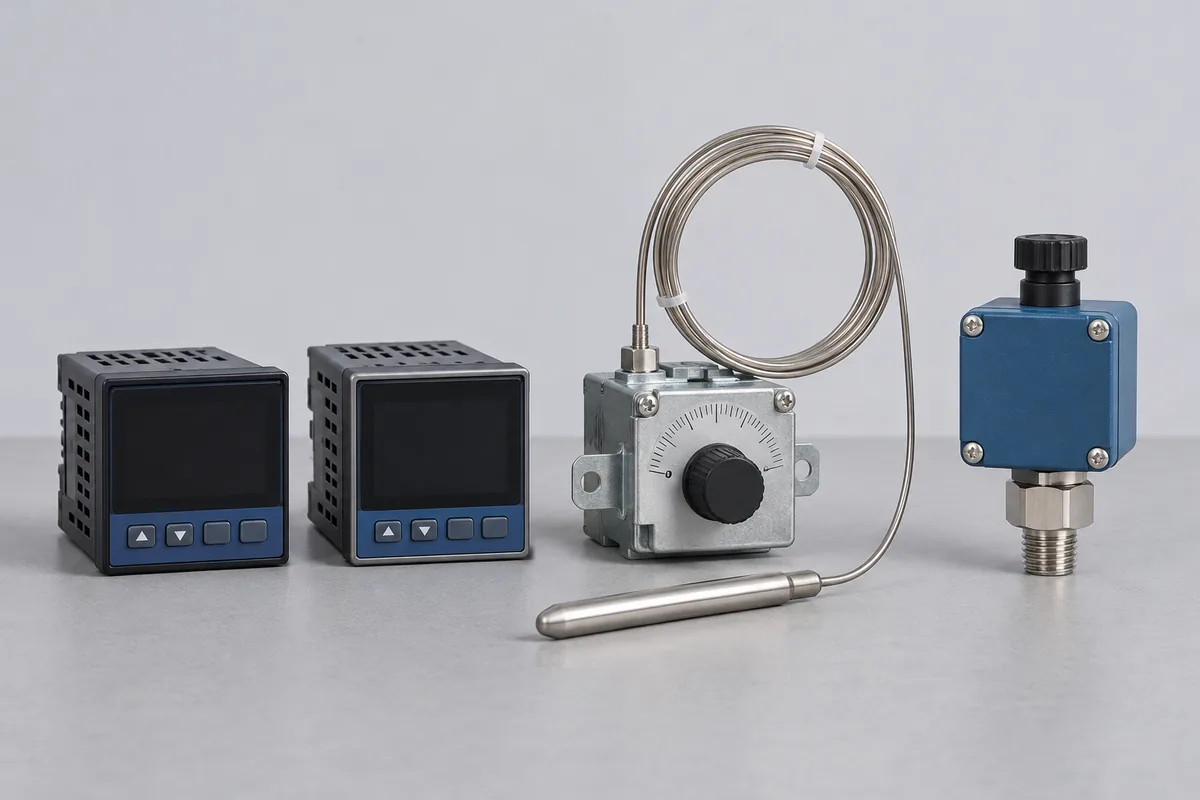
Share the model, tag and serial number, with the sensor type and physical arrangement. A capillary thermostat, an electronic switch with a remote probe and an alarm contact on a controller can need different test arrangements. Include the probe dimensions, cable or capillary length and whether the assembly can be removed.
Send the manufacturer’s diagram or manual if it is available. State whether the set point is adjustable or fixed and whether the switch has an automatic or manual reset. This avoids a quotation based only on a temperature printed on the enclosure.
State the switching requirement
Give the required operating point, direction of temperature change and acceptance limits. Include the reset point or allowed difference between operation and reset when your procedure specifies it. Identify the contact state your record treats as operation and say whether repeat operations are required.
If the switch contributes to an alarm or protective function, include the plant’s approved test scope and access arrangements. Checking the switch does not by itself verify the complete alarm or shutdown chain. RTS will review the device and intended result before agreeing on the work; the responsible plant team should arrange isolation and return to service.
Include the maintenance window
For an installed switch, name the equipment owner and the period available for the check. If the assembly will be sent away, ask for receiving instructions before removing or packing it. Report a damaged capillary, intermittent contact or failure to reset at the quotation stage.
For a plant list covering several Indian locations, keep the operating point and acceptance limits against each asset tag. Similar-looking switches may protect equipment with different requirements.