
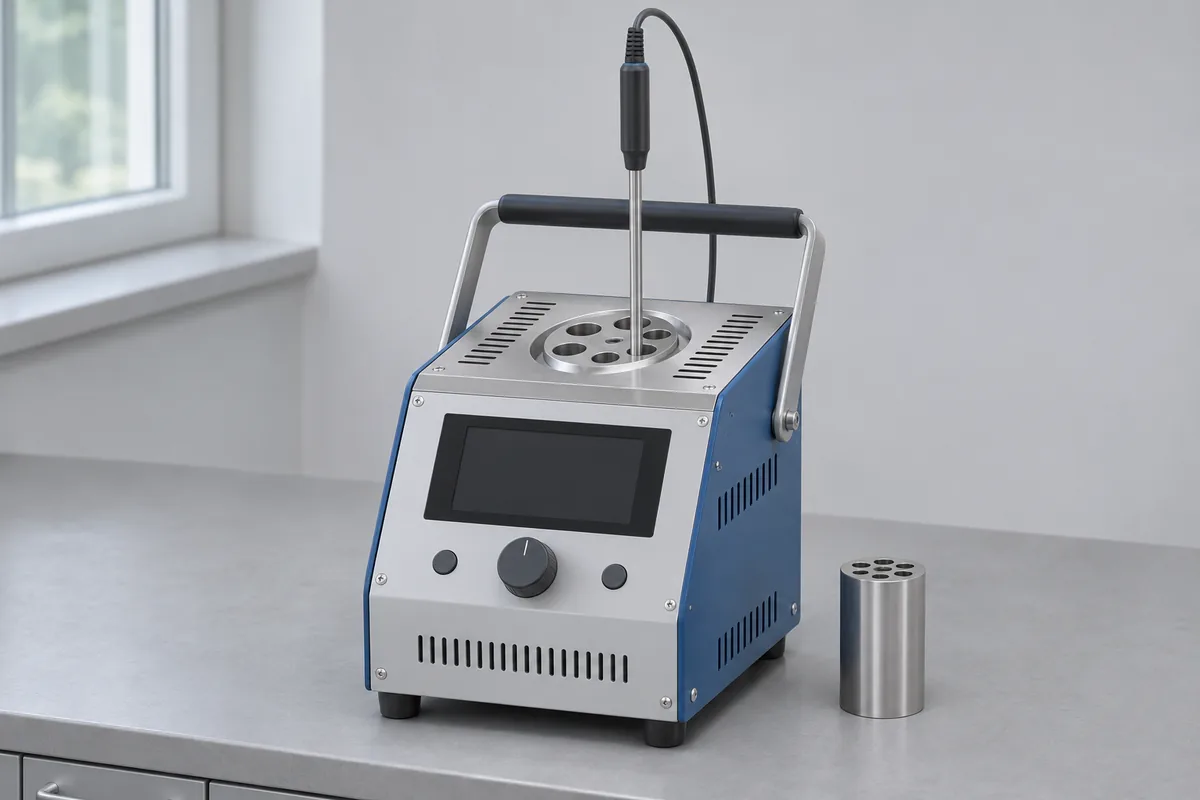
Describe the insert your technicians use
Send the block model and serial number, an insert drawing or bore layout, the probe diameters and normal insertion depths. Mark the bores that are occupied together. For a block that travels between benches, describe how it is used at the operating points of interest.
Name the characteristic you want measured
The temperature difference between wells, the change with depth in one well and the variation over time at a fixed point answer different questions. List the characteristics your procedure needs at each setting. Identify display error and calibration of a detachable reference probe as separate deliverables if required.
Relate the result to the probes used in the block
The sensing element is not necessarily located at the very end of every probe. Provide the manufacturer’s information on active sensing length where it is available, particularly when short probes are used. The part of the well being characterised should relate to the part of the probe that actually measures temperature. A result from one depth cannot automatically describe a different insertion arrangement.
Include the normal number of probes and which wells they occupy. Adding probes changes the thermal loading, while the external reference and the block display can provide different views of the same condition. Ask for the report to retain insert identity, measuring depths, occupied wells and the recording interval. If several inserts or loading patterns are used, agree which combinations the quotation covers rather than treating them as one unnamed block calibration.
A single-position check of the dry-block display
A request limited to the dry-block's indicated temperature should identify one insert, well and comparison depth. Record the reference probe position and other occupied wells. Those details let the result describe the condition actually checked. If the kit returns with a different insert, the old comparison does not automatically describe that insert's working arrangement.
CC-4643 includes site-facility entries for an indicator with sensor of a dry-block bath at a single position. Match the requested temperature and configuration to the applicable entry. This is narrower than characterising axial gradients, differences between wells or changes caused by probe loading. Keep those characteristics as separate requirements when the block is used as a reference source for other thermometers.
For a kit shared by inspection benches at IMT Sohna, list the insert marks and the probe depths used at each bench. Decide which combination the current order covers and retain that decision with the calibration record. RTS can review a single-position display comparison alongside any wider characterisation you need, with the reporting scope agreed before dispatch or a site visit.
Keep block accessories together
Identify which inserts, external reference and cables travel with the block. Follow the manufacturer’s transport instructions and obtain the receiving details before dispatch. For a shared reference kit, name the laboratory that should receive it back and retain a list of the accessories sent.