
Freeze dryer shelves, condenser and pressure
For a freeze dryer, identify the shelf, condenser and chamber-pressure instruments involved in the protocol. Give the stages and locations requiring records, including the specified load condition. A calibrated vacuum gauge does not demonstrate product dryness, and a shelf indication does not describe every sample position. Ask for instrument comparisons and any wider cycle study to be reviewed as distinct requirements.
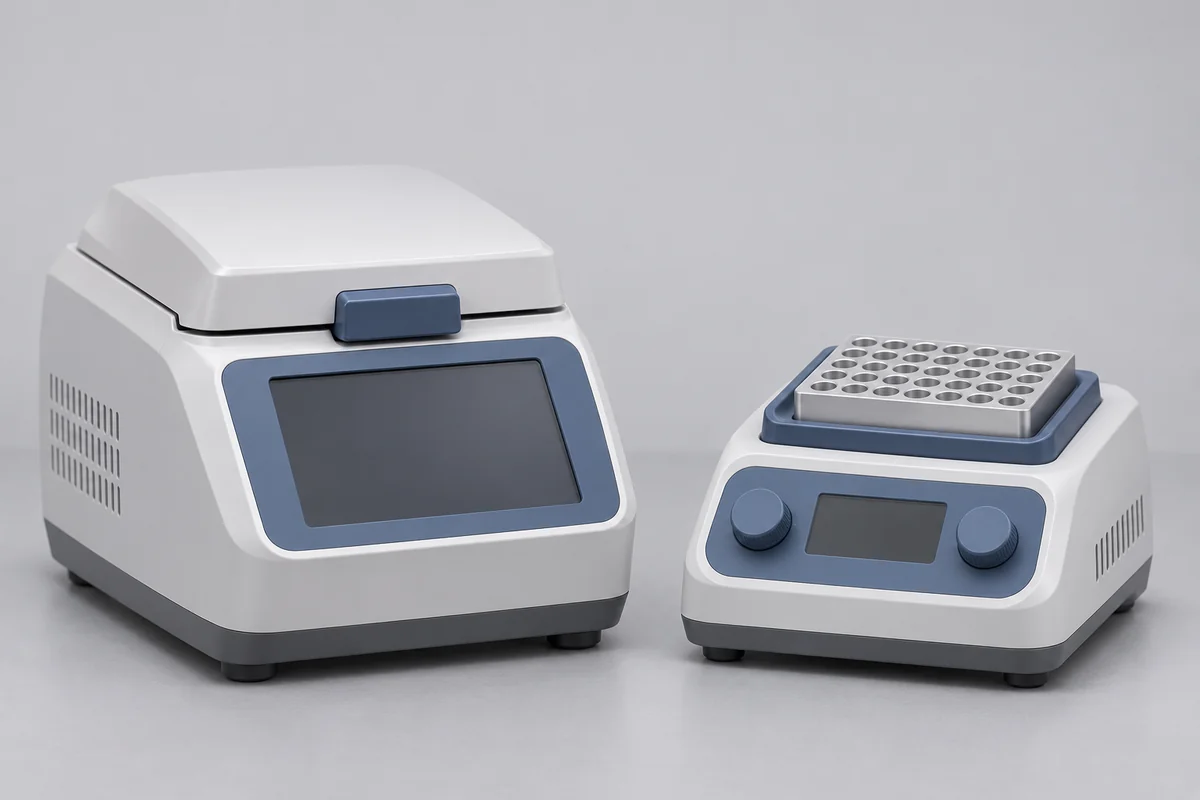
Thermal mixer block and mixing configuration
List the thermal mixer, fitted block and tube or plate format used by the laboratory. Specify whether temperature at selected positions, hold timing or mixing speed needs evidence. The block setpoint and the condition experienced by a sample are not automatically the same quantity. Retain the configuration and loading requirements so the proposed study can be interpreted when the block is changed.
Thermocycler block and cycle timing
Give the thermocycler model, block type and programme stages selected for verification. State the positions, temperatures and timing characteristics requested by the laboratory’s protocol. A steady reading at one block position cannot establish uniformity or behaviour through every programmed transition. RTS needs the suitable reference arrangement and method reviewed before accepting the study; the resulting record does not validate an assay.
Write the observation into the protocol
Identify where each reference sensor would represent the required measurement and how a cycle stage is defined. A hold timed from a controller event can differ from a hold timed after measured conditions are reached. Put those definitions beside the acceptance limits. This gives the reviewer a meaningful record and prevents a final setpoint from standing in for the whole cycle history.
Check the scope of the accepted work
CC-4643 lists particular thermal calibration quantities and conditions. Those entries do not automatically cover a complete lyophilisation cycle, a thermocycler qualification or mixing performance. RTS should confirm the accepted measurements, report type and any specialist route before booking. If the laboratory already has a manufacturer qualification protocol, send its current revision with the equipment list and the previous results.
Schedule the laboratory release
For equipment at IMT Rohtak, name the room owner and the window in which the unit can be released with its normal block or shelf configuration. For other Indian sites, include the location and whether the system is installed or transportable. Agree the owner’s preparation requirements and the accessories needed for the proposed measurements before arranging attendance.